Table of Contents
- Red Flags That Signal a Dishonest Auto Repair Shop
- Questions to Ask a Mechanic Before Repair
- How to Get a Second Opinion on Car Repairs
- How to Report Auto Repair Fraud
- Protecting Yourself: What Honest Shops Do Differently
- Frequently Asked Questions
Last Updated: August 31, 2026
Red Flags That Signal a Dishonest Auto Repair Shop
When your car needs work, trust is everything. Yet many car owners discover too late that they’ve walked into a shop more interested in padding the bill than solving the problem. The stakes are real: a dishonest repair can cost hundreds or thousands of dollars, damage your vehicle further, or leave you stranded on the road.

Spotting a dishonest auto repair shop before you hand over your keys separates smart car owners from those who get taken advantage of. Here’s what to watch for.
Pressure to Approve Work Without Explanation
The moment a mechanic starts pushing you to approve work before you understand what’s actually wrong, that’s your signal to pause. 🚩
Dishonest shops create urgency where none exists. They’ll tell you your brakes are failing (they’re not), your transmission is shot (it needs fluid), or your engine is about to seize (it’s running fine). The pressure tactic works because most car owners don’t know enough to push back.
A trustworthy shop, like CJ Auto Services LLC, does the opposite. They explain what they found, show you the diagnostic results, walk you through options, and give you time to decide. They answer questions without getting defensive. They don’t make you feel rushed.
Red flags to catch:
- Mechanic insists on immediate approval without letting you speak
- They refuse to show you the diagnostic report or explain findings in plain language
- They claim “it’s not safe to drive” but won’t let you take the car elsewhere for a second opinion
- Pressure intensifies when you ask for time to think
If a shop won’t let you understand the problem before charging you to fix it, walk out. Period.
Vague Estimates and Hidden Charges
A real estimate tells you exactly what you’re paying for. A fake one is deliberately fuzzy.
Dishonest shops quote a price that sounds reasonable, then hit you with surprise charges once they’ve got your car. “We found additional issues” or “labor ran longer than expected” becomes your problem, not theirs. By then, your vehicle is in pieces and you’re stuck.
The deception works because most car owners don’t know what a proper estimate looks like. A legitimate estimate includes:
- The specific repair (not “engine work” but “replace water pump”)
- Labor hours and hourly rate
- Parts cost, listed by part name
- Total price before work begins
- What’s included in the warranty
Vague language is the giveaway. Watch for:
- “Approximately $X” without a range or breakdown
- “Labor TBD” or “parts cost pending”
- Estimates that lump multiple repairs into one line item
- No mention of what happens if costs exceed the estimate
A shop that won’t give you a written, detailed estimate before starting work is gambling with your money. Don’t gamble back, find another shop.
Refusing to Show You the Old Parts
This is one of the oldest tricks in auto repair. A shop claims they replaced your alternator, brake pads, or water pump. You pay the bill. You drive away. You never see the old part.
Here’s why that matters: shops that won’t show you old parts are often lying about replacing them. They’ll charge you for a repair that never happened. Or they’ll install a used or refurbished part and charge you for new. You have no way to verify.
A dishonest auto repair shop counts on you not asking. An honest one expects the question.
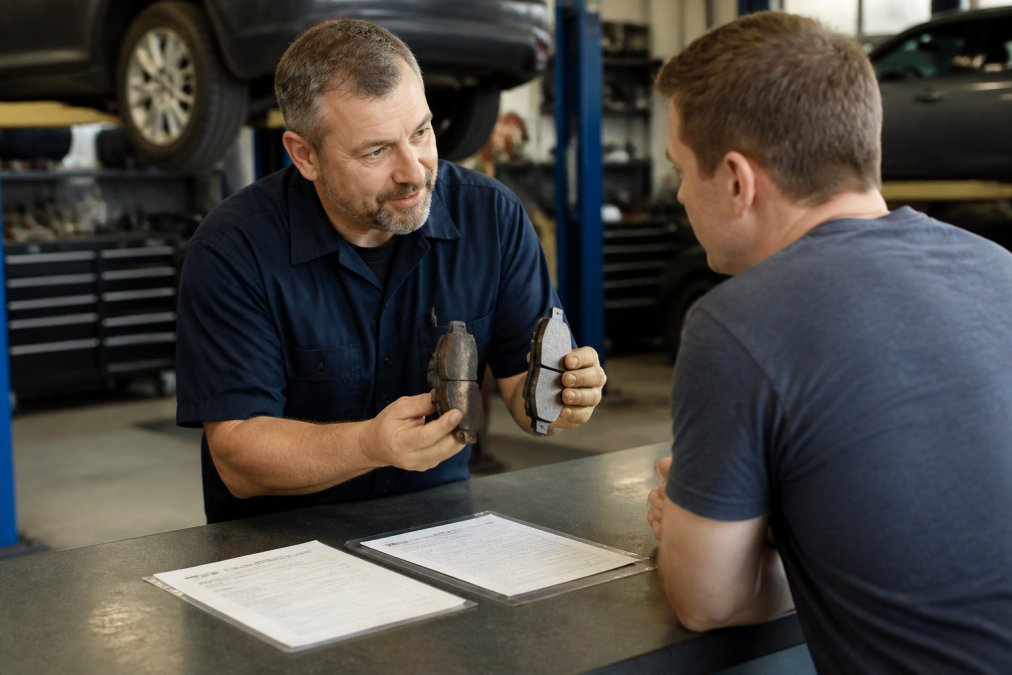
CJ Auto Services LLC and other trustworthy shops show you the old part. They explain why it failed. They let you keep it if you want. This transparency costs them nothing if the work was legitimate, and everything if it wasn’t.
If a mechanic refuses to show you the part they claim to have replaced, ask why. If their answer doesn’t make sense, leave. You’re not being paranoid; you’re protecting yourself.
Lack of Certification and Credentials
Certification matters because it means someone verified the mechanic’s knowledge.
ASE (Automotive Service Excellence) certification is the standard in the U.S. An ASE-certified mechanic has passed rigorous exams in their specialty area, engine repair, transmission, brakes, electrical systems, and more (ase.com). It’s not a guarantee of honesty, but it’s a guarantee of competence. A shop without ASE-certified technicians is cutting corners somewhere.
Other red flags:
- No certifications displayed or mentioned
- Mechanic can’t explain what they’re certified in
- Shop has no liability insurance or bonding
- No business license or registration visible
- Exclusively cash-only transactions (makes it harder to dispute charges)
Legitimate shops display their certifications prominently. They’re proud of them because they represent real training. If a shop hides this information or gets defensive when you ask, that’s a warning sign.
Questions to Ask a Mechanic Before Repair
Asking the right questions before work begins is your best defense against dishonest shops. 🛡️ These aren’t confrontational, they’re standard questions any competent mechanic expects.
Asking About Warranty and Guarantees
Before approving any repair, ask: “What’s your warranty on this work?”
A real warranty protects you if something goes wrong. It shows the shop stands behind their work. Dishonest shops either offer no warranty or give you one so limited it’s worthless (“30 days on parts only, labor not included”). verifying automotive parts.
Here’s what to ask specifically:
- How long is the warranty? (Aim for at least 12 months or 12,000 miles)
- Does it cover parts and labor, or just parts?
- What happens if the repair fails during the warranty period? (They should fix it at no cost)
- Is the warranty transferable if you sell the car?
- Do they honor warranties from other shops, or only their own work?
CJ Auto Services LLC backs their work with a 100% parts and labor warranty. That means if something goes wrong, they fix it without charging you again. That’s the standard you should expect.
A shop that won’t warranty their work is telling you they don’t trust it either.
Requesting a Written Estimate
Always get a written estimate before work begins. Verbal quotes are worthless in a dispute.
A written estimate should include:
- Your vehicle’s make, model, year, and VIN
- Specific description of the repair (not “transmission service” but “replace transmission fluid, filter, and pan gasket”)
- Labor hours and hourly rate
- Parts list with individual prices
- Total estimated cost
- What happens if the actual cost exceeds the estimate (most shops will call you first)
- Warranty terms
- Shop name, address, phone, and license number
Before signing, ask: “Will you call me if the cost exceeds this estimate?” A shop that says yes is being honest. A shop that won’t commit is planning to surprise you.
Keep the written estimate. If charges differ significantly from what you approved, you have documentation to dispute it.
How to Get a Second Opinion on Car Repairs
Sometimes you’re not sure if the repair is necessary or if the price is fair. A second opinion from another shop can answer both questions. 🔍
When a Second Opinion Makes Sense
Get a second opinion when:
- The repair cost is over $500
- The shop is recommending multiple repairs at once
- You’re unfamiliar with the shop or the mechanic
- The diagnosis doesn’t match symptoms you’re experiencing (your car runs fine but they say the engine is failing)
- You feel pressured to approve work immediately
- The repair seems unusually expensive compared to what you’ve paid before
A second opinion costs $50-150 for diagnostic time at most shops (aaa.com). That’s cheap insurance against a $2,000 mistake.
Finding a Trustworthy Shop for a Second Diagnosis
Not all shops are equal, so choose the second opinion carefully.
Look for shops that:
- Have ASE-certified mechanics
- Display customer reviews prominently (Google, Trustindex, industry sites)
- Offer transparent pricing and written estimates
- Have been in business for several years
- Specialize in your vehicle type (European cars, diesel engines, hybrids, etc.)
If your car needs specialized work, European car service, diesel engine repair, performance upgrades, find a shop that specializes in that area. A general mechanic might miss something a specialist would catch immediately.
When you bring your car in for a second opinion, be honest about what the first shop told you. Explain the recommended repair. Let the second shop diagnose independently. If both shops reach the same conclusion, you have confidence in the diagnosis. If they disagree, you’ve caught a potential scam.
CJ Auto Services LLC services all makes and models, including European and diesel vehicles. If you need a second opinion on specialized work, a shop with that expertise can give you a reliable answer.
How to Report Auto Repair Fraud
If you’ve been defrauded, reporting it creates a record and can protect other car owners. 📋
The first step is your state’s Attorney General office, which oversees consumer protection. Most states have a specific division for auto repair complaints. File a written complaint that includes:
- Shop name, address, and phone number
- Date of service and amount charged
- Detailed description of what went wrong
- Copies of your estimate, invoice, and any communications
- Photos of the work (if relevant)
You can also file a complaint with your state’s Department of Consumer Affairs or licensing board for auto repair shops.
For federal consumer protection guidance, the Federal Trade Commission accepts complaints about deceptive business practices. While the FTC typically doesn’t intervene in individual cases, complaints help identify patterns of fraud.
If you paid by credit card, you can dispute the charge with your card issuer. Most credit card companies will reverse fraudulent charges if you provide documentation.
For small claims court, you can sue the shop directly if the amount is within your state’s small claims limit (usually $5,000-10,000). You’ll need your estimate, invoice, and evidence of the fraud. Small claims court is faster and cheaper than hiring an attorney.
Document everything. Photographs, emails, written estimates, and invoices are your evidence.
Protecting Yourself: What Honest Shops Do Differently
The best defense against dishonest shops is knowing what honest shops look like. When you can recognize integrity, you spot dishonesty immediately. ✅
Transparent Communication and Documentation
Honest shops communicate like they have nothing to hide, because they don’t.
From the first phone call, they’re clear about pricing, process, and timeline. When you bring your car in, they explain the diagnostic process. They show you the results. They present options: “We can do a full repair for $X, a temporary fix for $Y, or you can drive it as-is if you’re comfortable with the risk.”
They give you time to decide. They don’t rush you. They answer questions without getting defensive.
Documentation is part of their standard process. You get:
- A written estimate before work begins
- An itemized invoice after work is complete
- Photos or videos of the problem and the repair (if relevant)
- Warranty paperwork
- The old parts (if requested)
This isn’t special treatment, it’s standard practice at shops that respect their customers.
ASE Certification and Professional Standards
ASE-certified mechanics have invested in their expertise. They’ve studied, passed exams, and maintained their certifications through continuing education. That commitment matters.
A shop that employs ASE-certified technicians is signaling that quality and competence matter to them. They’re not cutting corners on training.
Other signs of professional standards:
- Mechanics wear uniforms or name badges
- The shop is clean and organized
- Tools and equipment are well-maintained
- The waiting area is comfortable
- Staff treats you with respect
- The shop is a member of industry associations (Better Business Bureau, Chamber of Commerce, etc.)
These details seem small, but they reflect a shop’s values. A business that cares about professionalism in small things usually cares in big things too.
CJ Auto Services LLC employs ASE-certified mechanics and stands behind their work with a 100% parts and labor warranty. That’s the standard. Find shops that meet it.
Choosing the right auto repair shop is one of the most important decisions you make as a car owner. Your vehicle is a significant investment, and your safety depends on quality repairs. When you know what dishonest shops look like, and what honest ones do differently, you can protect both. If you need reliable, transparent service from ASE-certified mechanics who stand behind every repair, CJ Auto Services LLC offers same-day appointments, free pick-up and drop-off, and a complete warranty on parts and labor. Schedule Service today and experience the difference that honesty makes.
Frequently Asked Questions
What are the most common auto repair scams to watch out for?
Common scams include charging for repairs never performed, using refurbished parts while charging for new ones, and recommending unnecessary services. Dishonest shops often pressure you to approve work before diagnosis is complete or refuse to show you old parts after replacement. Always request a written estimate, ask for old parts back, and verify that recommended repairs match your vehicle’s actual condition. ASE-certified mechanics are less likely to engage in these practices.
How can I tell if a mechanic is overcharging me for parts?
Request an itemized invoice showing part names, quantities, and costs. Ask your mechanic about parts warranties and where parts come from. Compare pricing across multiple shops for the same repair, but remember that used or refurbished parts cost less than OEM (original equipment manufacturer) parts. Dishonest shops often hide part costs in labor charges or use inflated markup rates. A transparent shop will explain the difference between part types and why they’re recommending a specific option.
Are ASE-certified mechanics more trustworthy?
ASE (Automotive Service Excellence) certification requires mechanics to pass rigorous exams and maintain continuing education, which generally indicates higher technical competence and professionalism. While certification doesn’t guarantee honesty, it does mean the mechanic has demonstrated expertise in their field. Certified mechanics are more accountable to industry standards and less likely to recommend unnecessary work because their reputation depends on maintaining their credentials. Always verify current certification status and ask how long a mechanic has been certified.
What should I do if I suspect my mechanic is being dishonest?
First, get a second opinion from another trusted repair shop. If the second diagnosis differs significantly, ask both shops to explain their findings in writing. Document all communications, invoices, and work orders. You can file a complaint with your state’s Attorney General office or the Better Business Bureau. For suspected fraud involving payment or misrepresentation, contact local law enforcement or your state’s consumer protection agency. Always keep receipts and request written estimates before authorizing any work.
This article was written using GrandRanker


