Table of Contents
- What Makes a Shop ASE Certified
- Core Requirements for ASE Certified Mechanic Shops
- Understanding ASE Blue Seal of Excellence Requirements
- Benefits of ASE Certified Mechanics for Your Vehicle
- How to Check Mechanic Certification and Verify Shop Status
- Why Shop Certification Matters More Than Individual Credentials
- Finding the Right ASE Certified Shop for Your Needs
- Conclusion
- Frequently Asked Questions
Last Updated: August 31, 2026
What Makes a Shop ASE Certified
An ASE certified mechanic shop is a repair facility where technicians have earned and maintained professional certifications through the National Institute for Automotive Service Excellence. This isn’t just a badge on the wall, it’s a commitment to standards that protect both the business and the customers who trust it with their vehicles. When you walk into an ASE certified shop, you’re entering a place where the team has proven they know what they’re doing, and they’re held accountable for keeping that knowledge current.
The certification process is rigorous. It requires technicians to pass comprehensive exams covering everything from engine performance and transmission systems to electrical components and brake systems. But passing the exam once isn’t enough. ASE certified mechanics must renew their certifications every five years, which means staying current with evolving automotive technology and industry standards (ase.com). At CJ Auto Services LLC in Boynton, our ASE certified mechanics maintain this commitment to ongoing education, ensuring your vehicle receives service backed by verified expertise.
What separates ASE certification from other credentials is the independence of the organization. The National Institute for Automotive Service Excellence is a nonprofit organization created by the automotive industry to establish and maintain professional standards. This means the certifications are industry-recognized and trusted across the country, not just by one shop or manufacturer.
Core Requirements for ASE Certified Mechanic Shops
Technician Certification Standards
The foundation of an ASE certified mechanic shop is its people. Every technician working on customer vehicles must hold current ASE certifications in their area of specialization. This isn’t optional or suggested, it’s a requirement for the shop to maintain its certification status.
Technicians can pursue certifications in eight major areas: Engine Repair, Automatic Transmissions/Transaxles, Manual Drive Trains and Axles, Suspension and Steering, Brakes, Electrical/Electronic Systems, Heating and Air Conditioning, and Engine Performance (ase.com). Many technicians hold multiple certifications, which gives them the ability to diagnose and repair complex problems that span multiple vehicle systems.
To earn an ASE certification, a technician must pass a comprehensive exam that covers theory, practical application, and troubleshooting. The exams are administered at testing centers throughout the country and are updated regularly to reflect current automotive technology. A technician with five years of professional experience in their field can take the exam, though some paths allow for substitution of formal training for work experience (ase.com).
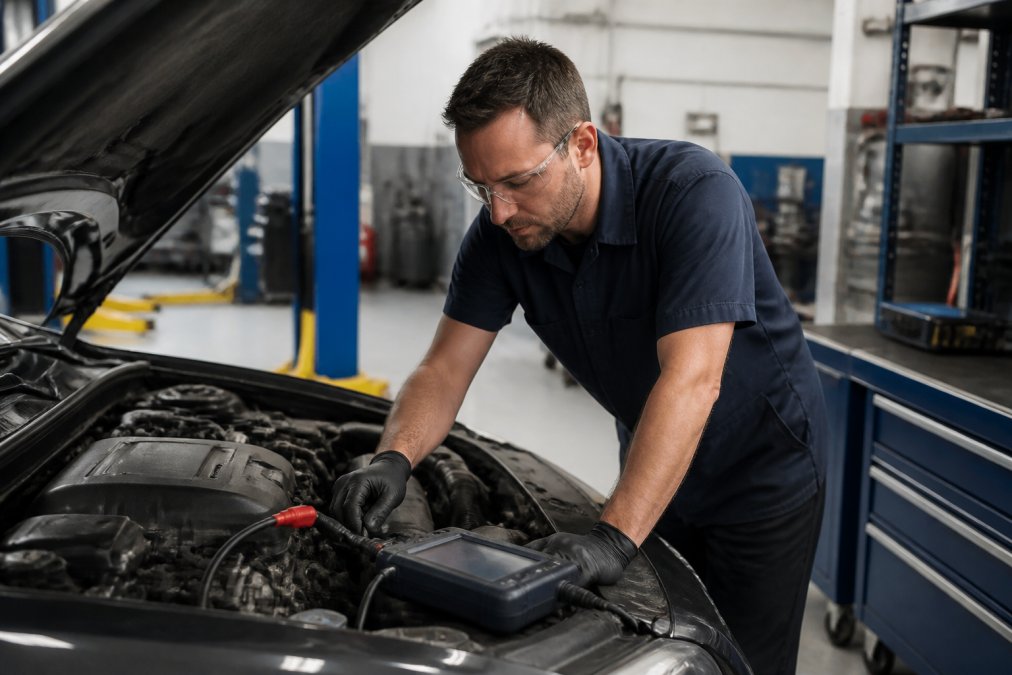
Once certified, technicians must renew every five years by either retaking the exam or earning continuing education credits. This renewal requirement is critical, it ensures that certified mechanics stay current with new vehicle technologies, diagnostic procedures, and repair techniques. A shop can claim ASE certification only if it maintains a certain percentage of its technician staff with current certifications in relevant areas.
Shop Equipment and Facilities
A shop seeking ASE certification must maintain facilities and equipment that meet industry standards. This includes having proper diagnostic equipment, safety equipment, and tools necessary to perform repairs correctly. The shop must have adequate lighting, ventilation, and workspace to allow technicians to work safely and effectively.
Diagnostic equipment is particularly important. Modern vehicles rely on complex computer systems, and technicians need current diagnostic tools to identify problems accurately. An ASE certified shop invests in equipment that can interface with vehicle diagnostic systems, read trouble codes, and help technicians understand what’s actually wrong with a vehicle before they start repairs.
The facility must also meet environmental and safety standards. This includes proper disposal of hazardous materials like used oil, coolant, and refrigerants. The shop must have safety equipment available, including fire suppression systems and first aid kits. Proper ventilation is essential, especially when working with volatile chemicals or running engine diagnostics.
Business and Record-Keeping Standards
Beyond the technical requirements, an ASE certified shop must operate with business practices that protect customers and maintain transparency. This includes maintaining detailed service records that document what work was performed, what parts were used, and what the charges were. These records must be available to customers upon request.
The shop must have clear communication with customers about the scope of work, estimates before starting repairs, and explanations of what was done and why. Warranty policies must be clearly communicated in writing. Many shops, including CJ Auto Services LLC, offer comprehensive warranties on both parts and labor to give customers confidence in the quality of their work.
Billing practices must be accurate and transparent. The shop should provide itemized invoices that clearly show labor hours, parts costs, and any other charges. A reputable ASE certified shop won’t surprise customers with unexpected costs or hidden fees.
Understanding ASE Blue Seal of Excellence Requirements
The ASE Blue Seal of Excellence is a higher-tier certification that shops can pursue beyond basic ASE certification. While ASE certification focuses on individual technician credentials, the Blue Seal recognizes shops that meet additional standards for facility quality, customer service, and business practices.
To earn the Blue Seal, a shop must meet all the basic ASE certification requirements and then go further. This includes having a higher percentage of ASE certified technicians on staff, maintaining specific equipment standards, and demonstrating a commitment to customer satisfaction through documented service practices. The shop must also have management personnel who are knowledgeable about automotive repair and service delivery.
The Blue Seal program requires that shops maintain customer satisfaction standards and have a process for addressing complaints. Shops must document their quality assurance procedures and be able to demonstrate that they follow them consistently. This might include pre-delivery inspections of completed work, follow-up communication with customers, and procedures for handling warranty claims.
When you see the ASE Blue Seal displayed at a shop, it signals that the business has gone beyond minimum requirements. It’s a commitment to excellence that extends beyond individual technician skills to encompass the entire operation. For shops in Boynton and surrounding areas, the Blue Seal represents a level of professionalism that customers can rely on.
Benefits of ASE Certified Mechanics for Your Vehicle
Choosing a shop with ASE certified mechanics provides real benefits for your vehicle and your wallet. When a technician has earned ASE certification, they’ve demonstrated knowledge of proper diagnostic procedures, repair techniques, and safety practices. This reduces the risk of misdiagnosis and unnecessary repairs.
A common mistake car owners make is taking their vehicle to the nearest shop without checking credentials. This can result in incorrect diagnosis, incomplete repairs, or work that doesn’t actually address the problem. An ASE certified mechanic brings verified expertise to the job. They understand how to use diagnostic equipment properly, interpret the results accurately, and recommend repairs that actually solve the problem.
ASE certified mechanics are also more likely to stay current with evolving technology. Since their certifications require renewal every five years, they’re incentivized to keep learning. This is especially important as vehicles become more complex, with sophisticated computer systems, hybrid powertrains, and advanced safety features. A shop that employs ASE certified mechanics is investing in ongoing training and development. professional shop machinery.
For owners of European vehicles or diesel trucks, common in the Boynton area, having access to certified mechanics with specialized knowledge is invaluable. These vehicles have unique requirements, and a mechanic without proper training and certification can create more problems than they solve. ASE certified shops that specialize in these vehicle types have technicians with proven expertise in those areas.
How to Check Mechanic Certification and Verify Shop Status
Before you entrust your vehicle to any shop, verify that the mechanics are actually ASE certified. The ASE maintains a public verification system where you can check individual technician credentials and shop certifications. You can visit the ASE website and use their credential verification tool by entering the technician’s name and credentials.
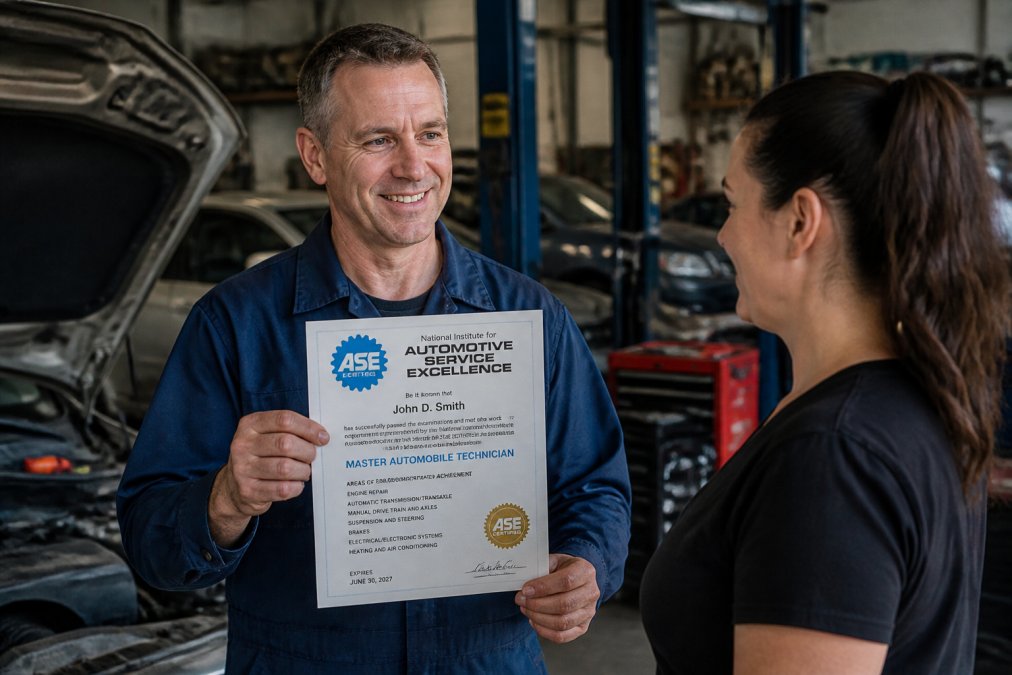
When you contact a shop, ask directly about ASE certification. A legitimate shop will be proud to share this information and may display certificates in the waiting area. Ask which technicians are certified and in which areas. If a shop is vague about certification status or can’t provide verification, that’s a red flag.
You can also check with the Better Business Bureau and read customer reviews on platforms like Google and Trustindex. These reviews often mention whether customers felt the shop was professional and knowledgeable. Customer feedback can reveal whether the shop actually delivers on the promise of certified expertise.
For shops claiming ASE Blue Seal status, verify this through the ASE website as well. The Blue Seal is a specific designation, and not all ASE certified shops have achieved it. Don’t assume a shop has the Blue Seal just because it’s ASE certified, ask to see documentation.
Why Shop Certification Matters More Than Individual Credentials
While individual technician certifications are important, shop-level certification adds another layer of accountability. A shop with ASE certification has committed to maintaining standards across the entire operation, not just having one or two qualified mechanics.
This means consistency. When you bring your vehicle to an ASE certified shop, you’re not relying on getting the right technician on the right day. The shop’s standards apply across the board. The diagnostic procedures are consistent, the warranty policies are clear, and the business practices are documented and auditable.
Shop certification also provides recourse for customers. If something goes wrong, you have a path to resolution through the ASE certification process. The shop’s certification can be revoked if it fails to maintain standards or engages in unethical practices. This creates incentive for the shop to address customer complaints and maintain quality.
For shops in Boynton that serve a diverse customer base, from routine maintenance to complex European vehicle repairs, ASE certification demonstrates that the business has invested in the infrastructure, training, and processes necessary to serve customers properly. It’s not just about the mechanics; it’s about the entire system.
Finding the Right ASE Certified Shop for Your Needs
Start by identifying shops in your area that hold ASE certification. A quick search for “ASE certified mechanic shop near me” will give you options, but verify the certification before making an appointment. Use the ASE verification tool to confirm that the shop’s credentials are current.
Consider your specific needs. If you drive a European vehicle, look for shops with ASE certified mechanics who specialize in European brands. If you own a diesel truck, seek out shops with technicians certified in diesel engine systems. Specialization matters because it ensures the shop has the specific knowledge your vehicle requires.
Ask about the shop’s warranty policy. A reputable shop will stand behind its work with a clear warranty on both parts and labor. This protects you if something goes wrong after the repair. CJ Auto Services LLC, for example, offers a 100% parts and labor warranty, which means customers have confidence that the work is backed by the shop’s commitment to quality.
Evaluate the shop’s communication practices. When you call or visit, do they explain what they’re going to do and why? Do they provide estimates before starting work? Do they answer your questions clearly? Good communication is a sign that the shop values customer relationships and operates with transparency.
Consider convenience factors if they matter to you. Some shops offer same-day appointments, free vehicle pick-up and drop-off, or other services that make the repair process easier. These conveniences don’t replace technical expertise, but they can make a significant difference in your overall experience.
Read recent customer reviews to get a sense of how the shop treats customers and whether people feel their vehicles were properly diagnosed and repaired. Look for patterns in the feedback, if multiple customers mention honest communication and fair pricing, that’s a strong indicator of a well-run shop.
Conclusion
Choosing an ASE certified mechanic shop is one of the best decisions you can make to protect your vehicle and your investment. When technicians hold current ASE certifications, you know they’ve demonstrated expertise and committed to staying current with industry standards. When a shop maintains ASE certification, it’s operating with documented procedures and quality standards that protect you.
At CJ Auto Services LLC in Boynton, our ASE certified mechanics provide expert diagnostic and repair services for all makes and models, with a 100% parts and labor warranty backing every job. Whether you need routine maintenance or complex repairs, our team delivers transparent pricing, same-day appointments, and the peace of mind that comes from working with certified professionals. Schedule Service today and experience the difference that certified expertise makes.
Frequently Asked Questions
What are the main requirements for a shop to be ASE Blue Seal recognized?
An ASE certified mechanic shop must have a high percentage of its technicians holding current ASE certifications in relevant specialties, maintain proper facilities and equipment, follow strict business practices, and pass regular inspections. The shop must also display its Blue Seal prominently and keep detailed service records. These standards ensure customers receive quality workmanship and honest service.
How can I verify if a mechanic shop is ASE certified?
Check the ASE website’s shop locator tool, which lists all certified facilities by location and specialty. Ask the shop directly for their Blue Seal number and certification details. Verify credentials before scheduling service, especially for specialized work like diesel or European vehicle repairs. You can also ask to see their current ASE certificates displayed in the shop.
What’s the difference between an ASE certified mechanic and an ASE certified shop?
An ASE certified mechanic is an individual technician who has passed specific certification exams in their specialty areas. An ASE certified shop is a business facility where the majority of technicians hold ASE credentials and the entire operation meets ASE’s standards for equipment, practices, and customer service. A shop’s certification provides broader assurance about the entire operation’s quality.
Why should I choose an ASE certified shop for specialized repairs like diesel or European vehicles?
ASE certified shops with specific specializations have technicians trained and tested on those vehicle types. For diesel trucks or European cars, this means mechanics understand the unique systems, diagnostics, and repair procedures your vehicle requires. Certification guarantees the shop maintains proper equipment and stays current with manufacturer specifications, reducing the risk of incorrect repairs.
This article was written using GrandRanker




One thought on “ASE Certified Mechanic Shop Requirements: A Complete Guide”
Comments are closed.