Table of Contents
- How to Compare Local Car Repair Services
- Dealership vs Independent Auto Repair Cost and Value
- Auto Repair Warranty Coverage Comparison
- ASE Certified Mechanics in Boynton: What It Means
- Evaluating Transparency and Customer Communication
- Specialized Services: European and Diesel Vehicle Repair
- Making Your Final Decision
- Frequently Asked Questions
Last Updated: September 2, 2026
When you need car repairs, the choice between a dealership and an independent shop can feel overwhelming. Both offer legitimate paths to getting your vehicle back on the road, but the experience, warranty coverage, and value proposition differ significantly. This guide from CJ Auto Services LLC breaks down exactly what separates these options so you can make an informed decision that aligns with your priorities.
How to Compare Local Car Repair Services
Choosing the right repair shop requires more than just picking the closest location or the lowest quote. The best approach involves evaluating several key factors that directly impact your vehicle’s longevity, your safety, and your wallet.
Start by assessing the shop’s credentials. ASE (Automotive Service Excellence) certification matters because it signals that mechanics have passed rigorous testing on automotive systems and repair procedures (ase.com). When you compare local car repair services, verify whether the technicians hold current ASE certifications in the relevant areas, engine repair, brake systems, transmission, or electrical work. This credential is the industry standard for competency.
Next, examine the warranty structure. A comprehensive warranty protects your investment and reflects the shop’s confidence in their work. Ask whether the warranty covers both parts and labor, how long it lasts, and whether it’s transferable if you sell the vehicle. Some shops offer limited warranties (30 days or 1,000 miles), while others stand behind their work for up to 36 months or 36,000 miles.
Transparency in communication is non-negotiable. Before you commit to repairs, the shop should explain what’s wrong with your vehicle, why the repair is necessary, and what it will cost. Request a written estimate, and don’t hesitate to ask questions. A trustworthy shop welcomes scrutiny and provides detailed breakdowns of labor and parts costs.
Convenience factors matter too. Same-day appointments, extended hours, and vehicle pickup and drop-off services reduce friction in your life. If you work long hours or depend on your car for daily transportation, these amenities aren’t luxuries, they’re practical necessities.
Finally, check customer reviews and local reputation. Look for patterns in feedback: Do customers mention honest pricing? Quick turnaround? Professional communication? One negative review doesn’t disqualify a shop, but consistent complaints about overcharging or unnecessary work are red flags.
Dealership vs Independent Auto Repair Cost and Value
The dealership versus independent shop debate often comes down to cost, expertise, and warranty implications. Understanding the real trade-offs helps you choose the right path for your specific situation.
Dealerships excel at manufacturer-specific expertise. Their technicians train exclusively on your vehicle’s brand, and they stock OEM (original equipment manufacturer) parts. If your vehicle is still under the factory warranty, using a dealership for repairs ensures you won’t void that coverage. For complex electrical or software-related issues on newer vehicles, dealership expertise can be invaluable.
However, dealership service typically costs more. Their overhead is higher, their labor rates reflect that, and they often recommend more extensive repairs than independent shops would suggest. The dealership model assumes you’ll return for routine maintenance and major repairs, so they price accordingly.
Independent shops like CJ Auto Services LLC operate with lower overhead and often deliver better value. They service all makes and models, which means they’ve developed broad expertise across different brands. An independent shop can often diagnose and repair your vehicle faster because they’re not bound by manufacturer protocols that sometimes require multiple steps to reach a diagnosis.
The real cost comparison depends on your vehicle’s age and condition. For a vehicle out of warranty, an independent shop usually offers better value. For a newer vehicle still under factory warranty, the dealership might be your only option to preserve that coverage.
Value extends beyond price. Consider the warranty on repairs, the shop’s communication style, and how they handle problems if something goes wrong. A shop that stands behind its work with a comprehensive warranty provides peace of mind that a slightly lower price can’t guarantee.
Auto Repair Warranty Coverage Comparison
When you compare local car repair services, warranty coverage becomes a critical differentiator. Understanding what’s actually covered protects you from unexpected costs down the road.
Most independent shops offer one of three warranty structures:
Limited Warranty (30 days or 1,000 miles): This covers defects in workmanship or parts failure directly related to the repair performed. It’s the baseline and protects you if something goes wrong immediately after the repair. However, it provides minimal long-term protection.
Standard Warranty (12 months or 12,000 miles): This is common among established independent shops and offers reasonable coverage for most repairs. It signals confidence in the work and gives you a safety net if problems emerge within a year.
Extended Warranty (24-36 months or 24,000-36,000 miles): Premium shops offer this to differentiate themselves and build customer loyalty. A 100% parts and labor warranty, covering both materials and technician time, demonstrates that the shop stands behind every repair. This is what CJ Auto Services LLC provides, and it’s a significant value proposition because it eliminates the risk of paying twice for the same repair.
Dealership warranties vary by manufacturer but typically last 12 months or 12,000 miles on repairs. Some luxury brands offer longer coverage. Dealership warranties are often honored at any authorized dealer nationwide, which provides flexibility if you travel.
The key question: Does the warranty cover parts only, or parts and labor? A parts-only warranty leaves you exposed if the repair fails due to incorrect installation. A full warranty covers both, which is the gold standard.
ASE Certified Mechanics in Boynton: What It Means
ASE certification is the credential that separates trained professionals from untrained technicians. Understanding what it represents helps you evaluate whether a shop has the expertise to handle your vehicle.
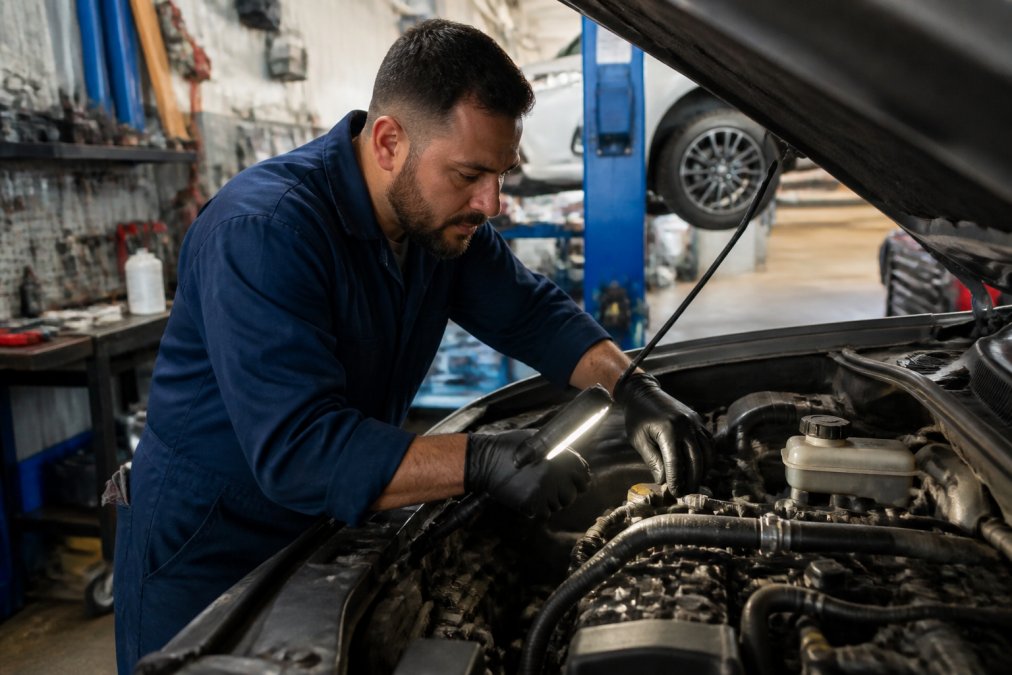
The National Institute for Automotive Service Excellence (ASE) administers rigorous tests covering eight primary automotive specialties: engine repair, automatic transmissions, manual drive trains, suspension and steering, brakes, electrical systems, heating and air conditioning, and engine performance. Technicians who pass these exams earn the right to display the ASE blue seal. switching your mechanic.
ASE certification requires both hands-on experience and knowledge. To qualify for the exam, a technician must have at least two years of professional work experience in that specialty (ase.com). They then must pass a comprehensive test covering theory, diagnostics, and repair procedures. Certification is valid for five years, after which technicians must retake the exam to stay current.
When you compare local car repair services and see ASE certifications displayed, you’re looking at mechanics who’ve invested in professional development and demonstrated competency through independent testing. This matters because automotive technology evolves constantly. A certified mechanic stays current with new systems, diagnostic tools, and repair procedures.
However, ASE certification is voluntary. A shop doesn’t need ASE-certified mechanics to operate legally, which means some shops employ uncertified technicians. This doesn’t automatically mean poor quality, but certification provides a verifiable benchmark.
At CJ Auto Services LLC, our ASE-certified mechanics bring this formal credential to every repair. We service all makes and models, which means our team has broad expertise across different brands and systems. This breadth, combined with ASE certification, ensures your vehicle receives professional-grade care regardless of whether you drive a domestic sedan, European import, or diesel truck.
Evaluating Transparency and Customer Communication
Transparency separates trustworthy shops from those that prioritize profit over customer relationships. When you compare local car repair services, communication quality is a leading indicator of integrity.
A transparent shop explains problems in plain language. Instead of saying “your transmission is failing,” they’ll say “your transmission is slipping between gears, which means the fluid is degraded and internal seals are worn. Here’s what that looks like when you drive.” They connect the symptom to the underlying cause so you understand why the repair is necessary.
Request a written estimate before work begins. This document should itemize labor (hours and hourly rate) and parts (specific components and cost). A detailed estimate prevents surprises. If the shop discovers additional problems during the repair, they should contact you before proceeding and explain what they found and why it matters.
Ask how the shop handles disputes. What happens if you disagree with a diagnosis? A reputable shop will explain their reasoning and, if you’re skeptical, offer to have an independent technician verify the diagnosis. This confidence in their work is a positive sign.
Communication extends to follow-up. After your repair, the shop should explain what was done, why it was necessary, and how to maintain your vehicle going forward. This guidance helps you avoid similar problems and shows the shop cares about your long-term vehicle health, not just the current transaction.
Customer reviews often highlight communication patterns. If multiple reviews mention that a shop “overcharged” or “did work without permission,” that’s a red flag. Conversely, reviews praising “honest pricing” and “clear explanations” indicate a shop that prioritizes customer trust.
Specialized Services: European and Diesel Vehicle Repair
Not all shops are equipped to handle every vehicle type. European and diesel vehicles require specialized knowledge and diagnostic equipment, which is why finding the right shop for these vehicles matters significantly.
European vehicles (BMW, Mercedes-Benz, Audi, Volkswagen, Porsche) have unique electrical systems, suspension designs, and performance characteristics. Their computer systems are more complex, and their parts are often more expensive. A shop that services only domestic vehicles may lack the diagnostic tools and technical knowledge to repair European imports efficiently.
Diesel engines operate on different principles than gasoline engines. They run at higher compression ratios, use different fuel systems, and have specialized emissions controls. A diesel specialist understands these differences and knows how to diagnose and repair issues specific to diesel powerplants. Attempting diesel repair without this expertise can lead to costly mistakes.
When you compare local car repair services for European or diesel vehicles, verify that the shop has:
- Technicians with specific experience in your vehicle’s brand or fuel type
- Diagnostic equipment designed for your vehicle’s systems
- Access to technical bulletins and service information for your specific model
- A track record of successful repairs (ask for references)
CJ Auto Services LLC specializes in European and diesel vehicle repair, which means our team has invested in the specialized training and equipment these vehicles demand. We understand the nuances of German engineering, the demands of diesel engines, and the specific maintenance requirements of high-performance vehicles. This expertise ensures that your European or diesel vehicle receives care from technicians who understand its unique needs.
Making Your Final Decision
After evaluating all these factors, the decision comes down to your priorities and circumstances. Create a simple comparison framework:
|
Factor |
Dealership |
Independent Shop |
|---|---|---|
|
Manufacturer Expertise |
Highest |
Varies by shop |
|
Cost |
Higher |
Generally lower |
|
Warranty Coverage |
12 months standard |
Varies (30 days to 36 months) |
|
Convenience |
Limited hours |
Often flexible |
|
Communication |
Formal, less personal |
Often more direct |
|
Specialization |
Brand-specific |
All makes and models |
|
Warranty Impact |
Preserves factory coverage |
No impact on factory warranty |
If your vehicle is under factory warranty and the repair relates to a covered component, the dealership is often your best choice to preserve that coverage. If your vehicle is out of warranty, an independent shop typically offers better value, especially if the shop has proven expertise in your vehicle type.
For European and diesel vehicles specifically, seek out a shop with demonstrated specialization. The wrong shop can misdiagnose problems or recommend unnecessary repairs, which costs you money and creates frustration.
When you compare local car repair services, prioritize transparency, expertise, and warranty coverage over price alone. The cheapest repair isn’t a bargain if it fails within months and requires redoing. The most expensive shop isn’t justified if you’re paying for overhead that doesn’t improve the quality of work.
At CJ Auto Services LLC, we’ve built our reputation on honest pricing, ASE-certified expertise, and a 100% parts and labor warranty that backs every repair. We offer same-day appointments and free vehicle pickup and drop-off because we understand that car repairs disrupt your life. Our team services all makes and models, with specialized expertise in European and diesel vehicles. If you’re ready to experience repair service that prioritizes your needs and your vehicle’s health, Schedule Service with CJ Auto Services LLC today and discover the difference that honesty and expertise make.
=== FAQ ANSWERS (audit these too, same rules) ===
[1] Q: What’s the difference between dealership and independent shop pricing for the same repair? A: Dealerships typically charge more for labor because they have higher overhead and factory-trained staff. Independent shops often offer competitive rates while maintaining quality. The real difference isn’t just the sticker price, it’s what’s included. Some independent shops bundle services (like free pick-up and drop-off) that dealerships charge separately. When you compare local car repair services, ask each shop for a full quote including all labor, parts, and any included perks. This gives you a true apples-to-apples comparison.
[2] Q: Does using an independent repair shop void my vehicle’s factory warranty? A: No. Federal law protects your factory warranty regardless of where you get repairs (the FTC). Using an independent shop doesn’t automatically void coverage. However, if a repair performed at an independent shop causes a separate issue, the dealership could deny a warranty claim for that specific problem. The key: keep detailed records of all work performed. When comparing auto repair warranty coverage, ask shops if they document their work in writing and provide copies. This protects you if a warranty question arises later.
[3] Q: What qualifications should I verify when comparing local mechanics? A: Look for ASE (Automotive Service Excellence) certification, the industry standard credential. ASE certified mechanics have passed rigorous exams and meet continuing education requirements. Beyond certification, verify the shop’s experience with your vehicle type. If you drive a diesel truck or European car, ask specifically about technician training in those specialties. Check online reviews for patterns, not just ratings, but what customers say about honesty and communication. Ask how long the shop has been in business and if they offer a warranty on parts and labor.
[4] Q: How can I verify a repair shop is trustworthy before committing? A: Start with transparency: a trustworthy shop explains the problem, shows you what needs fixing, and gives you a detailed written estimate before starting work. Call ahead and ask about their diagnostic process and whether they charge for diagnostics. Read customer reviews, but focus on recent ones and look for specific details about service quality and honesty. Ask if they offer same-day appointments and convenient services like free pick-up and drop-off, these suggest confidence in their work and respect for your time. Finally, ask about their warranty: shops confident in their work stand behind it with a strong guarantee on parts and labor.
Frequently Asked Questions
What’s the difference between dealership and independent shop pricing for the same repair?
Dealerships typically charge more for labor because they have higher overhead and factory-trained staff. Independent shops often offer competitive rates while maintaining quality. The real difference isn’t just the sticker price—it’s what’s included. Some independent shops bundle services (like free pick-up and drop-off) that dealerships charge separately. When you compare local car repair services, ask each shop for a full quote including all labor, parts, and any included perks. This gives you a true apples-to-apples comparison.
Does using an independent repair shop void my vehicle’s factory warranty?
No. Federal law protects your factory warranty regardless of where you get repairs. Using an independent shop doesn’t automatically void coverage. However, if a repair performed at an independent shop causes a separate issue, the dealership could deny a warranty claim for that specific problem. The key: keep detailed records of all work performed. When comparing auto repair warranty coverage, ask shops if they document their work in writing and provide copies. This protects you if a warranty question arises later.
What qualifications should I verify when comparing local mechanics?
Look for ASE (Automotive Service Excellence) certification—the industry standard credential. ASE certified mechanics have passed rigorous exams and meet continuing education requirements. Beyond certification, verify the shop’s experience with your vehicle type. If you drive a diesel truck or European car, ask specifically about technician training in those specialties. Check online reviews for patterns—not just ratings, but what customers say about honesty and communication. Ask how long the shop has been in business and if they offer a warranty on parts and labor.
How can I verify a repair shop is trustworthy before committing?
Start with transparency: a trustworthy shop explains the problem, shows you what needs fixing, and gives you a detailed written estimate before starting work. Call ahead and ask about their diagnostic process and whether they charge for diagnostics. Read customer reviews, but focus on recent ones and look for specific details about service quality and honesty. Ask if they offer same-day appointments and convenient services like free pick-up and drop-off—these suggest confidence in their work and respect for your time. Finally, ask about their warranty: shops confident in their work stand behind it with a strong guarantee on parts and labor.
This article was written using GrandRanker