What Makes a Brake Pad High Quality (Fit, Compound, Heat and Warranty)
Most people shopping for quality brake pads start with a brand name or a price tag. Neither tells you much. A pad earns the label "quality" through four things working together: how well it fits your car, what the friction compound is made of, how it handles heat, and what stands behind it.
Fit comes first, and it matters more than any premium sticker on the box. A pad has to match your axle, your caliper design, your brake package and, on many European cars, the wear-sensor arrangement. Year and model alone won’t get you there. A BMW or Audi can carry different brake packages within the same model year, and a pad with the wrong sensor connector or the wrong shape will never perform the way it was designed to.
Compound is next. Wagner points out that pad quality isn’t only about stopping power. It’s also how well the pad absorbs and disperses heat, how quickly it wears, and how much noise and dust it creates. A pad that stops hard but screams, coats your wheels in dust and is worn out within a year isn’t a high-quality pad.
Cutting corners costs you later. Low-quality pads can be noisy, wear faster and cause extra wear on other brake parts like rotors. A cheap set can end up costing more once a rotor replacement lands on the bill. If you want a broader look at what’s on the market, our brake pad brands review walks through how the major names compare.
Last, the warranty. A long warranty doesn’t prove a pad is good, and neither does a premium label. What counts is who’s backing the work. At CJ Auto Services, brake jobs come with a parts-and-labor warranty, so if something isn’t right, you aren’t left arguing with a parts counter. Before you agree to any job, ask the shop what its warranty actually covers.
Organic vs. Semi-Metallic vs. Ceramic: Which Suits Your Car and Driving
Readers constantly ask what separates organic, semi-metallic and ceramic pads, and which one lasts longest. Here’s the plain version of each.
Organic pads are quiet and affordable, but they wear out quicker than the other two. They suit light, gentle daily driving where cost matters most. One guide puts typical organic pad life at roughly 20,000 to 40,000 miles.
Semi-metallic pads deliver strong braking and good heat resistance, which makes them a good fit for heavier vehicles and more spirited driving. They also have better cold bite, meaning more friction before the brakes warm up. The trade-offs are more noise and more wear on the rotors. The same guide gives semi-metallic life as roughly 30,000 to 65,000 miles.
Ceramic pads are known for long life, low dust and quiet operation, which makes them a natural choice for a daily driver. The compound is less abrasive than semi-metallic material, so rotors typically last longer when paired with ceramic. Friction Master notes the limit: ceramic pads are made mainly of ceramic fibers, filler and bonding agents with only a small amount of metal, and they don’t absorb heat as well as semi-metallic pads, which can raise brake system temperatures. That guide puts typical ceramic life at roughly 40,000 to 70,000 miles.
Treat every one of those mileage figures as a range, not a promise. Another source suggests replacing pads somewhere between 25,000 and 65,000 miles depending on conditions and driving style. Our own explainer on how long brake pads last goes deeper on what shortens or stretches that window.
So which one suits you? If you commute in Palm Beach County stop-and-go traffic and want clean wheels and a quiet pedal, ceramic is usually the first pad to consider. If you drive a heavier car or lean on your brakes harder, a semi-metallic pad may serve you better. If budget is the main concern and your driving is easy, organic can work, though you’ll replace it sooner. The honest answer is that the right compound depends on your car and how you drive, which is why we like to look at the car before recommending anything.
Warning Signs Your Brake Pads Need Replacing
Your brakes usually tell you before they fail. Learn the signals and you can head off a bigger repair.
A high-pitched squeal when you brake is usually the first sign of worn pads. It comes from the wear indicator, a small metal tab built into the pad that’s designed to make noise when the pad gets thin (Subaru of Ontario). Don’t ignore it and hope it goes away.
A grinding sound is more serious. According to Performance Honda, grinding comes from the metal backing plate rubbing against the rotor. By then the friction material is gone, and you’re likely damaging the rotor with every stop.
Other signals worth taking seriously include:
- Longer stopping distances than you’re used to
- The car pulling to one side when you brake
- A pulsing or vibrating pedal
- A brake warning light on the dash, especially on European cars with wear sensors
You can also check thickness yourself. One service guide says that if the pad looks less than about a quarter inch thick, it’s time to replace it. Treat that as a rule of thumb, since pad thickness specs vary by vehicle, and have a technician measure it properly.
Don’t brush these signs aside. A third-party parts page attributes to NHTSA that brake problems are among the top mechanical causes of accidents, though we’d point you to NHTSA directly for the official figures. Either way, brakes are no place to wait and see. If you’re hearing any of the above, schedule service and we’ll take a look.
How CJ Auto Services Checks Fit and Quotes Brake Work in Boynton Beach
We’re a family-owned shop in Boynton Beach that works on European cars every day: BMW, Mercedes-Benz, Audi, Volkswagen, MINI and Porsche, and we welcome all makes. Here’s how a brake visit typically goes.
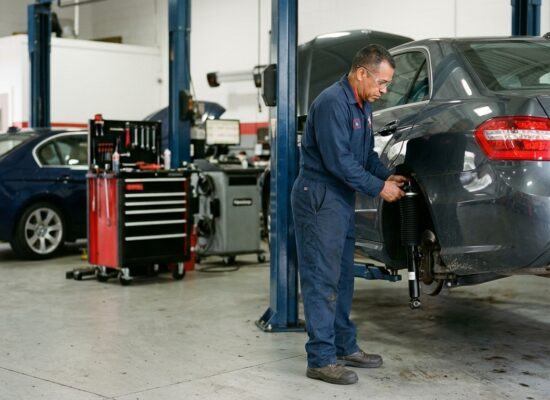
It begins with a free visual inspection. We look at pad thickness, rotor condition, and signs of uneven wear that point to a caliper or hardware problem. You get plain-spoken findings, not a sales pitch.
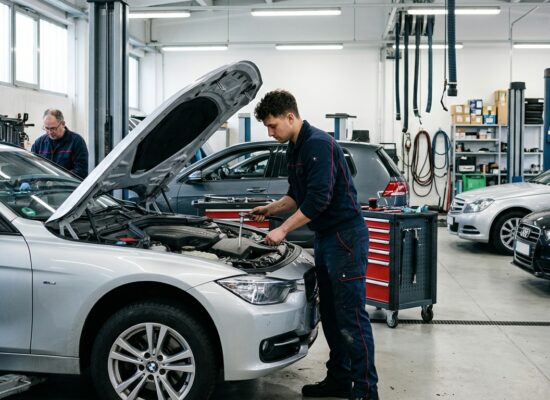
Next comes fit. Before any pad goes on, we confirm it’s right for your specific axle, caliper and brake package, including the wear-sensor setup on cars that use one. This step separates a pad that merely bolts on from one that performs the way it should.
Then you get a clear written estimate before any work begins. We explain what needs doing now, what can wait, and why, so there are no surprises on the invoice. Our honest auto repair approach is built on exactly that kind of straight talk.
ASE-certified mechanics do the work, and our parts-and-labor warranty backs it. We offer same-day appointments when your schedule is tight, and free pick-up and drop-off so you don’t lose a day to the repair. You can read more on our free vehicle pickup and drop-off page, or browse our full list of auto repair services in Boynton Beach.
Choosing Brake Pads for Your European Car
European cars are engineered around specific brake systems, and they tend to be less forgiving of a pad that’s only "close enough." Here’s how to choose with confidence.
First, match the pad to the car, not the badge on the box. Confirm the axle, caliper type, brake package and wear-sensor arrangement. It’s the most important criterion, and the one generic parts listings handle worst.
Second, weigh the compound against how you actually drive. For daily commuting and clean wheels, ceramic is a strong candidate. For heavier cars or harder braking, semi-metallic may be the better fit. For light use on a tight budget, organic can do the job. Heat is part of the Florida equation, so a pad’s ability to handle sustained heat in stop-and-go traffic is worth discussing with your technician rather than assuming.
Third, think about the whole brake system. Good pads on worn rotors won’t give you good results, and a quality pad is partly judged by how kindly it treats the parts around it. Ask whether your rotors are within spec before you commit.
Fourth, look at the warranty and who’s installing the work. A pad is only as good as its installation, so ask what the warranty covers, whether it includes labor, and who’s doing the job. If you’d like a starting point for European applications, our guide to good brake pads for European cars in Boynton Beach is a useful next read.
Finally, get it in writing. A clear estimate that names the pad type, covers labor and explains the warranty is the mark of a shop that stands behind quality brake pads rather than just selling them. If you’re ready to have your brakes looked at, call us or schedule service and we’ll check the fit, explain your options and quote the work plainly.