Table of Contents
- Why Diesel Truck Repair and Maintenance Matters
- Understanding Your Diesel Engine Maintenance Schedule
- Essential Maintenance Tasks for Diesel Trucks
- Diesel Oil Change Interval: Getting It Right
- Common Diesel Truck Engine Problems and Prevention
- Diesel Exhaust Fluid (DEF) Maintenance Essentials
- Winterization and Cold Weather Preparation
- DIY vs. Professional Service: When to Call a Mechanic
Last Updated: August 12, 2026
Why Diesel Truck Repair and Maintenance Matters
Diesel engines operate under higher compression and heat than gasoline engines, demanding a different maintenance approach. Neglecting diesel truck repair risks catastrophic engine failure, safety hazards, and repair bills that dwarf preventative care costs.
At CJ Auto Services LLC, trucks that receive regular maintenance stay on the road. The good news is that diesel engines, when properly maintained, are built to last. Many diesel trucks run 300,000 miles or more with consistent care.
Understanding Your Diesel Engine Maintenance Schedule
Your diesel engine’s manufacturer provides a specific maintenance schedule for a reason. Diesel engines have different maintenance intervals than gasoline engines because they operate differently. Most diesel manufacturers specify maintenance at intervals like every 5,000 to 10,000 miles for oil changes, with more extensive inspections at 15,000, 30,000, and 50,000-mile marks.
The manufacturer specifications exist because engineers tested thousands of hours of real-world operation. Ignoring them isn’t saving money, it’s gambling with your engine. Keep your owner’s manual accessible and check it before any service. A Cummins engine, a Duramax, or a Powerstroke each have unique requirements.
Essential Maintenance Tasks for Diesel Trucks
Diesel truck repair and maintenance breaks down into specific, repeatable tasks that prevent most serious problems from developing.
Oil Changes and Fluid Checks
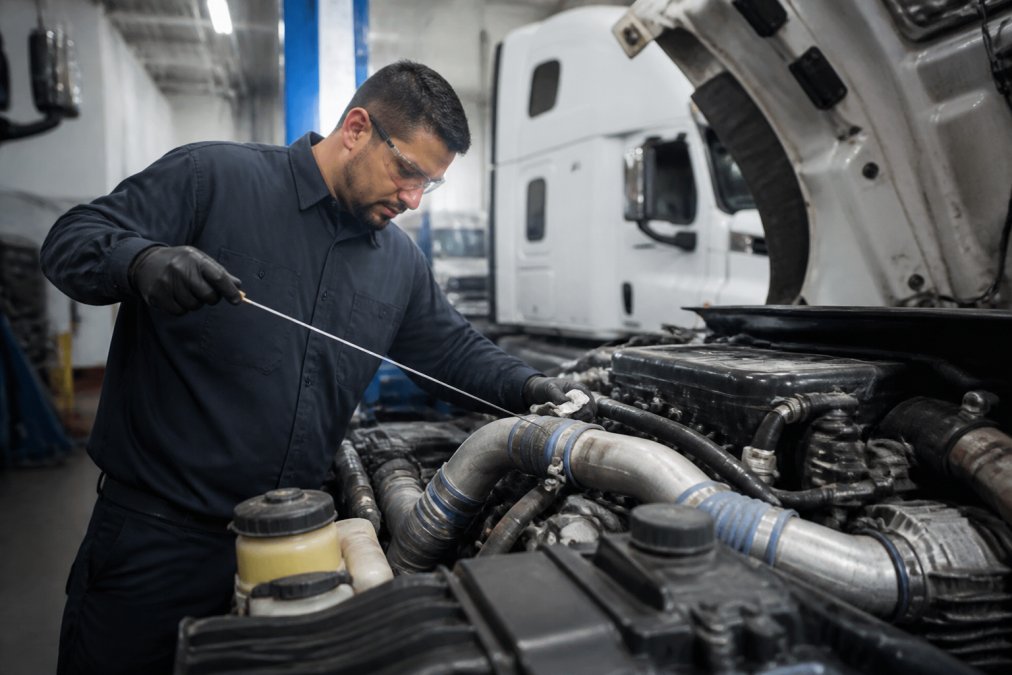
Oil changes are the foundation of diesel engine care. Diesel engines produce more soot and contaminants than gasoline engines, so their oil degrades faster and needs more frequent replacement.
Most diesel trucks require an oil change every 5,000 to 10,000 miles, depending on the engine and driving conditions. Heavy towing, frequent idling, or extreme temperatures push you toward the shorter interval. The oil filter should be replaced at every oil change.
Beyond oil, your diesel relies on several critical fluids: coolant protects against corrosion and maintains proper operating temperature; transmission fluid lubricates and cools your drivetrain; brake fluid ensures your brakes respond correctly. Each has a specific service life. Use the exact fluid type specified in your manual. During an oil change, a thorough inspection catches small problems before they become expensive ones.
Fuel System Maintenance and Filter Replacement
Diesel fuel absorbs water more readily than gasoline, and water in the fuel system causes rust, corrosion, and injector damage. The fuel filter traps contaminants and water before they reach the engine.
Most diesel engines have two fuel filters: a primary filter (often with a water separator) and a secondary filter. Both need regular replacement according to your manufacturer’s schedule, typically every 15,000 to 30,000 miles depending on fuel quality and driving conditions.
Warning signs of fuel system problems include rough idle, loss of power, or difficulty starting, especially in cold weather. Using quality diesel fuel from reputable stations helps prevent contamination. Avoid fuel from stations with low turnover, where fuel may have sat in tanks long enough to absorb excess water.
Air Filter Maintenance
Your diesel engine needs clean air to run efficiently. The air filter traps dust, pollen, and debris before they enter the engine. A clogged air filter reduces fuel efficiency, increases emissions, and forces the engine to work harder.
Check your air filter every 15,000 miles and replace it when it appears dirty or restricted. In dusty conditions, construction sites, unpaved roads, desert driving, you may need replacement more frequently. Some trucks have both an engine air filter and a cabin air filter; don’t confuse the two.
Coolant System Care and Radiator Inspection
Diesel engines run hot, and coolant inhibits rust inside the radiator, water pump, and engine block. Most diesel manufacturers recommend coolant replacement every 100,000 to 150,000 miles or every 5 to 7 years, whichever comes first. Using the wrong coolant type can cause damage, so check your manual.
Inspect your radiator regularly for leaks, corrosion, or debris blocking airflow. A radiator clogged with bugs and dirt can’t shed heat efficiently. Watch your temperature gauge while driving; a normal diesel temperature sits in the middle of the gauge.
Tire Pressure and Wheel Inspection
Proper tire pressure affects fuel efficiency, handling, and tire lifespan. Diesel trucks are heavier than gasoline vehicles, and tire pressure specifications reflect that weight. Check tire pressure monthly when tires are cold using the pressure specified on the driver’s door jamb or in your manual.
Inspect tires for uneven wear, bulges, cracks, or embedded objects. Uneven wear often signals alignment issues or suspension problems. Rotate tires every 5,000 to 7,000 miles to promote even wear.
In-Cab and Pneumatic System Checks
Modern diesel trucks often have pneumatic systems that power air brakes, air suspension, or other components. Water and oil accumulate in air tanks and must be drained regularly.
Check your air tank drains monthly or according to your manual. Inside the cab, keep an eye on warning lights and gauges. Air pressure gauges should show steady pressure during operation. Any warning light related to air systems deserves immediate attention.
Diesel Oil Change Interval: Getting It Right
The diesel oil change interval is one of the most misunderstood aspects of diesel truck maintenance. Many owners push intervals further than recommended, thinking they’re saving money. In reality, they’re accelerating wear and shortening engine life.
Diesel engines produce more soot than gasoline engines, contaminating the oil and breaking down its protective properties. Most modern diesel trucks use synthetic oil, which lasts longer than conventional oil. Even so, sticking to the manufacturer’s interval is essential. If your manual says 7,500 miles, that’s the target. Severe driving conditions, towing, idling, dusty environments, or frequent short trips shorten oil life. Consult with a professional if you regularly operate in harsh conditions.
Common Diesel Truck Engine Problems and Prevention
Diesel engines are durable, but they’re not immune to problems. Glow plug failure is common in older diesels or in cold climates; replacement is straightforward if caught early. Fuel injector problems develop when fuel is contaminated or fuel filters aren’t changed regularly, with symptoms including rough idle, loss of power, or visible smoke. Turbocharger issues arise from lack of maintenance or pushing the engine too hard; listen for unusual whistling or whining sounds. Exhaust system problems, including DPF regeneration issues, develop when the engine isn’t maintained properly.
Prevention is far cheaper than repair. Stick to your maintenance schedule, use quality fuel and fluids, and address warning signs immediately.
A rough idle or loss of power often signals a fuel system or emissions problem, not engine failure. Have it [diagnosed before it worsens](/engine-diagnostic-service-the-complete-2026-guide-to-your-check-engine-light/).
Diesel Exhaust Fluid (DEF) Maintenance Essentials
If your diesel truck was built after 2010, it likely uses a selective catalytic reduction (SCR) system that relies on diesel exhaust fluid (DEF) to reduce nitrogen oxides in the exhaust.
DEF is a mixture of urea and deionized water injected into the exhaust stream after the engine. Your truck has a dedicated DEF tank, separate from the fuel tank, and a fill door clearly labeled "DEF ONLY." Check your DEF level regularly; most trucks have a dashboard gauge. Running out of DEF doesn’t damage the engine, but the truck will enter reduced-power mode and eventually won’t start until DEF is added.
DEF must be stored properly. It degrades at high temperatures and can freeze in extreme cold. Keep DEF in a cool place and use it within two years of opening. Refill DEF at gas stations, truck stops, or automotive service centers; the cost is minimal.
Winterization and Cold Weather Preparation
Diesel engines are difficult to start in cold weather. Cold thickens diesel fuel and makes it harder for the engine to turn over.
Use winter-grade diesel fuel. In cold climates, fuel blends with additives that prevent gelling. Keep your battery in top condition. Cold reduces battery output significantly; have it tested before winter. Check glow plugs. These become critical in cold weather. Maintain proper oil viscosity. Winter oil is thinner and flows better at low temperatures. Keep your fuel tank full. A full tank prevents fuel line freeze-up and ensures maximum range. Inspect your block heater. If your truck has one, plug it in overnight during cold snaps.
Running out of fuel in winter risks fuel line freeze-up and stranding you in dangerous conditions. Keep your tank at least half full during winter months.
DIY vs. Professional Service: When to Call a Mechanic
Some diesel truck maintenance is DIY-friendly. Other tasks require specialized equipment, training, or expertise.
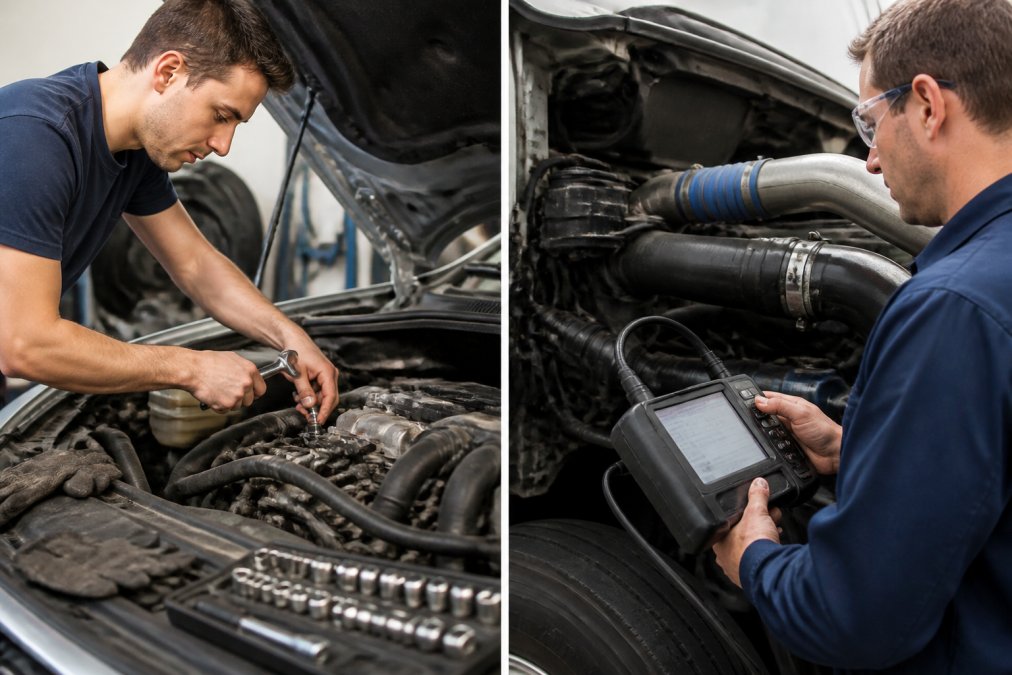
DIY-friendly tasks: checking and topping off fluids, replacing air filters, checking tire pressure and rotating tires, inspecting belts and hoses visually, cleaning the radiator exterior, replacing wiper blades.
Tasks requiring professional service: oil changes, fuel filter replacement, coolant flushes, glow plug replacement, fuel injector service, DPF regeneration, transmission service, turbocharger work, and any work involving electrical or emissions systems.
A professional shop has the diagnostic tools to pinpoint problems accurately and the equipment to safely drain and dispose of hazardous fluids. If you’re unsure whether a task is DIY-appropriate, a quick consultation costs nothing and prevents expensive mistakes.
DIY maintenance works best for owners who have mechanical aptitude, proper tools, and a safe workspace. Professional service is the better choice for complex diagnostics, emissions work, or when you need the job done right the first time.
Diesel truck repair and maintenance isn’t complicated, but it is specific. Your engine has particular needs, and meeting those needs keeps it running reliably for hundreds of thousands of miles. The cost of preventative maintenance is trivial compared to the cost of engine failure.
If you’re not confident in your ability to handle maintenance tasks, or if you want professional diagnostics to catch problems early, CJ Auto Services LLC offers comprehensive diesel truck maintenance services with ASE-certified mechanics, same-day appointments, and a 100% parts and labor warranty. Schedule your diesel truck service today and protect your transportation investment.
Frequently Asked Questions
How often should you change the fuel filters on a diesel truck?
Most diesel trucks require fuel filter changes every 15,000 to 25,000 miles, though some manufacturers recommend 10,000-mile intervals. Check your owner's manual for exact specifications. Fuel filters protect your fuel injectors and engine from contamination. Neglecting this maintenance can lead to poor fuel efficiency, hard starting, and costly injector damage. Our electronic diagnosis service ($100) can help identify if your fuel system needs attention before problems develop.
What is the diesel oil change interval for most trucks?
Diesel oil change intervals typically range from 7,500 to 15,000 miles, depending on your truck's make, model, and driving conditions. Severe driving (towing, idling, dusty environments) may require more frequent changes. Using the correct viscosity and synthetic oil extends engine longevity. Our full synthetic oil change service handles up to 5 quarts for $85, ensuring your engine gets the proper lubricating additive protection it needs.
What's the worst thing for a diesel engine?
Excessive idling and poor-quality fuel are among the most damaging practices for diesel engines. Idling allows fuel to accumulate in the combustion chamber without burning efficiently, leading to carbon buildup and premature wear. Low-quality fuel introduces contaminants that damage fuel injectors and the fuel system. Additionally, ignoring manufacturer maintenance schedules and running low on coolant or oil dramatically accelerates engine wear. Preventative maintenance catches these issues before they become expensive breakdowns.
What are the common signs that a diesel engine needs repair?
Watch for rough cold starts, reduced fuel efficiency, excessive exhaust smoke, unusual engine knocking, difficulty accelerating, or warning lights on your dashboard. These signs often indicate problems with glow plugs, fuel injectors, the turbocharger, or the emissions system. Don't ignore these warnings, addressing them early prevents catastrophic failure. Our ASE-certified mechanics can perform a computerized diagnosis to pinpoint the exact issue and recommend repairs before damage spreads.
This article was written using GrandRanker


