What if a simple maintenance habit could be the only thing standing between you and a set of tires that lasts twice as long? It’s common to feel a nagging vibration in your steering wheel and worry that your vehicle is developing a costly mechanical issue. You might even wonder if tire rotation and balancing are truly necessary or just another way for a shop to add to your bill.
We understand that you want to protect your investment without overpaying for services you don’t need. You deserve a vibration-free driving experience and the peace of mind that comes from a well-maintained vehicle. This guide will show you why these two specific services are the most critical steps to maximize your tire life to 50,000 miles and beyond. We’ll explain the technical differences between rotating and balancing, highlight the safety risks of skipping them, and show you the clear return on investment that comes with proactive care.
Key Takeaways
- Understand the fundamental differences between tire rotation and balancing to ensure every maintenance dollar helps extend your tire’s lifespan.
- Learn to distinguish between rotation, balancing, and alignment so you can communicate confidently with your mechanic about your car’s specific needs.
- Discover why the unique climate in Boynton Beach requires a more proactive approach to tread care to handle high heat and sudden summer downpours.
- Recognize the early symptoms of weight imbalance and wear patterns to prevent minor vibrations from turning into major suspension repairs.
- Find out how performance modifications, such as lift kits or custom wheels, change your vehicle’s dynamics and require specialized balancing techniques.
Understanding Tire Rotation and Balancing: The Basics of Tire Longevity
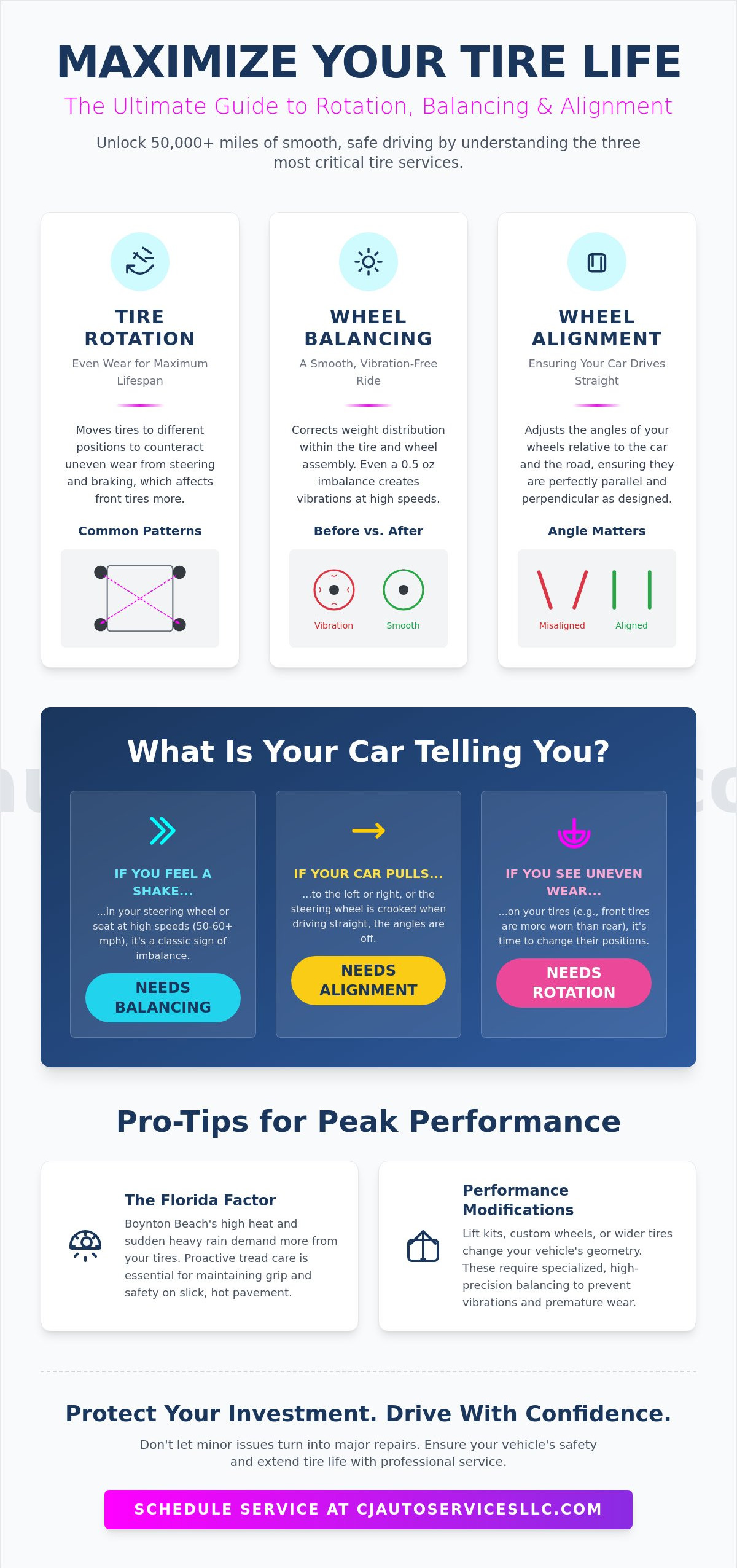
Getting the most value out of your vehicle starts where the rubber meets the road. While many drivers group these tasks together, tire rotation and balancing are two distinct services that work in harmony to protect your car. Tire rotation involves moving your tires from one position to another, such as front to back or side to side. Wheel balancing, on the other hand, focuses on the weight distribution within the tire and wheel assembly itself. When performed together, they ensure your car remains stable and predictable on the road.
Think of these services as a partnership for your car’s health. Rotation manages the physical contact with the road to ensure the tread wears down at the same rate across all four corners. Balancing ensures that each wheel spins perfectly without wobbling or hopping. Together, they create a foundation for a smooth ride and prevent the mechanical strain that leads to expensive suspension repairs. Investing in regular tire rotation and balancing is the most effective way to achieve perfectly even wear and maximize your tire investment.
What Exactly is Tire Rotation?
Front tires often bear the brunt of the work. Every time you turn the steering wheel or hit the brakes, the front tires handle intense friction and weight transfer. Because of this, they naturally wear out much faster than the rear ones. To counter this, technicians use specific Tire Rotation patterns to distribute that stress evenly. Common methods include:
- Forward Cross: Front tires move to the rear, and rear tires move to the opposite front positions.
- X-Pattern: All tires move diagonally to the opposite corner.
- Rearward Cross: Rear tires move to the front, and front tires move to the opposite rear positions.
Regularly moving these tires prevents localized damage like cupping and feathering, which can ruin a tire’s grip and cause excessive road noise.
What Exactly is Wheel Balancing?
Precision is everything when it comes to your wheels. Even a tiny weight discrepancy of just half an ounce can create a noticeable, annoying vibration once you reach highway speeds. This happens because centrifugal force amplifies any heavy spot as the wheel spins faster. Our team uses a computerized balancer to spin the wheel and identify exactly where these heavy spots are located. We then apply small lead or zinc weights to the rim to achieve perfect equilibrium. This process eliminates the “shake” in your steering wheel and protects your wheel bearings from unnecessary wear. Proper tire rotation and balancing keeps your vehicle feeling like new, regardless of how many miles you have on the odometer.
Rotation vs. Balancing vs. Alignment: Clearing the Confusion
It is easy to feel overwhelmed when a technician suggests three different services for your wheels at once. While they are often performed during the same visit, tire rotation, balancing, and alignment each solve a unique problem. Think of it this way: rotation is about position, balancing is about weight, and alignment is about angles. Mixing them up is common, but understanding the difference helps you advocate for your vehicle’s health and avoid paying for unnecessary work. When your tire rotation and balancing are handled correctly, you address the two most frequent causes of premature wear and ride discomfort.
The National Highway Traffic Safety Administration highlights the importance of these checks during Tire Safety Month every June. A simple way to diagnose your car’s needs is to pay attention to how it feels. If your car pulls to the left or right, it’s likely an alignment issue. If you feel a rhythmic shaking in your seat or steering wheel, you probably need a balance. If you see uneven tread depth but the car drives straight, a rotation is overdue. Keeping these distinctions in mind ensures you’re treating the symptom with the right cure.
Balancing vs. Alignment: The Vibration Test
If you’re wondering whether you need a balance or an alignment, try the vibration test. Balancing is a tire-centric fix that addresses weight inconsistencies. Alignment is a suspension-centric fix that ensures your wheels are square to the road and each other. A steering wheel that shakes at 60 mph almost always points to a weight imbalance. Conversely, a steering wheel that is off-center while you’re driving straight is a classic sign of poor alignment. For a deeper look at how these systems interact, you can explore our guide to full service auto repair in Boynton Beach to see how suspension health impacts your tires.
How Drivetrain Affects Your Rotation Strategy
Your car’s drivetrain dictates how your tires should be moved. Front-Wheel Drive (FWD) vehicles put immense pressure on the front axle for both power and steering. Rear-Wheel Drive (RWD) cars push from the back, creating different wear patterns. All-Wheel Drive (AWD) systems are the most sensitive. They require uniform tread depth across all four tires to prevent strain on the center differential. If one tire is significantly more worn than the others, it can actually trick the computer system into thinking a wheel is slipping. European performance cars often use “staggered fitment,” where the rear tires are wider than the fronts. In these cases, we can only rotate side-to-side, never front-to-back. If you aren’t sure which pattern your car requires, we can help you determine the best maintenance schedule for your specific model.
The Florida Factor: Why Boynton Beach Roads Demand Frequent Maintenance
Driving in Boynton Beach presents a unique set of challenges that generic car manuals often overlook. While a driver in a cooler state might get away with stretching their maintenance intervals, South Florida’s climate is far less forgiving. The combination of scorching asphalt and high-speed commutes on I-95 creates a pressure cooker environment for your rubber. Asphalt temperatures in the peak of summer can climb well above 140 degrees, softening the tire compound and making it more susceptible to rapid wear. Without regular tire rotation and balancing, this intense heat causes your tread to degrade unevenly, shortening the life of your tires significantly.
Safety is the primary concern for local commuters. When those sudden afternoon thunderstorms roll in, your ability to avoid hydroplaning depends entirely on tread depth and even contact with the road. Standing water on the Turnpike or Federal Highway requires tires that can channel water away efficiently. If your tires are worn unevenly due to neglected maintenance, you lose that critical grip. Additionally, our proximity to the coast means salt air and fine “sugar sand” can find their way into wheel assemblies. Salt air accelerates corrosion on metal rims and wheel weights, while sand can act as an abrasive, making precision maintenance a necessity rather than a luxury. Diesel truck and van owners navigating these same South Florida roads should also follow a dedicated diesel engine services checklist to ensure their powerplants hold up against the region’s demanding heat and stop-and-go conditions.
Heat and Tire Pressure: The Silent Killers
Ambient heat is a constant factor that directly impacts your tire’s internal pressure. As temperatures rise, the air inside your tires expands. This fluctuation is why you might see your dashboard warning light flicker after a long afternoon parked near the Boynton Harbor Marina. Driving on under-inflated tires in the Florida heat is particularly dangerous. It causes the tire’s “shoulders” to press harder against the road, which generates even more internal heat and leads to premature edge wear. To keep your tires healthy, we recommend checking your pressure during the coolest part of the day, typically in the early morning, to get the most accurate reading. If that warning light persists, our computerized engine diagnostics Boynton Beach service can pinpoint the exact cause and eliminate any guesswork.
Road Surface Wear in South Florida
The roads themselves contribute to faster degradation. Much of the asphalt used in Florida is a limestone-based mix that is naturally more abrasive than the materials found in northern regions. This “sandpaper” effect is amplified by the frequent stop-and-go traffic on busy stretches like Congress Avenue or Gateway Boulevard. Skipping a single service in this environment can ruin a high-quality tire in just 10,000 miles. Consistent tire rotation and balancing ensures that no single tire bears the brunt of these abrasive surfaces for too long, protecting your investment and keeping your ride smooth even on the roughest local patches.
When to Schedule Service: Signs, Symptoms, and Intervals
Staying ahead of maintenance is the best way to avoid a sudden, expensive bill for a new set of tires. While every vehicle is different, we generally recommend a 5,000 to 7,500-mile interval for rotations. This ensures that no single tire stays in a high-stress position for too long. We also suggest performing a balance check every time you rotate. Even if you don’t feel a shake yet, weights can shift or fall off, and tires can wear into new shapes that require adjustment. Precision matters. Remember, every new tire installation requires a professional balance right out of the gate to ensure a smooth start.
The 5,000-Mile Rule: Syncing with Your Oil Change
The easiest way to remember your tire rotation and balancing is to pair it with your routine oil change. This saves you an extra trip to the shop and keeps your maintenance records organized. If you drive a European car like an Audi or Mercedes Benz, your synthetic oil might last 10,000 miles or more. In these cases, you shouldn’t wait for the oil light to come on. You’ll need a mid-cycle visit just for your tires to prevent premature wear. It’s always a good idea to check your owner’s manual for manufacturer-specific patterns that suit your vehicle’s unique weight distribution.
Warning Signs: Vibrations, Pulling, and Uneven Tread
Your car often sends signals when it needs attention before you hit the mileage limit. Use this quick diagnostic checklist during your next drive to see if you’re overdue for service:
- Steering Wheel Shake: A vibration felt through the wheel usually points to a balance issue in the front tires.
- Seat or Floorboard Jitter: If you feel the vibration in your seat or the floor, the problem is likely with the rear wheel balance.
- Visible Feathering: Run your hand along the tire tread. If the edges feel sharp or jagged like the teeth of a saw, your tires are “feathering” and need immediate help.
Catching these signs early prevents the vibration from damaging your suspension or steering components. If you’ve noticed any of these symptoms while driving through Boynton Beach, don’t wait for the problem to get worse. You can easily schedule your tire rotation and balancing with our team to restore that smooth, like-new driving feel. Regular tire rotation and balancing is a small investment that pays off in long-term safety and significant tire longevity.
Professional Tire Care at CJ Auto Services in Boynton Beach
Choosing the right shop for your vehicle maintenance shouldn’t feel like a gamble. While big-box tire chains often prioritize volume over precision, CJ Auto Services LLC operates as your dedicated partner in vehicle longevity. We take a Master Craftsman approach to every visit. This means we don’t just move your tires and send you on your way. We look at the bigger picture. Our technicians treat your car with the neighborly warmth you expect from a local Boynton Beach business, backed by the technical confidence of seasoned experts. When you visit us for tire rotation and balancing, you’re getting a level of detail that protects your safety and your wallet.
Standard maintenance needs often change when you personalize your ride. If you’ve invested in auto performance modifications like lift kits or oversized custom wheels, your balancing requirements become much more complex. These upgrades shift your vehicle’s center of gravity and alter how weight is distributed across the axles. We specialize in calibrating these high-performance setups to ensure they don’t lead to premature suspension wear or a harsh ride. Our team understands the physics behind your modifications, providing the specialized care needed to keep your custom build performing at its peak.
Specialized Care for European and Performance Vehicles
European cars like BMW, Mercedes-Benz, and Audi are engineered with incredibly tight tolerances. Even a minor weight discrepancy that a generic shop might miss can cause significant feedback through a sensitive German steering system. We use advanced computerized diagnostic equipment specifically designed to meet the exacting specs of these high-end brands. Whether you drive a precision-tuned Japanese import or a luxury European sedan, we ensure your tire rotation and balancing meets the manufacturer’s original performance standards. This level of accuracy is essential for maintaining the “planted” feel these vehicles are famous for at highway speeds.
The CJ Auto Services LLC Advantage: Peace of Mind Maintenance
We believe in proactive service that prevents stress before it starts. Every tire service at our shop includes a complimentary inspection of your brakes and suspension components. It’s the perfect time to check for thinning pads or leaking struts while the wheels are already off. If we spot an issue, we’ll walk you through it with total transparency. For those who want to dive deeper into their stopping power, our guide on brake repair Boynton Beach offers comprehensive safety information to keep you informed. As a family-owned business, we value your time and trust above all else, ensuring every job is done right the first time.
Protect Your Investment with Proactive Care
Maintaining your tires is about more than just avoiding a flat; it’s about ensuring your vehicle handles with the precision and safety it was designed to deliver. By committing to regular tire rotation and balancing, you effectively extend the life of your tread and prevent the costly suspension repairs that stem from neglected vibrations. Our family-owned shop has served the Boynton Beach community since 2020, bringing specialized expertise to every European and Japanese import that enters our bays. We don’t just move your tires. Every service includes a full diagnostic suspension check to ensure your entire steering system remains in peak condition. You deserve a smooth, confident ride every time you hit the road. Schedule your professional tire rotation and balancing at CJ Auto Services today! We look forward to helping you get the most miles out of your tires.
Frequently Asked Questions
Is it really necessary to balance tires every time I rotate them?
Yes, it’s highly recommended to perform these tasks together to ensure a smooth ride. While rotation manages tread wear, balancing corrects the weight distribution within the wheel assembly. Skipping the balance during a rotation often reveals hidden vibrations once the tires are moved to a new position, which can lead to discomfort and uneven wear patterns on your freshly rotated tires.
What happens if I skip tire rotation and balancing for too long?
Neglecting these services causes your tires to wear out prematurely and unevenly. You’ll likely experience steering wheel vibrations, reduced traction in wet weather, and a significantly shorter lifespan for your rubber. Over time, the constant shaking from unbalanced wheels can also strain your suspension and steering components, eventually leading to much more expensive mechanical repairs.
How much does tire rotation and balancing usually cost in Boynton Beach?
Service costs for your wheels vary based on your vehicle’s make and the specific requirements of your rims. While we don’t provide fixed pricing here, local rates generally reflect the specialized computerized equipment and labor needed for a precision job. It’s best to contact a trusted local shop for a quote tailored to your car’s specific drivetrain and wheel size.
Can I rotate my own tires at home, or do I need a professional?
You can rotate your tires at home with the right tools, but you won’t be able to perform the essential balancing step without specialized machinery. A professional tire rotation and balancing ensures that lug nuts are torqued to factory specifications and allows a technician to inspect your brakes. Professional care provides a level of safety and precision that a standard floor jack simply cannot offer.
Why does my steering wheel shake only at high speeds (60-70 mph)?
Shaking that only occurs at highway speeds is a classic symptom of an out-of-balance wheel. Small weight discrepancies become amplified by centrifugal force as the tire spins faster. If the vibration disappears when you slow down, it almost certainly points to a balancing issue rather than a bent rim or an alignment problem that would be felt at all speeds.
Does tire rotation affect my vehicle’s wheel alignment?
No, rotating your tires doesn’t change the physical angles of your suspension system. However, a rotation can reveal existing alignment issues that were previously masked by specific wear patterns. If you notice your car pulling to one side after your tires are moved, it’s a sign that your alignment was already off and needs professional adjustment to prevent further damage.
Will regular tire balancing help improve my gas mileage?
Yes, properly balanced tires can contribute to better fuel efficiency. When wheels are out of balance, they create rolling resistance and unnecessary friction as they wobble or hop down the road. By ensuring your tires spin smoothly, you reduce the workload on your engine. This helps your vehicle maintain its optimal miles per gallon and saves you money at the pump. Diesel-powered vehicles can see even greater fuel savings when tire maintenance is paired with a thorough diesel engine services and maintenance checklist that keeps injectors and fuel systems operating at peak efficiency.
How long does a professional tire rotation and balance service take?
A standard tire rotation and balancing usually takes between 30 and 60 minutes. This timeframe allows our technicians to remove all four wheels, use computerized equipment for precision balancing, and perform a brief safety inspection of your undercarriage. It’s an efficient process designed to get you back on the road quickly without compromising on the quality of the maintenance.





One thought on “Why Tire Rotation and Balancing Matters for Longevity”
Comments are closed.