Table of Contents
- What You’ll Need Before You Start
- Step 1: Inspect Your European Car Suspension System Monthly
- Step 2: Recognize the Signs of Bad Suspension in BMW and Other European Models
- Step 3: Schedule European Vehicle Suspension Diagnostic Services Annually
- Step 4: Understand the Importance of Wheel Alignment for European Cars
- Step 5: Replace Worn Components with Quality Parts
- Common Mistakes to Avoid
- Conclusion
- Frequently Asked Questions
Last Updated: October 1, 2026
What You’ll Need Before You Start
Learning how to maintain european car suspension system parts starts with a simple truth: European cars reward owners who pay attention early. BMW, Audi, Porsche, and Volkswagen models are engineered for sharp handling, and that precision puts extra demand on every bushing, strut, and control arm. At CJ Auto Services LLC, our ASE Certified mechanics work on these vehicles daily. Small suspension issues caught early stay small. Ignored ones turn into expensive repairs.
Here in Boynton Beach, Florida, the local roads add their own wear. Potholes, railroad crossings, and heavy summer heat all take a toll on rubber and fluid-filled components.
Before you begin any inspection, gather these items:
- A floor jack and jack stands, or ramps
- A tire pressure gauge
- A flashlight or work light
- A pry bar for checking play in joints
- Gloves and safety glasses
- Your vehicle’s service records
One quick note: never crawl under a car supported only by a jack. Use stands every time.
Step 1: Inspect Your European Car Suspension System Monthly
A monthly walk-around is the cheapest suspension maintenance you’ll ever do. It takes about ten minutes and catches most problems before they grow. Park on level ground, set the brake, and start with what you can see and feel.
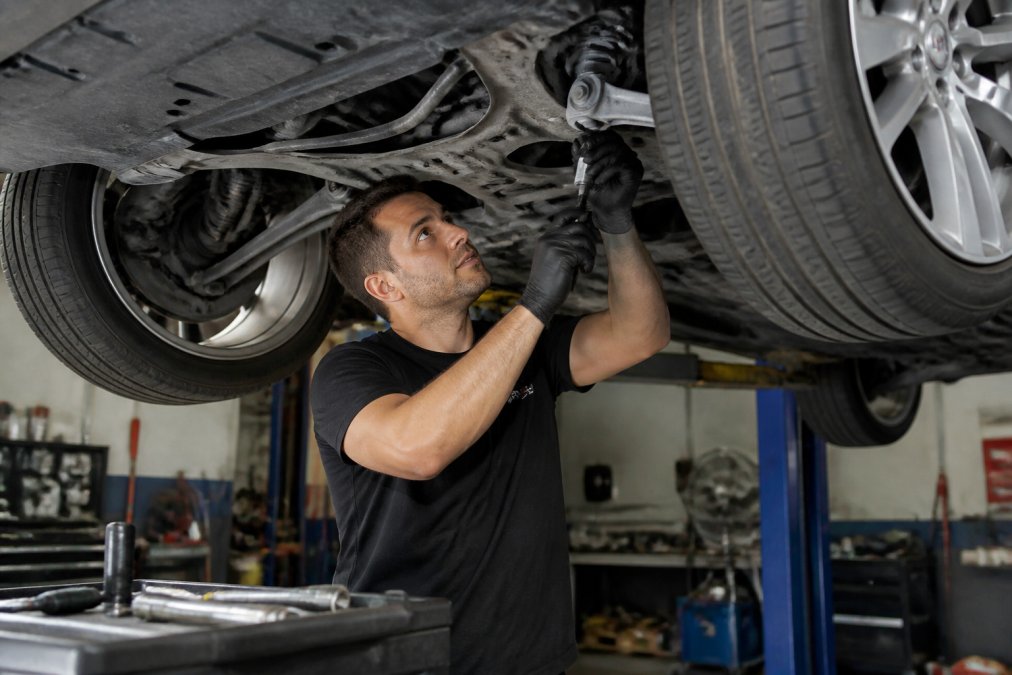
Checking Shocks and Struts
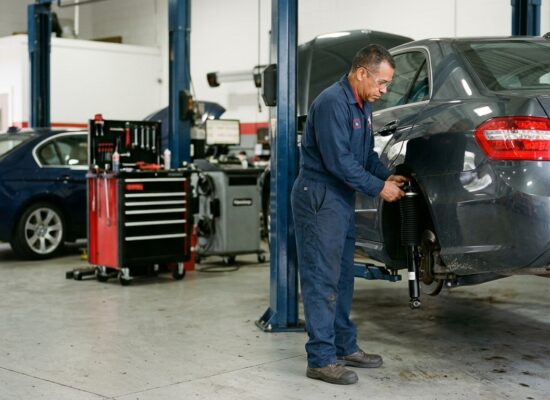
Push down firmly on each corner of the car, then release. The body should bounce once and settle. If it keeps rocking, the shock or strut is worn. Look for oily streaks on the strut body too. Leaking fluid means replacement is coming.
Examining Control Arms and Bushings
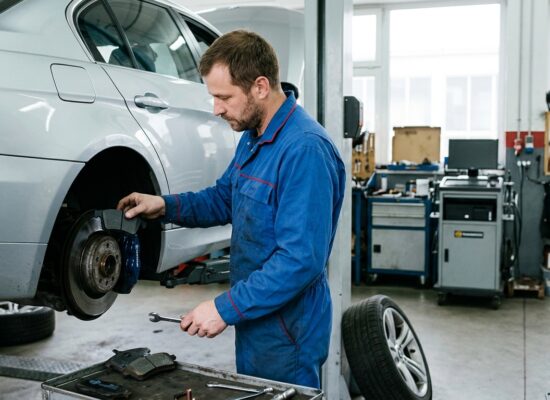
Check the rubber bushings where the control arms meet the frame. Cracked, dry, or squishy rubber is a warning sign. With the car safely lifted, use a pry bar to check for play in the joints. Any clunk or looseness deserves attention.
Step 2: Recognize the Signs of Bad Suspension in BMW and Other European Models
The signs of bad suspension in BMW and other European cars show up long before a part fails completely. Your car is talking to you. The trick is knowing what to listen for.
Watch for these signals:
- Nose dives when braking. Worn front struts let the front end drop hard.
- Uneven tire wear. Cupping or bald patches point to bad shocks or alignment.
- Clunking over bumps. Usually worn sway bar links or control arm bushings.
- Steering wander. The car drifts and needs constant correction.
- A rougher ride than usual. You feel every seam in the pavement.
Porsche and Audi owners often notice handling changes first. When a European car suddenly feels vague, something has changed.
Step 3: Schedule European Vehicle Suspension Diagnostic Services Annually
European vehicle suspension diagnostic services give you a full picture once a year, even when nothing feels wrong yet. A trained technician puts your car on a lift, checks every joint, and measures wear that you cannot see from the driveway.
At CJ Auto Services LLC, we use full computerized diagnosis to read suspension and steering fault codes on modern European cars. Many BMW, Audi, and Porsche models monitor ride height and damping electronically.
Book this visit once a year, or before any long road trip. If you drive rough roads often, more frequent checks may be beneficial.
Step 4: Understand the Importance of Wheel Alignment for European Cars
The importance of wheel alignment for European cars comes down to one thing: precision. These vehicles are built with tight tolerances, and even a small alignment error changes how they steer and how long your tires last.
Hit a curb or a deep pothole? Get the alignment checked. Common signs you need one include:
- The steering wheel sits off-center while driving straight
- The car pulls to one side
- Tires wear faster on one edge
Alignment and suspension work together. New struts on a misaligned car still wear unevenly. That is why a good shop checks alignment after any suspension repair.
|
Warning Sign |
Likely Cause |
What to Do |
|---|---|---|
|
Steering wheel shimmy |
Worn control arm bushings |
Inspect front suspension |
|
Nose dive when braking |
Worn struts or shocks |
Test and replace in pairs |
|
Uneven tire wear |
Bad alignment or worn parts |
Check alignment after repairs |
|
Clunking over bumps |
Worn sway bar links |
Replace links, then recheck |
|
Car pulls to one side |
Alignment out of spec |
Schedule an alignment |
Step 5: Replace Worn Components with Quality Parts
Suspension parts wear out, and when they do, the quality of the replacement matters. Cheap parts on a European car often fail early.
CJ Auto Services LLC is a dealer for aftermarket parts, so we can match the right component to your model and driving style. For BMW and European vehicles, we recommend quality parts that meet or exceed factory specs. Replace shocks and struts in pairs, and always replace worn bushings with the correct rubber or polyurethane type for your car.
One more thing: after any suspension replacement, get an alignment. Skipping it undoes much of the benefit of the new parts.
Common Mistakes to Avoid
Suspension problems rarely appear overnight. They build slowly, and each stage gives you a chance to act.
Other common errors:
- Ignoring small noises.
- Replacing one strut instead of a pair. This causes uneven handling.
- Skipping the alignment. New parts plus old alignment equals fast tire wear.
- Using the wrong parts. European cars need components built for their specs.
- Skipping yearly inspections. A pro sees what you cannot.
If you live in Boynton Beach and search for “European car suspension repair near me,” look for a shop that knows these cars.
Conclusion
Suspension problems never fix themselves, and the longer you wait, the more they cost. A monthly check, a yearly diagnostic, and prompt repairs keep your European car handling the way it should. At CJ Auto Services LLC, our ASE Certified mechanics back every repair with a 100% parts and labor warranty, offer free vehicle pick-up and drop-off, and take same-day appointments. We’re a family-owned shop in Boynton Beach, and we treat your car like our own. Schedule service with CJ Auto Services LLC and keep your European car driving tight, safe, and smooth.
Frequently Asked Questions
How often should I have my European car suspension inspected in Boynton Beach?
We recommend a professional inspection at least once a year, or every 12,000 miles, whichever comes first. Florida’s heat and road conditions can accelerate wear on suspension parts. If you drive on rough roads or notice any changes in handling, schedule an inspection sooner. At CJ Auto Services LLC, our ASE certified mechanics offer thorough European vehicle suspension diagnostic services to catch issues early.
What are the common signs of bad suspension in BMW and Audi vehicles?
Look for a bouncy or harsh ride, excessive nose dive when braking, uneven tire wear, and steering that feels loose or vague. You might also hear clunking noises over bumps or see fluid leaking from shocks. In BMW and Audi models, worn control arm bushings often cause a shimmy at highway speeds. If you notice any of these signs of bad suspension in BMW, have a professional inspect your car promptly.
Why does European car suspension require specialized maintenance?
European vehicles like BMW, Audi, and Porsche often use complex multi-link suspension designs and electronic damping systems that differ from domestic cars. These components require specific tools, diagnostic equipment, and knowledge of European engineering. A shop experienced with European car suspension, like CJ Auto Services LLC, can properly diagnose and maintain these systems to preserve your vehicle’s handling and comfort.
How do Florida road conditions affect European car suspension systems?
Florida’s hot, humid climate and occasional rough roads can wear out suspension components faster. Heat degrades rubber bushings and can cause shock absorbers to lose effectiveness. Potholes and uneven pavement put extra stress on control arms and struts. Regular inspections and the importance of wheel alignment for European cars cannot be overstated to counteract these effects and keep your vehicle safe.