That old 3,000-mile rule is officially dead, yet many drivers still feel a sense of dread every time they glance at their odometer. It’s frustrating when your owner’s manual says one thing while your dashboard light says another, and you’re constantly worried about how the sweltering Florida heat affects your engine oil change service requirements. You deserve a clear answer that doesn’t involve guesswork or outdated advice.
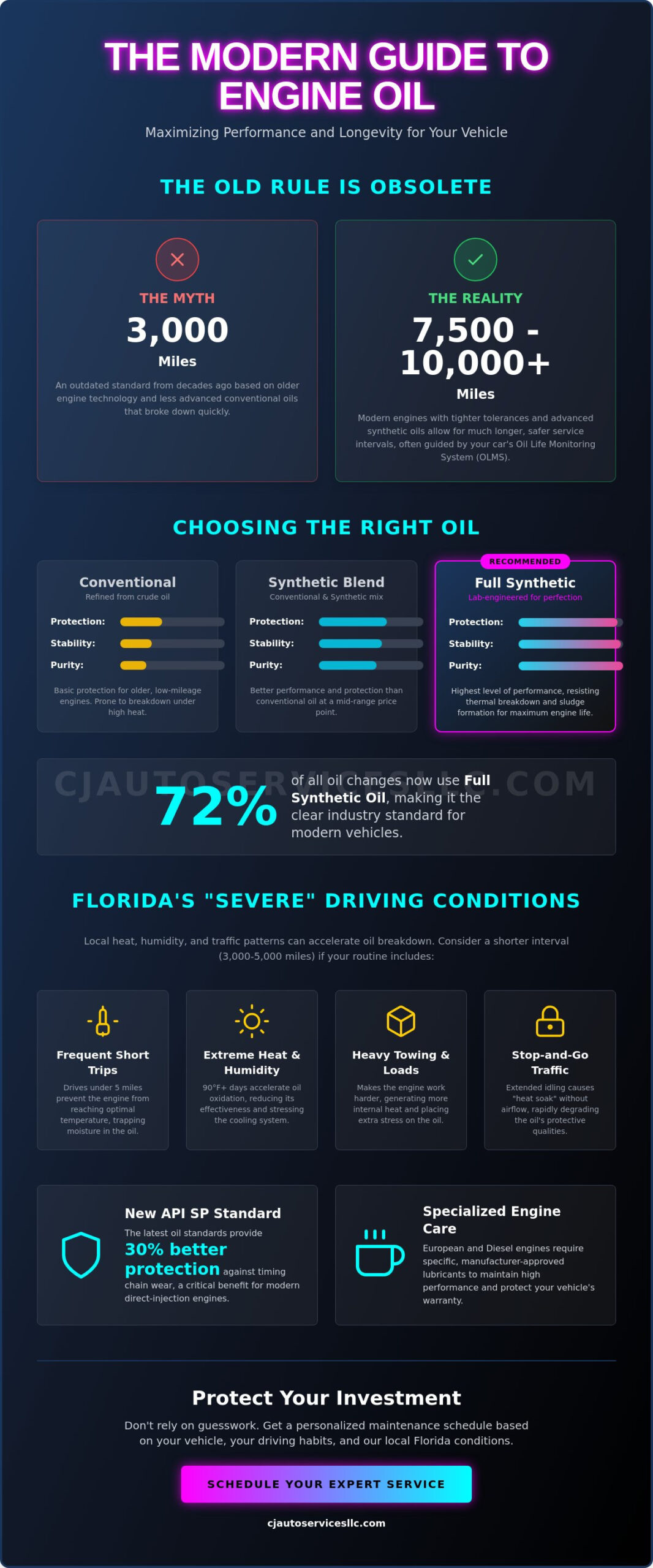
In this guide, you’ll learn the exact timing and specialized oil requirements for your vehicle to maximize engine life and performance. We’ll break down the industry shift toward full synthetic oils, which now account for nearly 72% of all oil changes. We will also explain how the latest API SQ standards provide 30% better protection against timing chain wear and help you establish a maintenance schedule you can actually trust. You’ll gain the peace of mind that comes from knowing your car is handled by experts who value your time and your safety above all else.
Key Takeaways
- Modern engines have moved past the 3,000-mile rule, often requiring an engine oil change service every 7,500 to 10,000 miles depending on your driving habits.
- Full synthetic oil provides the highest level of protection, offering a stable molecular structure that outperforms conventional and blend options.
- Specialized European and Diesel engines require manufacturer-approved lubricants to maintain their high-performance standards and protect your vehicle’s warranty.
- Intense Florida humidity and local traffic conditions accelerate oil oxidation, making personalized maintenance schedules vital for Boynton Beach drivers.
- A professional visual inspection of your vehicle’s undercarriage during service identifies potential issues before they become costly repairs.
Understanding the Modern Engine Oil Change Service Frequency
Your vehicle’s longevity depends more on an engine oil change service than almost any other maintenance task. It’s the most critical preventative step you can take to keep your car running smoothly for years. While the goal is simple, the rules have changed significantly over the last decade. Staying informed helps you avoid unnecessary costs while protecting your engine’s internal components from friction and heat.
The frequency of this service is no longer a one-size-fits-all number. It’s dictated by your car’s age, the specific engine type, and your daily driving habits. For many modern vehicles, the traditional 3,000-mile interval has been replaced by more efficient 7,500 to 10,000-mile windows. However, these longer stretches aren’t universal. For drivers in Boynton Beach, the local environment often plays a larger role in your maintenance schedule than the number on your odometer.
The 3,000-Mile Myth vs. Modern Reality
Decades ago, older cars required frequent oil changes because of limitations in Motor oil chemistry and wider manufacturing tolerances. These older lubricants would break down quickly under stress, leading to sludge buildup. Today, engineering has advanced. Modern engines are built with incredibly tight tolerances, and high-quality synthetic oils are designed to resist thermal breakdown for much longer periods. Most newer vehicles now feature an Oil Life Monitoring System (OLMS), which is an onboard computer algorithm that calculates the remaining life of your lubricant based on engine revolutions, operating temperature, and driving patterns. This technology allows you to extend your service intervals safely without risking engine damage.
When to Stick to a Shorter Interval
Even with advanced technology, many Florida drivers still qualify for a “severe” driving schedule. This typically requires an engine oil change service every 3,000 to 5,000 miles to ensure peak performance. You should consider a shorter interval if your daily routine includes these factors:
- Frequent Short Trips: Driving less than five miles doesn’t allow the engine to reach its full operating temperature, which prevents water vapor from evaporating out of the oil.
- Extreme Heat: The intense humidity and 90°F plus days in Boynton Beach accelerate oil oxidation and stress the cooling system.
- Heavy Loads: If you use your vehicle for towing or carry heavy equipment for work, your engine works harder and generates more internal heat.
- Stop-and-Go Traffic: Extended idling in South Florida traffic creates “heat soak,” where the oil absorbs massive amounts of heat without the benefit of airflow from a moving vehicle.
Understanding these conditions helps you move beyond generic advice. It allows you to treat your car like the precision machine it is, ensuring you get the most out of every mile.
Choosing the Right Oil: Synthetic vs. Conventional
Selecting the right fluid for your engine is about more than just checking a box on a service menu. It’s about matching the chemical properties of the oil to the specific engineering of your motor. Conventional oil is refined from crude oil, which means its molecules vary in size and shape. This irregularity creates more friction and heat as the oil moves through tight engine passages. In contrast, full synthetic oil is engineered in a laboratory to have perfectly uniform molecules. This consistency allows the oil to glide over metal surfaces with minimal resistance, providing superior protection from the moment you turn the key.
Synthetic blends offer a middle ground, mixing conventional and synthetic stocks to provide better protection than standard oil at a lower price point. However, for most modern vehicles, full synthetic has become the industry standard. Data from March 2026 shows that synthetic oil now accounts for nearly 72% of all oil changes in North America. For older vehicles with over 75,000 miles, high mileage oils are often the best choice. These formulations contain special seal conditioners that help swell and rejuvenate aging gaskets, which prevents small leaks from becoming major puddles on your driveway. When weighing the benefits of Synthetic vs. Conventional, it’s clear that the engineered option provides the most reliable defense against wear.
The Superiority of Full Synthetic Oil
Full synthetic oil is the gold standard because it stays stable under extreme conditions. While conventional oil can begin to oxidize and turn into thick sludge when exposed to the 90°F plus Boynton Beach heat, synthetic oil maintains its viscosity. This resistance to chemical breakdown means your engine oil change service lasts longer and protects better. While the upfront cost is higher, the long-term benefit is undeniable. You’re investing in the health of your engine to avoid the massive expense of internal repairs caused by sludge buildup or metal-on-metal contact. If you’re ready to upgrade your vehicle’s protection, a professional oil change using premium synthetic fluids is the best place to start.
Deciphering Oil Viscosity
The numbers on an oil bottle, like 5W-30, tell a specific story about how the oil flows. The “5W” stands for winter and describes the oil’s flow during a cold start, while the “30” describes its thickness at full operating temperature. Following your manufacturer’s specific weight is non-negotiable. Modern engines often use Variable Valve Timing (VVT), which relies on precise oil pressure to move mechanical components. Using oil that is too thick or too thin can cause these systems to lag, leading to immediate losses in fuel efficiency and engine power. Always check your owner’s manual or ask a trusted technician to ensure you’re using the exact grade your engine was designed to handle.
Why European and Diesel Engines Need Specialized Care
High-performance European vehicles and heavy-duty diesel trucks aren’t built like standard economy cars. They’re precision-engineered machines that operate under intense pressure and specific thermal conditions. Because of this, a generic “one-size-fits-all” engine oil change service simply isn’t enough to protect your investment. Owners of BMW, Audi, and Mercedes-Benz must look beyond the viscosity on the bottle and focus on “Manufacturer Approvals.” These factory standards, such as BMW LL-01 or VW 502.00, are non-negotiable. Using a lubricant that lacks these specific certifications can lead to internal component wear and may even void your factory warranty.
At CJ Auto Services LLC, we treat every vehicle like the masterpiece it is. We understand that European engines often run at higher operating temperatures to maximize efficiency. This requires oil with exceptional shear stability to prevent the fluid from thinning out under stress. While research on modern engine oil change intervals suggests longer windows for many vehicles, these high-performance motors require strict adherence to factory-specified schedules to maintain their longevity and power.
European Car Oil Specifications
European manufacturers design their engines with unique lubrication paths and tight tolerances. These motors require oils that can resist oxidation while keeping the engine clean over extended periods. It’s also vital to use the correct filtration. Specialized European oil filters use high-quality synthetic media designed to withstand high pressure without collapsing; this is a significant step up from the generic “orange” filters often found at quick-lube shops. Choosing the right parts ensures your engine stays protected between every engine oil change service.
While we serve the Boynton Beach community, we recognize that excellence in European auto care is a global standard; for instance, owners in Australia can discover Eurotech Automotive for specialized maintenance tailored to these high-performance brands.
Diesel Engine Oil & Maintenance
Diesel engines face an entirely different set of challenges. They operate with much higher compression ratios than gasoline engines, which naturally generates massive amounts of soot and carbon buildup. Diesel-specific oil contains advanced detergents to keep this soot in suspension, preventing it from settling and turning into abrasive sludge. These formulations also protect your Diesel Particulate Filter (DPF) by using low-ash chemistry.
Maintenance for these vehicles is about more than just the oil. A professional diesel service at CJ Auto Services LLC includes a thorough check of turbocharger cooling lines and the replacement of fuel filters and water separators. These extra steps prevent fuel system contamination and ensure your turbo remains properly lubricated. Whether you’re driving a luxury sedan or a work truck, our team provides the expert care your specialized engine demands.
This level of specialized maintenance is a universal standard for high-performance engines across all industries. For those in the maritime sector, Panama Ship Service offers the same degree of technical expertise and operational support for vessels navigating the demanding conditions of the Panama Canal.
Step-by-Step: What Happens During a Professional Oil Change
Quick-lube chains often prioritize speed above all else, boasting 15-minute turnaround times that can lead to costly mistakes. At CJ Auto Services LLC, we take a different path. We believe an engine oil change service should be a comprehensive health check for your vehicle, not an assembly line process. When you rush a service, a technician might miss a fraying belt or accidentally strip a drain plug, turning a routine visit into a major headache. Our Master Craftsmen treat every car with the respect it deserves, ensuring that every detail is perfect before you get back on the road.
The quality of the parts used is just as vital as the skill of the person installing them. An oil filter is your engine’s primary defense against microscopic debris, and using a low-quality generic version can lead to restricted flow or even internal failure. We use premium filters with high-efficiency media designed to maintain structural integrity under pressure. This ensures that the clean oil we put into your engine stays clean, providing the maximum protection possible until your next scheduled visit.
The Inspection Beyond the Oil
A professional engine oil change service is the ideal time for a thorough undercarriage inspection. While the oil is draining, our technicians examine your brake lines, suspension components, and steering linkages for signs of wear or damage. We also perform battery testing and replacement checks to ensure your car starts reliably every time. If our inspection reveals a weakening power source, our car battery replacement Boynton Beach service ensures your entire electrical system is diagnosed and restored to full health. Identifying a small fluid seep or a worn bushing today can save you thousands in future engine repair or suspension work. This proactive approach gives you the peace of mind that your vehicle is truly safe, not just topped off with oil. Pairing this service with a vehicle tune-up service ensures your ignition, fuel, and engine systems are all operating at peak efficiency together.
The CJ Auto Services LLC Professional Process
Our process begins by draining the oil while it is still warm. This ensures that contaminants and sludge are suspended in the fluid and removed from the engine more effectively. Our technicians always torque the drain plug to the manufacturer’s exact specifications, preventing the oil pan damage that often occurs at high-volume shops. We also adhere strictly to Florida Department of Environmental Protection regulations by recycling all used oil and filters in labeled, sealed containers to protect our local groundwater and soil.
The final step is a rigorous verification. We confirm the oil level is precise, check for any leaks under pressure, and reset your maintenance light. You’ll receive a detailed digital health report that outlines exactly what we found, providing total transparency into your vehicle’s condition. If you’re looking for a service that values quality over speed, schedule your oil change with our expert team today.
Maintaining Performance in the Boynton Beach Heat
Living in South Florida means your vehicle faces environmental stressors that most national maintenance guides simply don’t account for. The combination of high humidity and consistent 90°F plus days creates a perfect storm for oil degradation. Heat accelerates the chemical process of oxidation, which causes the lubricant to thicken and lose its ability to protect moving parts. When you schedule an engine oil change service, you aren’t just replacing a fluid; you’re resetting your engine’s primary defense against the relentless Florida sun.
You don’t have to be a mechanic to keep an eye on your vehicle’s health between visits. We recommend checking your oil dipstick once a month to ensure the level is correct and the color isn’t excessively dark or gritty. As a local, family-owned shop, CJ Auto Services LLC understands these specific regional challenges better than any national chain. We live in the same humidity and drive the same roads as you do. Our Master Craftsmen take pride in providing a level of care that prioritizes your safety and your car’s long-term performance.
The Florida Heat Factor
While many drivers across the country only worry about extreme temperatures during the peak of summer, Boynton Beach residents know that heat is a year-round reality. High ambient temperatures significantly reduce the oil’s capacity to transfer heat away from critical engine components. This is why we pay close attention to your coolant levels during every engine oil change service. A healthy cooling system works in tandem with fresh oil to ensure your engine doesn’t reach catastrophic temperatures during your afternoon commute.
Local Driving: Stop-and-Go Challenges
Driving on Congress Avenue or navigating the daily congestion on I-95 is significantly harder on your vehicle than cruising at highway speeds. Constant idling and frequent stopping create “heat soak,” where engine temperatures rise because there isn’t enough moving air to cool the block. This stop-and-go environment is the definition of severe driving. Additionally, Florida’s sandy soil and high pollen counts can quickly clog your engine’s air filter. A dirty filter restricts airflow, forcing the engine to work harder and run hotter, which further stresses the oil. Keeping these filters clean is just as important as the oil itself for maintaining peak efficiency. The same South Florida heat that degrades your oil also accelerates battery wear, making it wise to pair your oil service with a professional car battery replacement in Boynton Beach evaluation to protect your vehicle’s entire electrical system. If it’s time for your next checkup, you can Schedule your expert oil change at CJ Auto Services LLC in Boynton Beach to ensure your vehicle is ready for the road ahead.
Protect Your Investment with Personalized Care
Understanding your vehicle’s specific needs is the first step toward long-term reliability. We’ve seen how modern engineering and high-quality synthetic oils have changed the rules, but local factors like South Florida’s humidity and stop-and-go traffic still demand a proactive approach. By moving away from generic advice and focusing on a personalized engine oil change service, you ensure your motor remains efficient and powerful for years to come.
As a family-owned and operated shop right here in Boynton Beach, we specialize in the complex requirements of European and diesel engines. Every visit to our facility includes a comprehensive digital vehicle inspection, giving you total transparency into your car’s health. We take pride in being your trusted partner on the road, providing the expertise of a master craftsman with the warmth of a neighbor. Ready to experience a higher standard of maintenance? Book Your Professional Oil Change at CJ Auto Services LLC Today. We look forward to helping you drive with confidence and peace of mind.
Frequently Asked Questions
How long does a professional engine oil change service take?
A thorough service typically takes between 45 and 60 minutes. Unlike high-volume shops that prioritize speed, we take the time to perform a comprehensive digital vehicle inspection and ensure all fluids are at their proper levels. This window allows our technicians to drain the oil completely and verify that your undercarriage is in good health before you leave.
Is it really necessary to use synthetic oil if my manual says conventional is okay?
While your manual might list conventional oil as an option, synthetic oil is the superior choice for the intense Florida climate. Synthetic lubricants resist oxidation much better than conventional oils when temperatures climb above 90°F. Choosing synthetic provides an extra layer of protection against engine wear and helps maintain your fuel efficiency over the long term.
Can I go 10,000 miles between oil changes if I use high-quality synthetic oil?
You can reach higher intervals under perfect conditions, but stop-and-go traffic in Boynton Beach often requires more frequent care. Constant idling and short trips are considered severe driving conditions that break down even the best synthetic fluids. We generally recommend an engine oil change service every 5,000 to 7,500 miles to ensure your engine stays free of sludge and carbon deposits.
What happens if I skip an oil change for too long?
Old oil eventually loses its ability to lubricate and begins to turn into a thick, jelly-like sludge. This sludge blocks oil passages and prevents the fluid from cooling critical engine components, which can lead to catastrophic engine failure. Regular maintenance is a small investment that prevents the need for a total engine replacement later on.
Does CJ Auto Services handle oil changes for European cars like BMW and Mercedes?
Yes, we are specialists in European cars and Japanese cars. Our team understands the specific manufacturer approvals required for brands like Audi, BMW, and Mercedes-Benz. We use the exact oil weights and high-quality filters these precision engines demand to stay within warranty and perform at their peak.
Why is my oil light on even though I just had an oil change?
This often happens if the maintenance reminder system wasn’t properly reset during the service. However, if the light is red or indicates low oil pressure, it could signal a more serious mechanical issue or a faulty sensor. If you’re concerned about a dashboard light, our computerized engine diagnostics can quickly identify the root cause to give you peace of mind.
Is an oil change included in a full vehicle tune-up?
Yes, an engine oil change service is a core component of our vehicle tune-up service. A tune-up is designed to restore your car’s performance by addressing multiple systems at once. We combine fresh oil and filters with a broad inspection of your ignition and fuel systems to ensure everything is operating in perfect harmony.
How much does an oil change service cost in Boynton Beach?
The total cost depends on your vehicle’s oil capacity and whether it requires conventional, synthetic blend, or full synthetic oil. Specialized European and diesel engines also have specific filter requirements that can influence the final price. We believe in total transparency and will always provide a clear explanation of the fluids and parts your specific car needs before we begin any work.





4 thoughts on “How Often Should Your Engine Oil Change Service Be Done?”
Comments are closed.