A small vibration at a stoplight, brakes that feel a little softer than usual, or an A/C system that takes too long to cool can be easy to put off. A full service maintenance review gives you a clear look at the condition of your vehicle before those small changes become an inconvenient repair, a safety concern, or a breakdown on a busy Boynton road.
This is not a sales pitch disguised as an inspection. Done properly, it is a practical check of the systems that keep your car starting, stopping, steering, cooling, and running reliably. The goal is simple: understand what needs attention now, what can be planned for later, and what is still in good shape.
What Is a Full Service Maintenance Review?
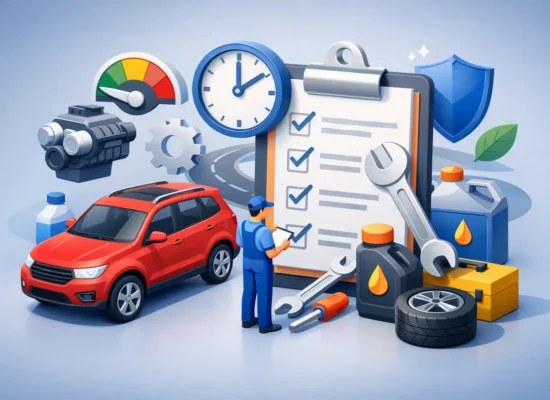
A full service maintenance review is a broader vehicle assessment that looks beyond a basic oil change. It combines preventive maintenance checks with an inspection of key mechanical and safety systems. The exact scope should reflect your vehicle’s age, mileage, service history, manufacturer recommendations, and the symptoms you have noticed.
For a newer vehicle with consistent maintenance records, the review may mostly confirm that fluids, filters, tires, brakes, and wear items are on schedule. For an older vehicle, a recently purchased used car, or a vehicle with an unknown history, the review may be more detailed. That difference matters. Good maintenance is not about replacing every part just because it has miles on it. It is about making informed decisions based on condition and risk.
A trustworthy shop should explain the findings in plain language. If a repair is urgent, you should understand why. If a service can wait, you should know what to watch for and when to recheck it.
The Systems Your Maintenance Review Should Check
Fluids, filters, and routine service items
Engine oil is only one part of routine vehicle care. A thorough review should consider the condition and level of important fluids, including coolant, brake fluid, transmission fluid when applicable, power steering fluid on vehicles that use it, and windshield washer fluid. Fluid leaks, contamination, low levels, or overdue service can point to a larger issue or create one over time.
Air filters and cabin filters also deserve attention. A clogged engine air filter can affect airflow, while a dirty cabin filter can reduce A/C performance and allow more dust into the vehicle. These are usually straightforward maintenance items, but replacing them only when needed keeps the service practical and fairly priced.
Brakes, tires, and steering
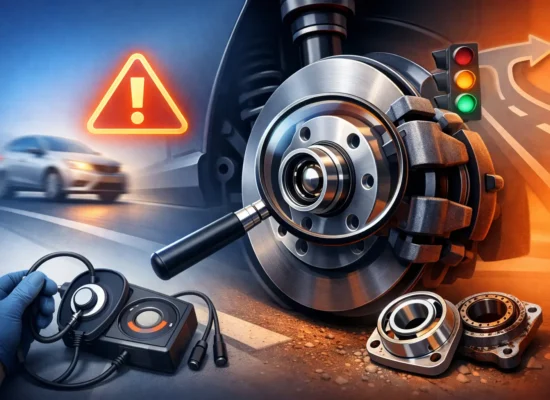
Your brakes and tires are among the most important safety items on the vehicle. A review should include brake pad thickness, rotor condition, brake fluid condition, tire tread depth, tire pressure, and signs of uneven tire wear. Uneven wear can be caused by an alignment issue, worn suspension parts, improper inflation, or tire rotation that has been missed.
Steering and suspension components should also be checked for looseness, damage, and leaks. Worn shocks, struts, ball joints, tie rods, or bushings may show up as pulling, clunking, bouncing, uneven tire wear, or a steering wheel that no longer feels stable. Not every noise means a major repair, but it should be diagnosed instead of guessed at.
Battery, starting, and charging systems
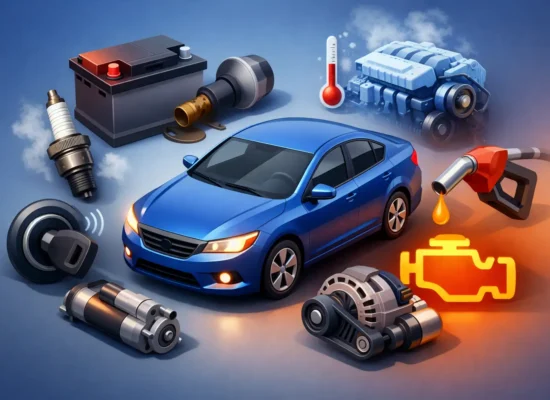
A car can start normally one day and struggle the next, especially in South Florida heat. Battery condition, terminal corrosion, alternator output, and starter performance all affect reliability. Testing these systems during maintenance can help identify a weak battery or charging issue before it leaves you stranded at work, school, or home.
If your vehicle has slow cranking, dim lights, warning messages, or an intermittent no-start condition, mention it when booking. Intermittent electrical problems can require more targeted diagnostics than a standard review, and describing the pattern helps the technician work efficiently.
Engine performance and emissions-related components
A maintenance review can also identify concerns with spark plugs, ignition components, belts, hoses, exhaust parts, and visible engine leaks. Depending on your vehicle and mileage, technicians may check for stored diagnostic codes even when the check engine light is not currently on.
This does not mean every component needs replacement at a certain mileage. Many parts last longer than expected, while others wear earlier because of driving habits, heat, traffic, or past maintenance. The right recommendation is based on inspection results and the manufacturer’s service schedule, not a one-size-fits-all package.
Heating and air conditioning
In South Florida, air conditioning is more than a comfort feature. If the A/C is weak, noisy, inconsistent, or has an unusual smell, the system should be evaluated. A review may include checking cooling performance, cabin filter condition, belts, visible A/C components, and signs of leakage.
A low refrigerant charge is not always the whole answer. Refrigerant does not simply wear out. If it is low, there may be a leak that needs to be located and repaired. A clear explanation helps you avoid paying for a temporary fix that does not address the cause.
Why Timing Matters More Than Waiting for a Warning Light
Many drivers wait until a dashboard warning light appears. Warning lights are useful, but they do not monitor every wear item. Tires can wear unevenly without a warning. Brake pads can become thin before a light comes on. A small coolant leak can remain hidden until the engine overheats.
Regular reviews give you time to plan. Instead of facing a surprise repair and losing use of your vehicle, you can schedule service around your work, family, and budget. That does not mean you should repair every advisory item immediately. It means you have the information to prioritize wisely.
For most drivers, a review makes sense alongside regular oil service or before a long drive. It is also smart to schedule one after buying a used vehicle, before handing a car down to a new driver, when moving into a period of heavier commuting, or after noticing a change in how the vehicle drives.
How to Read the Results Without Feeling Pressured
The most useful maintenance review separates findings into clear categories: items that affect immediate safety or reliability, items that should be scheduled soon, and items worth monitoring. Ask for specifics. What was measured? Is there a leak, wear, or test result that supports the recommendation? What could happen if the service is delayed?
You should also ask whether the recommendation comes from the manufacturer’s maintenance schedule, the actual condition of the part, or both. For example, a fluid service may be due by time or mileage even if the vehicle seems to drive normally. A suspension repair, on the other hand, is often based on play, damage, leaking, tire wear, or a handling concern found during inspection.
Price matters, too. A quality shop should provide realistic pricing and explain the repair order without making you feel rushed. If several services are needed, ask which work should be completed first and whether any labor can be combined. This is especially helpful for higher-mileage vehicles where planning repairs over time may be more sensible than doing everything at once.
What to Tell Your Technician Before the Review
Your observations are part of the diagnosis. Mention any warning lights, noises, vibrations, odors, fluid spots, trouble starting, changes in fuel economy, or issues with braking, steering, shifting, and A/C. Note when the problem occurs, such as only when the engine is cold, during rain, at highway speeds, or while turning.
Bring any service records you have, even if they are incomplete. Knowing what has already been done can prevent duplicate work and make the review more accurate. If you do not have records, that is still workable. The technician can assess current condition and help establish a sensible maintenance baseline.
At CJ Auto Services, ASE-certified technicians can review the vehicle’s needs clearly and provide the practical guidance local drivers expect. Same-day appointments and vehicle pick-up and drop-off help make preventive care easier to fit into a full schedule.
Maintenance Is About Fewer Surprises
The best time to learn about a worn part is before it interrupts your day. A full service maintenance review does not force a repair decision. It gives you an honest picture of your vehicle, so you can protect your safety, manage costs, and keep moving with more confidence. When something about your car feels different, trust that signal and have it checked while you still have options.