Table of Contents
- What to Look for in a Diesel Engine Diagnostic Service
- Benefits of ASE Certified Diesel Mechanics
- How Much Do Diesel Diagnostics Cost
- Diesel Truck Repair Maintenance Tips
- Questions to Ask Before Choosing a Diesel Engine Diagnostic Provider
- Why Diesel Engine Diagnostics Matter for Your Vehicle
- Conclusion
Last Updated: August 24, 2026
When your diesel engine starts acting up, the difference between a quick fix and a costly breakdown often comes down to one thing: where you take it for diagnostics. The best diesel engine diagnostic services combine advanced technology, certified expertise, and transparency to pinpoint problems before they become catastrophic. This guide from CJ Auto Services LLC covers what separates a truly capable diesel diagnostic provider from one that’s just guessing.
Diesel engines demand specialized knowledge. They run hotter, operate under higher compression, and respond differently to issues than gasoline engines. Finding the right diesel engine diagnostic services means understanding what to look for, what questions to ask, and why ASE certification actually matters when your truck’s reliability is on the line.
What to Look for in a Diesel Engine Diagnostic Service
The foundation of quality diesel engine diagnostic services starts with three core elements: the technology available, the credentials of the technicians, and the diagnostic process itself.
Technology and Equipment Standards
Modern diesel engines are complex systems controlled by multiple computer modules. A shop equipped only with basic scanners won’t catch half the problems lurking in your engine.
The best diesel engine diagnostic services use full-system computerized diagnosis that can access every module in your truck. This includes engine control modules, transmission controllers, emission systems, and fuel injection computers. When a technician plugs in a quality scanner, they’re not just reading fault codes, they’re accessing real-time data streams that reveal how each system is actually performing under load.
Look for shops that use OEM-level diagnostic equipment or equivalent aftermarket tools. These aren’t the budget scanners you can buy online. They cost thousands and require ongoing updates to handle new diesel models. If a shop is reluctant to discuss their diagnostic equipment, that’s a red flag. A provider confident in their capabilities will explain exactly what tools they’re using and why those tools matter for your specific engine.
Beyond scanners, quality shops invest in fuel system testing equipment, compression testers designed for diesel engines, and thermal imaging cameras. These tools help diagnose issues that generic code readers completely miss. A fuel system that’s slowly degrading won’t always throw a code, but a fuel pressure test under load will catch it before it strands you on the highway.
CJ Auto Services LLC maintains full computerized diagnosis capabilities, which means technicians can run comprehensive scans across all your truck’s systems. This level of diagnostic depth catches intermittent issues and early warning signs that simpler equipment would overlook.
Technician Expertise and Credentials
A scanner is only as good as the person holding it. Diesel engines have their own quirks, failure patterns, and maintenance requirements that differ significantly from gasoline engines.
ASE certification in diesel engines is the industry standard for a reason (ase.com). It requires hands-on experience, passing rigorous exams, and staying current with evolving diesel technology. An ASE-certified diesel technician has demonstrated competency in areas like fuel injection systems, turbochargers, emission controls, and the specific diagnostic procedures that diesel engines demand.
But credentials alone don’t tell the whole story. Ask how long a technician has worked specifically on diesel engines. The best diesel engine diagnostic services employ technicians who actively stay current with manufacturer updates and new diagnostic procedures. Diesel technology evolves constantly.
Benefits of ASE Certified Diesel Mechanics
ASE certification represents a commitment to professional standards that directly benefits you as a vehicle owner. When a mechanic holds ASE credentials in diesel engines, they’ve invested time and money into proving their competency.
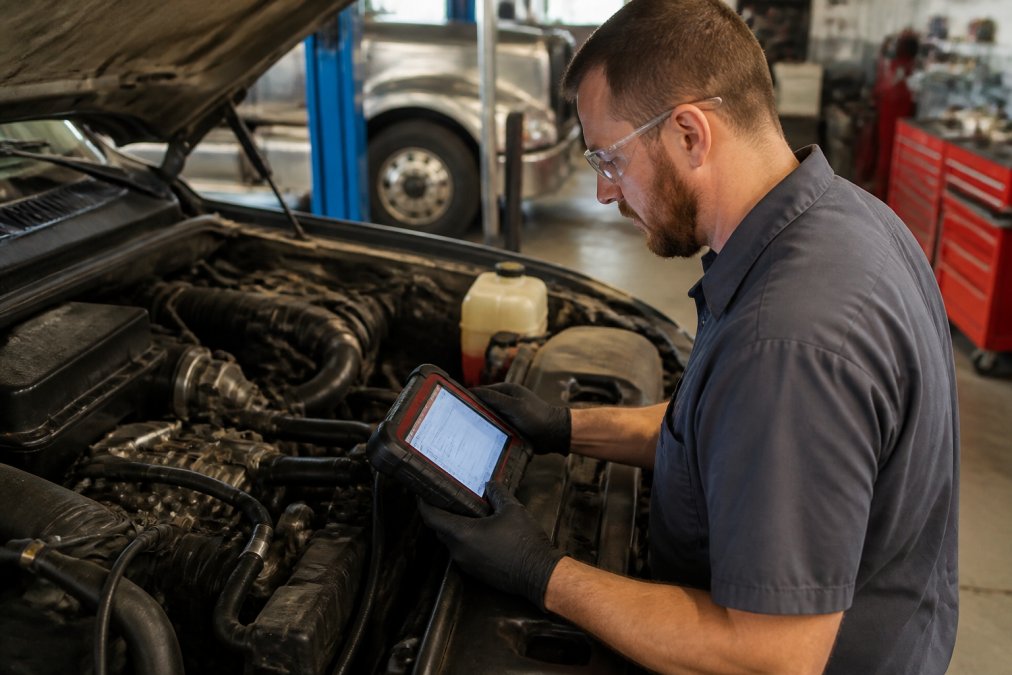
ASE-certified diesel mechanics understand the specific diagnostic protocols that diesel engines require. They know which codes matter and which ones are red herrings. They understand how diesel fuel quality affects engine performance, how high-pressure fuel systems fail, and how to distinguish between a sensor problem and an actual engine issue. This expertise means faster, more accurate diagnostics, which saves you money and gets your truck back on the road sooner.
Certification also means accountability. ASE maintains standards and can revoke credentials if a technician’s work falls below acceptable levels. When you work with a certified mechanic, you’re working with someone whose reputation is backed by an independent verification system. That matters when you’re trusting someone with a vehicle that might cost tens of thousands of dollars to repair if diagnosed incorrectly.
Many shops advertise diesel experience without backing it up with credentials. ASE certification is the verifiable proof. At CJ Auto Services LLC, our ASE-certified mechanics bring that verified expertise to every diesel diagnostic job. You’re not guessing whether the technician knows what they’re doing, their credentials prove it.
The peace of mind from working with certified professionals extends beyond the diagnostic itself. ASE-certified technicians are more likely to catch secondary issues before they become problems, recommend appropriate maintenance intervals for diesel engines, and explain their findings in terms you can actually understand.
How Much Do Diesel Diagnostics Cost
Diesel engine diagnostic services pricing depends on several factors: the complexity of the issue, the equipment required, and the time spent investigating.
Rather than guessing at pricing, contact your service provider directly for a quote. Many shops offer initial consultations where they can assess your truck’s symptoms and give you an accurate estimate. This approach protects you from surprises and lets you make an informed decision.
What matters more than the absolute cost is the value you receive. A thorough diagnostic that correctly identifies a problem saves you from chasing a misdiagnosis. The most expensive diagnostic is the wrong one, the kind where you fix something that wasn’t broken and the real problem persists.
When evaluating diesel engine diagnostic services pricing, compare not just the diagnostic fee but also what happens next. Does the shop charge separately for the repair estimate? Do they charge the diagnostic fee toward repairs if you use them? These details matter when you’re budgeting for the work ahead.
Diesel Truck Repair Maintenance Tips
Preventing major diesel engine problems starts long before your truck breaks down. Preventive maintenance catches issues when they’re small and manageable.
Preventive Diagnostics and Regular Checks
Diesel engines benefit from periodic diagnostic checks even when nothing seems wrong. Many diesel problems develop gradually, a fuel injector slowly degrading, a turbo bearing wearing out, an emission system sensor drifting out of range. By the time you notice symptoms, the problem is often advanced.
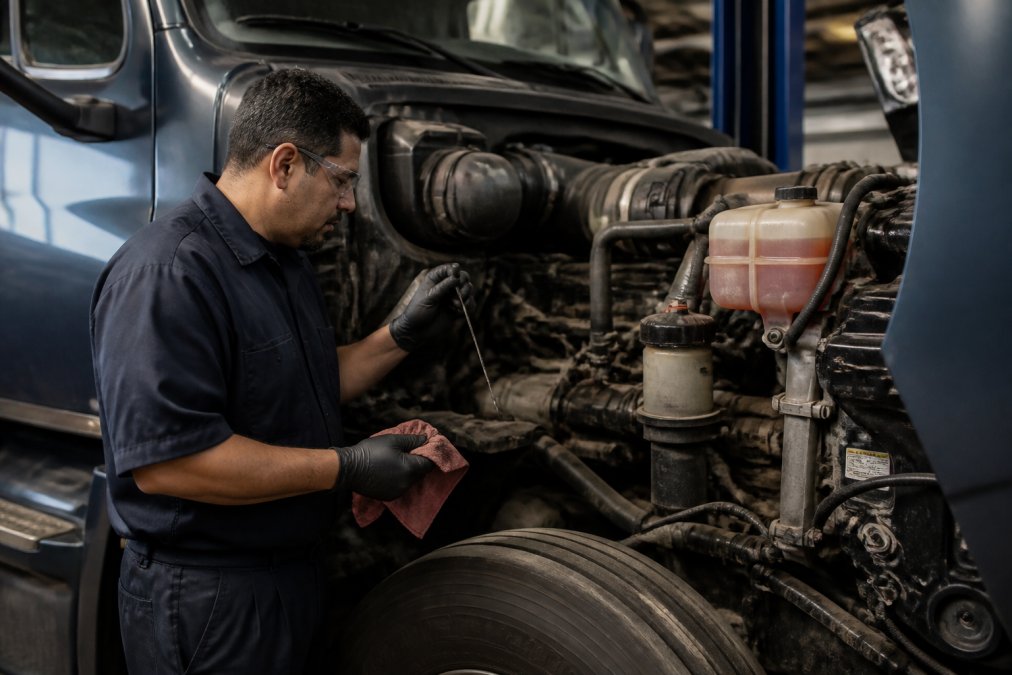
Schedule diagnostic scans at regular intervals, not just when warning lights appear. This approach to diesel truck repair maintenance tips catches issues early. A fuel injector that’s slightly out of spec might not trigger a code for months, but a diagnostic scan will show the deviation. Catching it then costs far less than waiting for it to fail completely.
Monitor your fuel quality carefully. Diesel fuel is more prone to water contamination and microbial growth than gasoline (the EPA). Water in your fuel system leads to corrosion and fuel injector problems. Contaminated fuel damages fuel pumps and injectors. Use quality fuel from reputable stations, and consider fuel additives designed for diesel engines if you operate in humid climates or store fuel long-term.
Check your engine oil regularly and follow the manufacturer’s recommended change intervals. Diesel engines run hotter and work harder than gasoline engines, so their oil breaks down faster. Using the correct oil grade and changing it on schedule protects your engine’s internal components. Don’t skip this, it’s the cheapest insurance against expensive engine damage.
Inspect your air filter more frequently than you might for a gasoline vehicle. Diesel engines pull more air, and a clogged filter forces the engine to work harder and can trigger issues with the fuel system (peer-reviewed research). A dirty air filter also affects fuel economy noticeably on diesel trucks.
Pay attention to your coolant system. Diesel engines generate significant heat, and cooling system failures can damage an engine quickly. Check coolant levels regularly, flush the system on schedule, and address any leaks immediately. A small coolant leak today becomes an overheating incident tomorrow.
Questions to Ask Before Choosing a Diesel Engine Diagnostic Provider
Before you commit to a shop for diesel engine diagnostic services, ask these questions to separate competent providers from ones that might waste your time and money.
What diagnostic equipment do you use, and how often is it updated? A shop that can’t answer this confidently doesn’t invest in proper tools. Quality providers update their diagnostic software regularly to handle new models and emerging issues.
How many years of diesel-specific experience do your technicians have? Experience matters.
Can you explain what you found during the diagnostic in terms I can understand? A good technician translates technical findings into plain language. If a shop makes you feel stupid for not understanding their explanation, that’s a sign they don’t actually understand it themselves, or they’re intentionally obscuring the issue.
Do you warranty your diagnostic work? If you pay for a diagnostic and the shop misses the actual problem, will they stand behind their work? Reputable providers warranty their diagnostics because they’re confident in their accuracy.
What’s your process if the initial diagnostic doesn’t reveal the problem? Sometimes issues are intermittent or complex. How does the shop handle situations where the first scan doesn’t identify the root cause? Do they have a systematic process for deeper investigation?
Can you provide references from other diesel truck owners? Ask for contact information from customers who’ve had similar diagnostic work done. Real customer feedback reveals how thorough and honest a shop actually is.
What’s included in your diagnostic report? You should receive a detailed written report explaining what was found, what it means, and what repairs are recommended. Vague reports suggest vague diagnostics.
Why Diesel Engine Diagnostics Matter for Your Vehicle
Diesel engines represent a significant investment. Protecting that investment means addressing problems early, before small issues cascade into catastrophic failures.
A diesel engine that’s running poorly isn’t just annoying, it’s costing you money every day. Poor fuel economy, sluggish performance, and rough running all indicate underlying issues that worsen over time. Ignoring them doesn’t make them go away. It makes them more expensive.
Quality diesel engine diagnostic services catch problems while they’re still manageable. A fuel injector that’s starting to fail can be replaced before it damages the fuel system. A turbo bearing that’s wearing out can be serviced before it fails completely. An emission sensor that’s drifting can be recalibrated before it triggers limp-mode and strands you on the highway.
Beyond the mechanical benefits, proper diagnostics protect your safety. A diesel engine with undiagnosed problems is less predictable and potentially dangerous. Sudden power loss, brake issues related to engine problems, or transmission concerns all stem from engine problems that diagnostics reveal.
The reliability of your diesel truck depends on catching problems early. This is why working with a provider that takes diagnostics seriously matters so much. CJ Auto Services LLC approaches every diesel diagnostic with the rigor it deserves, using full computerized diagnosis to ensure nothing gets missed. That thoroughness translates directly into vehicle reliability and your peace of mind on the road.
Diesel engine problems don’t announce themselves politely. By the time you notice symptoms, damage is often already underway. The right diesel engine diagnostic services catch issues before they become emergencies, saving you thousands in repairs and keeping your truck reliable when you need it most. CJ Auto Services LLC combines ASE-certified expertise with advanced diagnostic technology and transparent communication to deliver the thorough diagnostics your diesel engine deserves. Schedule Service today and get the answers your truck needs.
Frequently Asked Questions
Q: What is included in a diesel engine diagnostic service?
A: A comprehensive diesel engine diagnostic service uses computerized equipment to scan your engine's systems, identify fault codes, and pinpoint underlying issues. Technicians examine fuel injectors, emissions systems, turbochargers, and other diesel-specific components. The diagnostic reveals problems ranging from sensor failures to fuel system issues, providing a detailed report of what needs repair. This full computerized diagnosis helps mechanics understand exactly what's wrong before starting repairs, preventing unnecessary work and unexpected costs.
Q: Why are diesel diagnostics more complex than gasoline engine diagnostics?
A: Diesel engines operate at higher compression ratios and require specialized knowledge of fuel injection systems, emissions controls, and turbocharger technology. Standard diagnostic scanners often cannot read all diesel-specific fault codes. ASE certified diesel mechanics understand these unique systems and use equipment designed specifically for diesel engines. The complexity also comes from the tight tolerances in fuel systems and the advanced emissions equipment required to meet environmental standards, making proper diagnosis essential.
Q: How often should I get a diesel engine diagnostic check?
A: Most manufacturers recommend diagnostic checks during regular maintenance intervals, typically every 15,000 to 30,000 miles depending on your truck's specifications. Beyond scheduled maintenance, get a diagnostic whenever your check engine light appears, you notice performance changes, or before major trips. Preventive diagnostics catch small issues before they become expensive repairs, protecting your investment and keeping your diesel truck reliable. Regular checks are especially important if you frequently tow or operate in demanding conditions.
Q: How do ASE Certified Mechanics improve diagnostic accuracy for diesel engines?
A: ASE certified mechanics complete rigorous training and pass comprehensive exams covering diesel engine systems, diagnostics, and repair procedures. This certification ensures they understand diesel-specific technology, emissions systems, and common failure patterns. Their expertise allows them to interpret diagnostic codes correctly and avoid misdiagnosis. Certified technicians stay current with manufacturer updates and new diagnostic techniques, meaning your diesel engine gets accurate assessment backed by proven credentials and ongoing professional development in diesel technology.
This article was written using GrandRanker