
Table of Contents
- What Is a Professional Auto Repair Cost Estimator?
- What to Look for in a Professional Auto Repair Cost Estimator
- How to Read a Car Repair Estimate
- Comparison Table: Top Auto Repair Estimator Tools
- Average Cost of European Car Repair and Estimator Accuracy
- Routine Car Maintenance Near Me: Using Estimators for Preventive Planning
- How to Choose the Best Estimator for Your Shop
- Conclusion
Last Updated: August 21, 2026
What Is a Professional Auto Repair Cost Estimator?
A professional auto repair cost estimator is a software tool or service that calculates the projected labor and parts costs for vehicle repairs before work begins. These estimators combine vehicle identification data, standardized labor time guides, and current parts pricing to generate accurate repair quotes. For shop owners and technicians, they’re essential for transparency, customer confidence, and operational efficiency.
The core function is straightforward: input the vehicle details and required repairs, and the estimator outputs a comprehensive cost breakdown. But what makes a professional-grade tool different from a basic calculator is its integration with real-time parts databases, manufacturer labor standards, and the ability to handle complex, multi-system diagnostics. At CJ Auto Services LLC, we rely on accurate estimating tools to ensure customers understand exactly what they’re paying for before we turn a wrench.
Most estimators operate on three pillars: vehicle identification (VIN decoding), labor time references, and parts pricing. Without accuracy in any one of these areas, the entire estimate becomes unreliable. A shop that underestimates costs erodes margins. One that overestimates loses customers. The right tool finds the middle ground.
The best estimators update their labor guides and parts pricing monthly or quarterly. Outdated data leads to estimates that don’t reflect current market conditions or manufacturer specifications.
What to Look for in a Professional Auto Repair Cost Estimator
Choosing the right estimator means understanding what separates a tool that helps from one that creates more work. The features that matter most are the ones that directly impact accuracy and speed.
VIN Decoding and Vehicle Identification
VIN decoding is where accuracy begins. A complete VIN contains 17 characters that unlock critical information: model year, engine type, transmission, original equipment manufacturer specifications, and more (nhtsa.gov). A quality estimator decodes this instantly and pulls the correct labor times and parts compatibility for that exact vehicle configuration.
Many shops still rely on manual entry or generic vehicle lookups. That approach works for routine maintenance but fails when you’re dealing with specialty vehicles or complex engine variants. European cars, diesel trucks, and high-performance models demand precision. A tool that can’t distinguish between a standard 3.0L engine and a turbocharged variant will generate wildly inaccurate estimates.
The best estimators integrate with manufacturer databases and update their VIN libraries regularly. When a new model year arrives, the tool should recognize it immediately. This is especially critical for shops in areas with diverse vehicle populations, where you’re equally likely to see a 2026 BMW as a 2015 Ford pickup.
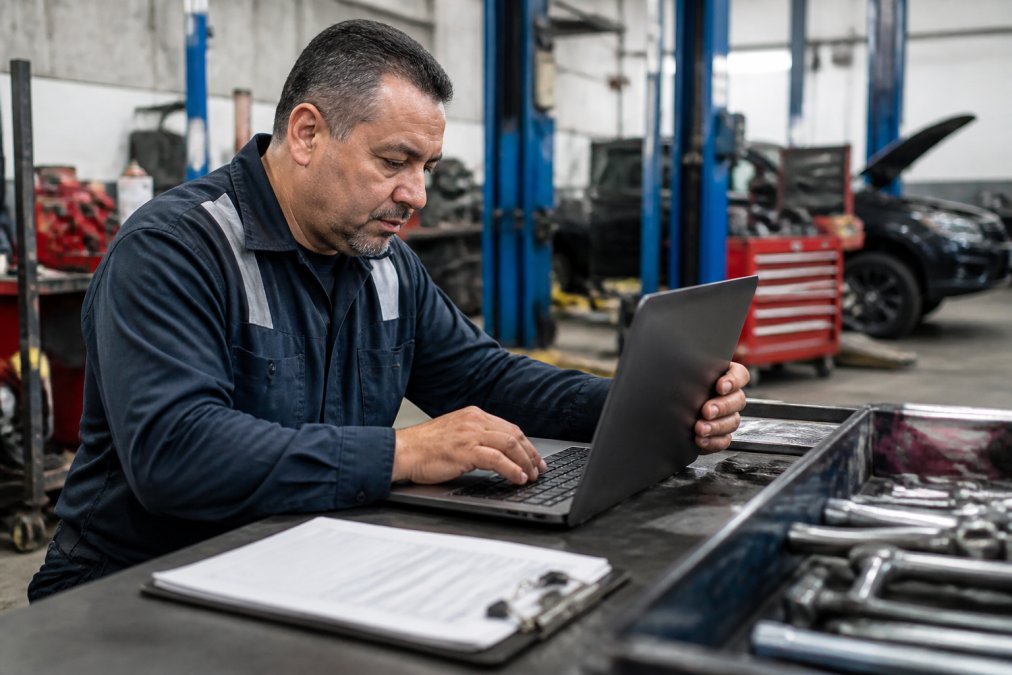
VIN decoding eliminates guesswork. It ensures you’re estimating for the exact vehicle in your bay, not a generic version of that make and model.
Labor Time Guides and Accuracy
Labor time guides are the backbone of any estimate. These reference documents specify how many hours a given repair should take on a specific vehicle. A transmission fluid change on a 2024 Honda Civic takes a different amount of time than the same job on a 2024 Audi A4 (alldata.com). The estimator must know the difference.
Industry-standard labor guides come from sources like Alldata, Mitchell, and CCC (peer-reviewed research). These databases are built on decades of real-world shop data and manufacturer specifications. A professional estimator pulls from one or more of these sources and applies them consistently. The accuracy of your estimate depends entirely on the quality of these guides.
Here’s where many shops get caught: a labor guide might list a job at 2.5 hours, but your shop consistently completes it in 2 hours because your team is experienced. Some estimators allow customization for this exact reason. You can adjust standard times to reflect your shop’s actual performance. That flexibility matters when you’re trying to stay competitive while maintaining healthy margins.
For specialty work, European car service, diesel diagnostics, transmission rebuilds, you need guides that reflect the complexity of those repairs. A generic estimator that treats all vehicles the same will underestimate difficult jobs and lose you money.
Parts Pricing Integration
Parts pricing changes constantly. A serpentine belt costs different amounts depending on the supplier, the brand, and whether you’re buying OEM or aftermarket. A professional estimator connects to real-time parts databases so you’re always quoting current prices, not yesterday’s rates.
The best tools integrate with multiple suppliers. If your shop uses Napa, AutoZone, and OEM parts depending on the job, the estimator should pull pricing from all three and let you choose which source to quote. This flexibility protects your margins and gives customers accurate information about parts availability.
For shops handling European vehicles or specialty components, integration with European parts suppliers becomes essential. A tool that only connects to domestic suppliers will leave you scrambling when you need a Bosch sensor or a Brembo brake component.
Outdated parts pricing in your estimator leads to two problems: you underbid jobs and lose margin, or you overbid and lose the customer. Update your parts database monthly at minimum.
How to Read a Car Repair Estimate
Understanding what’s on an estimate is just as important as generating one. A clear, well-organized estimate does more than protect you legally, it builds customer trust and reduces disputes over pricing.
A professional estimate breaks down into distinct sections: vehicle identification, labor items, parts, taxes, and total. Each line should be specific enough that a customer understands exactly what they’re paying for. "Engine work" is vague. "Replace spark plugs, wires, and ignition coil" is clear.

The labor section lists each repair task, the time allocated, and the hourly rate applied. If your shop charges $85 per hour and a job is estimated at 2.5 hours, the customer sees $212.50 for labor. Transparency here prevents sticker shock and builds confidence. Customers who understand where their money goes are more likely to approve estimates and return for future service.
Parts are listed separately with the part name, quantity, and unit price. OEM parts typically cost more than aftermarket equivalents, and a good estimate makes that distinction clear. If you’re recommending a premium part, explain why, better durability, warranty coverage, or manufacturer requirements. sustainable repair tips.
The estimate should also include any shop fees, diagnostic charges, or additional services. If you’ve already performed a diagnostic to determine what needs repair, that cost should be itemized. Many shops credit the diagnostic fee toward the repair if the customer approves the estimate, which is a customer-friendly practice that encourages approval.
Finally, the total should be clear and unambiguous. No hidden fees. No surprise charges added later. If the actual repair requires additional work once you’re inside the vehicle, that’s when you contact the customer and update the estimate before proceeding.
Comparison Table: Top Auto Repair Estimator Tools
| Tool | Key Strengths | Best For | Integration |
|---|---|---|---|
| Mitchell 1 | Comprehensive labor guides, OEM data, real-time updates | Full-service shops, complex diagnostics | Parts suppliers, DMS systems |
| Alldata | Extensive vehicle coverage, detailed specs, technician resources | Independent shops, specialty repairs | Multiple supplier networks |
| CCC Estimating | Insurance integration, photo documentation, mobile access | Collision and general repair | Insurer networks, shop management |
| ProDemand | Labor guides, parts pricing, quick lookup | Small to mid-size shops | Common supplier integrations |
Each tool has strengths depending on your shop‘s focus. A shop specializing in European car service might prioritize the tool with the most detailed OEM specifications. A collision shop benefits from tools with strong insurance integration. The right choice depends on your specific workflow and customer base.
Average Cost of European Car Repair and Estimator Accuracy
European vehicles command premium pricing for parts and labor, and estimators must reflect that reality. A routine brake service on a German luxury sedan costs significantly more than the same service on a domestic vehicle. The estimator you choose must have accurate data for European manufacturers: BMW, Mercedes-Benz, Audi, Porsche, and others.
Many general estimators underestimate European repair costs because they don’t account for specialized components, tighter tolerances, and higher parts costs. A shop that handles European vehicles needs an estimator with strong data for these makes. Otherwise, you’ll consistently underbid jobs and damage your profitability.
The cost difference isn’t arbitrary. European manufacturers often use proprietary components, require specific diagnostic tools, and demand higher labor rates due to complexity. An estimator that doesn’t reflect these realities will generate quotes that don’t match your actual costs.
For shops in areas with significant European vehicle populations, and many shops serving routine car maintenance near me clients encounter them regularly, choosing an estimator with strong European coverage is non-negotiable. CJ Auto Services LLC works with estimating tools that account for the premium costs associated with European makes and models, ensuring accurate quotes and healthy margins on every job.
Routine Car Maintenance Near Me: Using Estimators for Preventive Planning
Estimators aren’t just for major repairs. They’re also tools for preventive planning and customer education. When a customer brings in their vehicle for routine car maintenance near me, the estimator helps identify upcoming needs before they become expensive problems.
Many estimators include maintenance schedules based on manufacturer specifications. Input the vehicle’s mileage and model year, and the tool suggests what maintenance is due. This gives you a conversation starter with customers: "Your vehicle is due for a transmission fluid change at 60,000 miles. You’re at 58,500, so we should schedule that in the next month or so."
Preventive maintenance builds customer loyalty and steady revenue. A customer who understands their vehicle’s maintenance schedule is more likely to approve recommended services because they trust the guidance. An estimator that clearly communicates what’s needed and why builds that trust.
For shops offering routine car maintenance near me services, estimators become a marketing tool. Customers see detailed breakdowns of what’s included in each service and why it matters. That transparency converts one-time visitors into regular customers.
How to Choose the Best Estimator for Your Shop
Selecting an estimator means evaluating your shop’s specific needs, not just picking the most popular option. Start by identifying your shop’s primary service focus. Do you handle all makes and models, or specialize in European vehicles? Do you work with collision shops, or focus on mechanical repairs? Your answer shapes which tool will serve you best.
Next, consider integration. The best estimator in the world creates extra work if it doesn’t connect to your shop management system, parts suppliers, and diagnostic equipment. Seamless integration means data flows directly from your diagnostic scan to the estimate, reducing manual entry and errors.
Test the tool with vehicles you actually service. Pull up a few recent jobs and see how the estimator handles them. Can it find the right labor times? Does it pull accurate parts pricing? Does it handle specialty work like European diagnostics or diesel engine repairs? A tool that works beautifully for domestic vehicles might struggle with your shop’s specialty focus.
Cost matters, but it’s not the primary factor. A cheap tool that generates inaccurate estimates costs you far more in lost margins and customer disputes than a premium tool that gets it right every time. Many tools offer free trials, use them to evaluate performance before committing.
Finally, consider support and updates. Estimating tools are only as good as their data. A tool that updates labor guides and parts pricing monthly stays current. One that updates quarterly or annually will generate increasingly inaccurate estimates as time passes. Check the vendor’s update schedule before signing on.
Shops with 2-5 bays handling general repairs benefit most from tools like Mitchell 1 or Alldata. Larger shops or those with specialty focus should evaluate tools with deeper integration capabilities and more granular customization options.
Choosing the right professional auto repair cost estimator transforms how you operate. It protects your margins, builds customer trust, and saves your team hours of manual calculation. At CJ Auto Services LLC, we’ve built our reputation on transparency and accuracy, and that starts with estimating tools that get the numbers right. When you’re ready to simplify your estimating process and ensure every quote reflects your shop’s true costs, Schedule Service with our ASE Certified Mechanics and experience the difference that precision makes. Our team handles all makes and models, including European vehicles, with the same commitment to honest pricing and quality service that has earned us the trust of customers throughout the area.
Frequently Asked Questions
How accurate are online auto repair cost estimators?
Online estimators provide ballpark figures based on national labor rates and parts databases, but accuracy depends on the tool's data quality and how well it accounts for your vehicle's specific condition. A professional auto repair cost estimator used by shops tends to be more accurate than consumer-facing calculators because technicians can input actual diagnostic findings and regional pricing. For the most reliable estimate, get a quote directly from an ASE-certified mechanic who has inspected your vehicle.
What should be included in a professional auto repair estimate?
A complete estimate must include the vehicle identification number (VIN), itemized parts with costs, labor hours and rates, total parts and labor charges, and warranty information. It should also specify which parts are OEM or aftermarket, any fluids or supplies, and the timeline for completion. The estimate should be clear enough that you understand exactly what work will be performed and why. Transparent shops like CJ Auto Services provide detailed breakdowns so you know what you're paying for before work begins.
What factors influence the cost of European car repair?
European vehicles often cost more to repair than domestic models because parts are specialized and sometimes imported, labor rates are higher due to technician expertise required, and diagnostic procedures are more complex. Luxury and performance brands add another layer of cost. Models from manufacturers like BMW, Mercedes, and Audi need ASE-certified mechanics with European-specific training. Additionally, European cars may require premium fluids and components that exceed standard parts pricing, making accurate estimating especially important for budget planning.
How can I avoid hidden costs when getting my car repaired?
Request a written estimate before work begins and ask the shop to contact you if additional issues are discovered during diagnostics. Clarify what the warranty covers and get it in writing. Ask specifically about parts sourcing (OEM vs. aftermarket) and labor rates. Work with shops that perform computerized diagnostics upfront, like CJ Auto Services' electronic diagnosis service, so you have a clear picture of what needs fixing. A shop that communicates transparently and provides detailed estimates upfront is your best protection against surprise charges.
Do ASE Certified Mechanics provide more accurate estimates than online calculators?
Yes. ASE-certified technicians have hands-on experience diagnosing real vehicles and understand regional cost variations, vehicle-specific complexities, and actual labor times. Online calculators use generic databases that don't account for your vehicle's condition or local market rates. A certified mechanic can also identify secondary issues that a calculator would miss. When you work with ASE-certified professionals, you get an estimate backed by expertise and accountability, which is why many customers prefer in-person quotes from qualified shops.
What is VIN decoding in an auto repair estimator?
VIN decoding pulls your vehicle's complete specifications from its 17-character identification number: year, make, model, engine type, transmission, and trim level. This allows the estimator to apply exact labor times and parts compatibility data specific to your car. Without VIN decoding, estimates would be generic and potentially inaccurate. A professional auto repair cost estimator uses VIN data to ensure that parts recommended and labor hours quoted match your exact vehicle configuration, reducing the chance of errors or incompatible parts.
How do labor time guides affect repair estimates?
Labor time guides (like Alldata or Mitchell) standardize how long specific repairs should take, allowing shops to quote fair prices based on industry standards. These guides account for job complexity and required expertise. A professional auto repair cost estimator references these guides to calculate labor costs accurately. However, actual time may vary based on vehicle condition, technician experience, and complications discovered during work. Reputable shops factor in real-world variables and communicate if a job will take longer than the standard guideline.
This article was written using GrandRanker


