Table of Contents
- What Wheel Alignment Actually Does for Your Car
- 1. Your Steering Wheel Sits Off-Center
- 2. The Car Pulls to One Side
- 3. Uneven Tire Wear Causes and What It Looks Like
- 4. Vibrations Through the Steering Wheel
- 5. Loose or Wandering Steering Feel
- 6. How Often to Get Wheel Alignment (and What Throws It Off)
- 7. BMW Alignment Service in Boynton Beach: Why European Cars Need Specialized Equipment
- Frequently Asked Questions
Last Updated: September 26, 2026
What Wheel Alignment Actually Does for Your Car
Wheel alignment is the adjustment of your vehicle’s suspension so all four wheels sit at the angles the manufacturer intended. Get it wrong and your tires scrub sideways down the road instead of rolling straight, which wears them out early and makes the car harder to control. At CJ Auto Services LLC in Boynton Beach, Florida, we check alignment angles on every European car that comes through for steering complaints, and the pattern is always the same: the driver felt something small weeks before the damage showed up on the tires.
Here are the seven signs your car needs a wheel alignment, plus what each one actually means and when to stop guessing and get it inspected.
1. Your Steering Wheel Sits Off-Center
If the steering wheel is crooked while you drive straight down a flat road, the front toe setting has shifted. The wheel is your most honest alignment gauge, and it rarely lies.
You will notice it on the highway first. The car tracks straight, but the wheel sits a few degrees left or right of center. That offset means the tie rods are no longer even, usually after a hard pothole strike or a curb hit.
A common mistake is assuming this is cosmetic. It is not. An off-center wheel means one front tire is being dragged slightly sideways at all times, and that tire will wear faster than the other.
2. The Car Pulls to One Side
A constant pull to the left or right is the most common reason drivers book an alignment. On a level road with correct tire pressure, your car should track straight with light hands on the wheel.
A pull that shows up suddenly usually points to a bent suspension component. A pull that develops gradually is more often worn tie rod ends or a camber angle that has drifted out of spec. Either way, you are fighting the wheel to stay in your lane, and that gets tiring fast on I-95.
Do not confuse a pull with road crown. Most roads slope slightly to drain water, so a mild drift toward the shoulder is normal. A real pull needs constant correction, and it gets worse the faster you drive.
3. Uneven Tire Wear Causes and What It Looks Like
Uneven tire wear is the physical evidence of misalignment, and it is the sign most drivers catch too late. Run your hand across the tread and you will feel it before you see it.
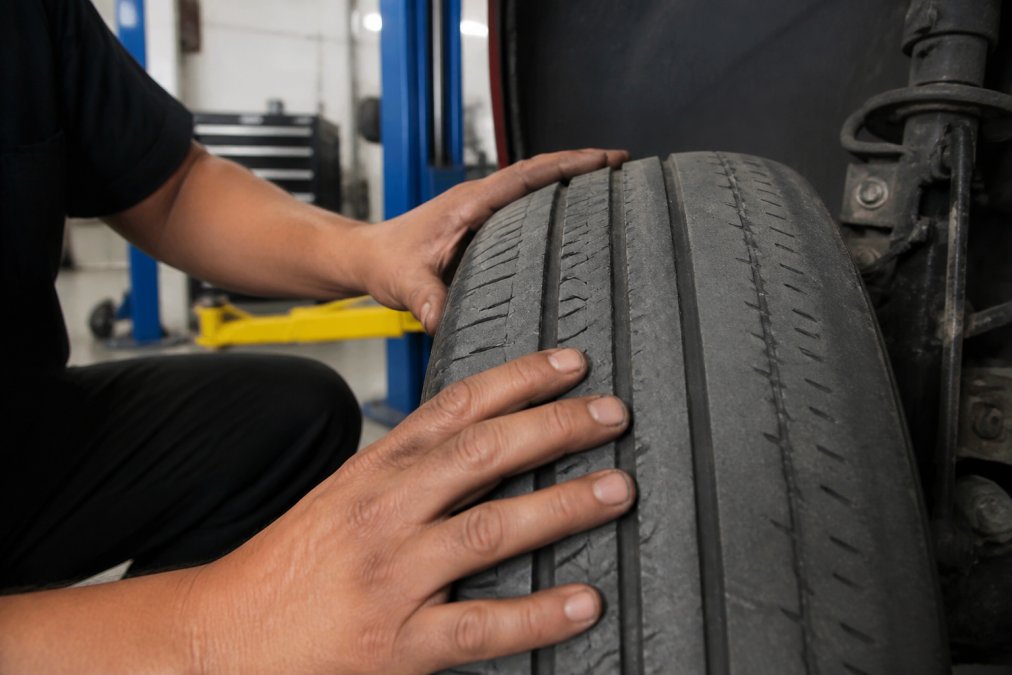
The three patterns worth knowing:
- Inner or outer edge wear: too much camber, positive or negative
- Feathered tread blocks: toe is out of spec, and the tread edges feel sharp one way, smooth the other
- Cupping or scalloped dips: often worn suspension parts rather than alignment alone
Here is the part most guides skip. Cupping usually means something is loose, not just out of adjustment. If your shocks or control arm bushings are worn, an alignment will not hold, and you will be back in the same spot in a few thousand miles. That is why a good shop checks suspension condition before it touches the alignment rack.
4. Vibrations Through the Steering Wheel
Steering wheel vibration is usually a wheel balance issue, but alignment plays a supporting role. If the shake comes and goes at certain speeds and the wheel also sits off-center, you likely have both problems. Precision in the assembly process prevents these imbalances from developing in the first place, a topic explored further in our wheel maintenance guide.
Vibration that appears only during braking points somewhere else entirely, often warped rotors. Vibration that shows up at a steady 60 to 70 mph is classic imbalance. Get the tires balanced and the alignment checked together, because fixing one without the other rarely solves the complaint.
For European cars, this matters more than most owners realize. BMW, Audi, and Porsche models are sensitive to small changes in wheel position, and a vibration you would barely notice in a softer car becomes obvious in a stiffly sprung sport suspension.
5. Loose or Wandering Steering Feel
Wandering steering means the car needs constant small corrections to hold a straight line. It feels vague, like the wheel is connected to the road through a rubber band.
Worn tie rod ends, a tired steering rack, or excessive toe will all cause this. On a test drive, a technician checks for play by rocking the wheel with the car stationary. Any clunk or slack points to a worn part that needs replacing before an alignment will mean anything.
If you are coming from a car with a fresh alignment, the difference is immediate. The steering feels planted and the car goes where you point it without a fight.
6. How Often to Get Wheel Alignment (and What Throws It Off)
How often to get a wheel alignment depends on your driving, not just your mileage. Most manufacturers suggest checking alignment once a year, and sooner if you hit something hard.
What throws alignment off, in rough order of frequency:
- Potholes and road construction zones
- Curb strikes while parking
- Minor collisions, even low-speed ones
- Suspension work or new tires
- Normal wear on tie rods and bushings over time
South Florida roads are not gentle. Between summer storms opening up pavement and construction traffic around Boynton Beach, front-end angles take a beating. If you just installed new tires, get an alignment at the same time. New rubber on worn angles wears out fast, and that is an expensive mistake.
7. BMW Alignment Service in Boynton Beach: Why European Cars Need Specialized Equipment
BMW alignment service in Boynton Beach is not the same job as aligning a domestic sedan. European cars often need specific ride height settings, weighted alignment procedures, and equipment that reads camber and caster to a finer tolerance than a basic two-wheel setup.
At CJ Auto Services LLC, our ASE Certified mechanics work on BMW, Mercedes-Benz, Audi, Porsche, and Volkswagen daily, and we handle the full computerized diagnosis that comes with modern European suspension systems. We are a family-owned shop, father and son, and we back our repairs with a 100% parts and labor warranty. If you want same-day service, free vehicle pick-up and drop-off, and a straight answer about what your car actually needs, that is what we do. You can Schedule Auto RepairService online whenever it is convenient for you.
A quick way to judge any shop before you hand over the keys:
- Do they check suspension parts before aligning, or just adjust angles?
- Can they show you the before-and-after alignment readings?
- Do they ask about your driving and tire wear, or just quote a number?
- Is the alignment done with the car at its proper ride height and load?
Frequently Asked Questions
What are the common symptoms of bad wheel alignment?
The most common signs include a steering wheel that sits off-center while driving straight, the car pulling to one side, uneven or rapid tire wear, vibrations through the steering wheel, and a loose or wandering steering feel. You may also notice your tires squealing on turns or the car feeling less stable at highway speeds. If you notice two or more of these at once, have a shop inspect the alignment rather than waiting for the next scheduled service.
Can bad alignment cause tire wear on European vehicles?
Yes. Misalignment forces tires to scrub at an angle instead of rolling flat, which wears one edge faster than the rest. On BMW, Audi, Porsche, and Volkswagen models, uneven tire wear causes are often tied to camber and toe settings that drift after hitting a pothole or curb. Because European tires are frequently more expensive to replace, catching alignment problems early protects both handling and your tire budget.
How often should I get a wheel alignment in Boynton Beach?
Most manufacturers recommend checking alignment every 12,000 miles or once a year, whichever comes first. In Boynton Beach, heat, road construction, and frequent potholes can knock alignment out sooner. Get it checked after any hard hit to a curb or pothole, after new tires are installed, or any time you notice pulling or uneven wear. A quick inspection is far cheaper than replacing a set of prematurely worn tires.
What happens if I ignore wheel alignment issues?
Ignoring alignment problems accelerates tire wear, which shortens tire life and can lead to a blowout at speed. It also strains suspension and steering components, so a small alignment fix can turn into a larger repair. Handling gets less predictable, especially in emergency maneuvers or heavy rain. Addressing the alignment early keeps the car stable, protects your tires, and avoids compounding damage to parts that are costlier to replace.
Why do European cars require specialized alignment equipment?
BMW, Mercedes-Benz, Audi, Porsche, and Volkswagen models often use adjustable camber and toe settings with tighter factory tolerances than many domestic or Asian vehicles. Some also require weight loading or specific ride-height procedures during alignment. A shop without the right equipment or European-specific software may get the numbers close but not correct, which leads to uneven wear and vague steering. Choose a shop experienced with European alignment specs.
Wheel alignment is one of those maintenance items that is easy to postpone until a tire bill forces the issue. If any of these seven signs sound familiar, get it looked at before the wear compounds. CJ Auto Services LLC offers computerized diagnosis, suspension repair, tire sales with install and balance, and alignment checks for European and domestic vehicles in Boynton Beach. Schedule service with us and get your car tracking straight again.