Table of Contents
- Why Your Car Maintenance Schedule Matters More in 2026
- The 30-60-90 Maintenance Schedule Explained
- Your Complete Car Maintenance Schedule by Interval
- DIY vs Professional Car Maintenance: Which Makes More Sense?
- Average Annual Car Maintenance Costs and How to Control Them
- EV vs. Gas Vehicle Maintenance: What Changes in 2026
- Digital Tools to Track Your Car Maintenance Schedule
- Conclusion
Last Updated: August 11, 2026
Why Your Car Maintenance Schedule Matters More in 2026
A car maintenance schedule is a structured plan that tells you exactly when to service specific components based on mileage or time intervals, helping you prevent costly breakdowns before they happen. Following one consistently is the single most effective thing you can do to protect your vehicle’s long-term reliability.
Here at CJ Auto Services LLC, we see the same pattern repeat itself: drivers skip routine service to save money in the short term, then face repair bills that dwarf what preventative maintenance would have cost. According to the National Highway Traffic Safety Administration’s vehicle safety resources, most mechanical failures that result in accidents are directly linked to neglected routine maintenance.
This guide covers everything you need to build and follow a complete car maintenance schedule in 2026, from oil changes to timing belt replacement, including a practical DIY vs. professional decision framework and the best digital tools to track it all. Always cross-reference with your manufacturer recommendations and your odometer reading, your service manual is the final authority on your specific car.
The 30-60-90 Maintenance Schedule Explained
The 30-60-90 maintenance schedule is the backbone of preventative maintenance for most gas-powered vehicles. It groups major service milestones at 30,000, 60,000, and 90,000 miles, with each interval triggering a progressively more comprehensive inspection of your vehicle’s systems. By scheduling inspections around predictable wear curves, you catch problems at the cheapest possible stage.
30,000-Mile Service: The Foundation
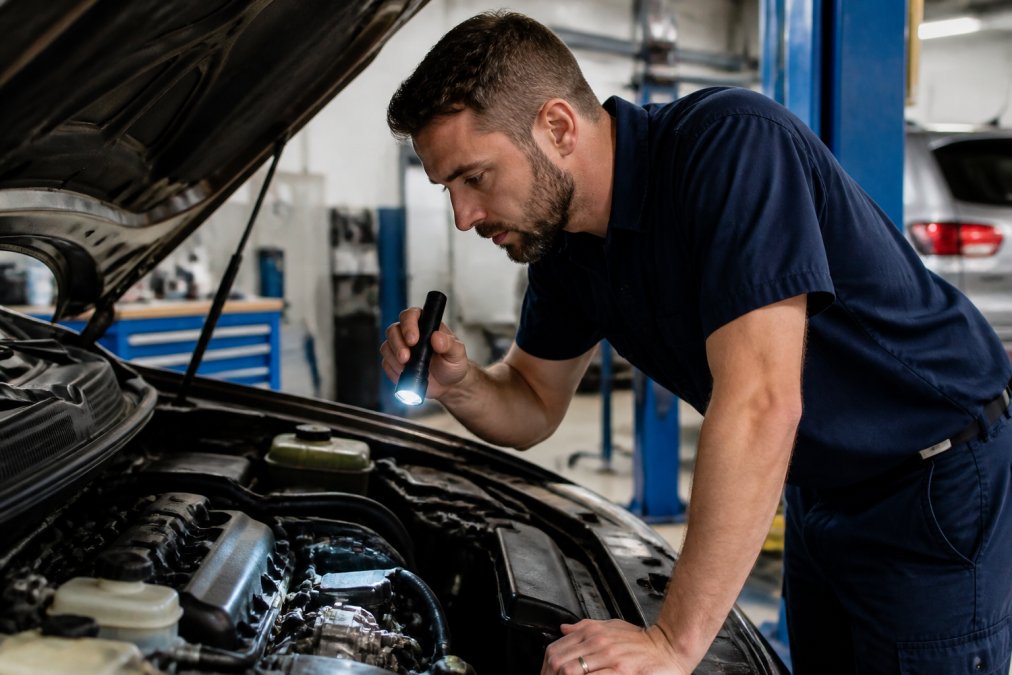
At this interval, expect to address engine air filter replacement, tire rotation and wheel alignment check, brake pad thickness inspection, power steering fluid and coolant level checks, battery voltage test and terminal cleaning, and wiper blade replacement. Many vehicles also benefit from a transmission fluid check at this stage, particularly if you do significant city driving.
60,000-Mile Service: Mid-Life Checkup
At 60,000 miles, your vehicle enters its most critical service window. This interval typically includes everything from the 30,000-mile service, plus spark plug replacement, coolant flush and refill, brake fluid replacement, serpentine belt inspection for cracking or fraying, suspension components check, cabin air filter replacement, and transmission fluid change. A failed serpentine belt disables power steering, the alternator, and often the water pump simultaneously, catching wear at 60,000 miles is far less expensive than a roadside failure.
90,000-Mile Service: Major Systems Review
The 90,000-mile service is the most comprehensive of the three milestones. For many vehicles, this is where timing belt replacement becomes urgent. A timing belt failure on an interference engine causes catastrophic internal damage. Additional items typically include full chassis lubrication, exhaust system inspection, complete brake system inspection including calipers and rotors, wheel alignment and tire tread depth measurement, and fuel system cleaning.
Your Complete Car Maintenance Schedule by Interval
| Service Task | Interval | DIY Friendly? | Priority |
|---|---|---|---|
| Oil and filter change | 3,000-7,500 miles | Yes | Critical |
| Tire rotation | 5,000-7,500 miles | Possible | High |
| Tire pressure check | Monthly | Yes | High |
| Air filter replacement | 15,000-30,000 miles | Yes | Medium |
| Battery inspection | 15,000-30,000 miles | Yes | High |
| Brake pad inspection | 20,000-30,000 miles | No (recommended Pro) | Critical |
| Transmission fluid | 30,000-60,000 miles | No | High |
| Coolant flush | 30,000-60,000 miles | No | High |
| Spark plug replacement | 30,000-100,000 miles | Possible | Medium |
| Serpentine belt | 60,000-100,000 miles | No | Critical |
| Timing belt | 60,000-100,000 miles | No | Critical |
Every 3,000-7,500 Miles: Oil, Tires, and Fluids
Oil changes remain the single most impactful item on any car maintenance schedule. Most modern vehicles using full synthetic oil can safely go 5,000 to 7,500 miles between changes. Check your owner’s manual rather than defaulting to the sticker on your windshield.
At every oil change interval, also check tire pressure against the placard inside your driver’s door, inspect your tire pressure monitoring system warning light, top off windshield washer fluid, and rotate tires if you’re at the 5,000-7,500 mile mark. Synthetic oil costs more per quart but lasts longer and protects better in extreme temperatures.
Every 15,000-30,000 Miles: Filters, Battery, and Brakes
This interval covers components that degrade gradually without obvious symptoms. A routine inspection should include engine air filter inspection and replacement if restricted, cabin air filter check, battery terminal cleaning and voltage test, brake pad thickness measurement, and wheel alignment check if you’ve noticed pulling or uneven tire wear.
Most auto parts stores will test your battery for free. A battery that tests below 12.4 volts at rest is worth replacing before winter.
Every 60,000-100,000 Miles: Belts, Spark Plugs, and Drivetrain
This is where deferred maintenance becomes genuinely dangerous. Key items include timing belt replacement, serpentine belt replacement if showing wear, spark plug replacement, transmission fluid change, differential fluid on rear-wheel and all-wheel drive vehicles, and complete drivetrain inspection.
Skipping a timing belt replacement on an interference engine is one of the most expensive mistakes a driver can make. When a timing belt snaps, pistons and valves collide, and repair bills routinely exceed the value of older vehicles.
DIY vs Professional Car Maintenance: Which Makes More Sense?
The honest answer depends on the task, your tools, and your time. Not every maintenance item requires an ASE-certified technician, but some absolutely do.
Tasks Most Drivers Can Handle at Home
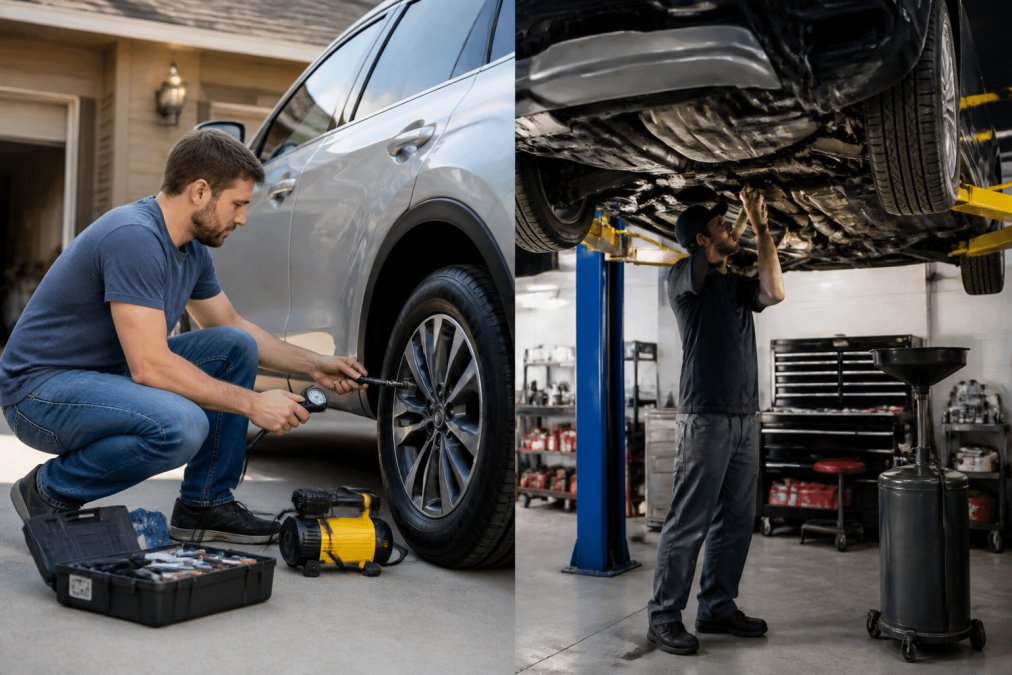
Engine air filter replacement, cabin air filter replacement, wiper blade replacement, tire pressure checks, battery terminal cleaning, and oil changes are all doable at home with basic tools. The real cost-benefit of DIY maintenance is time versus money. If your hourly rate at work exceeds what a shop charges for a given service, paying a professional is the rational choice.
When to Call an ASE-Certified Technician
Brake system work, timing belt replacement, transmission fluid changes, wheel alignment, suspension component replacement, and any diagnostic work involving modern vehicle electronics belong in a professional shop. According to the ASE’s consumer guidance on finding certified technicians, ASE certification requires technicians to pass rigorous exams and demonstrate hands-on experience. A good shop saves you money by catching secondary issues during a routine service.
Average Annual Car Maintenance Costs and How to Control Them
Annual car maintenance costs vary significantly based on vehicle age, make, model, and how proactively you service it. The most reliable way to control maintenance costs is to stay ahead of the schedule rather than react to failures.
Practical cost-control strategies include following manufacturer recommendations rather than fear-based upselling, tracking your odometer reading consistently, bundling services when possible, and addressing small issues immediately. For older, high-mileage vehicles, consistent maintenance often prevents breakdowns that would cost far more.
The car maintenance schedule that saves you the most money is the one you actually follow. Perfection matters less than consistency.
EV vs. Gas Vehicle Maintenance: What Changes in 2026
Electric vehicles have fundamentally different maintenance profiles than internal combustion engine vehicles. EVs eliminate oil and filter changes, spark plug replacement, serpentine belt service, fuel system cleaning, timing belt replacement, and transmission fluid changes.
What EVs still require includes tire rotation and alignment (EVs are typically heavier and wear tires faster), brake system inspection (though regenerative braking reduces pad wear), cabin air filter replacement, coolant system maintenance for battery pack and electronics, and battery health monitoring. As documented in the U.S. Department of Energy’s alternative fuels vehicle maintenance guidance, EV owners typically spend less on routine maintenance than gas vehicle owners over the vehicle’s lifetime, but battery replacement outside of warranty represents a significant potential cost.
Digital Tools to Track Your Car Maintenance Schedule
Keeping a reliable maintenance log is the difference between a car that holds its value and one that doesn’t. Several tools make this easy in 2026:
CARFAX Car Care automatically imports service history from participating shops, sends recall alerts, and provides mileage-based reminders. It supports up to eight vehicles with minimal manual input.
FIXD pairs a Bluetooth OBD2 sensor with a mobile app to provide real-time vehicle health monitoring, translates check engine codes into plain language, and tracks multiple vehicles.
Drivvo handles fuel logging, service records, maintenance reminders, and expense categorization across multiple vehicles, with cloud backup available on the premium tier.
GarageHub is built for DIY mechanics who want comprehensive records including parts used, labor cost, and photos, plus an AI mechanic for repair questions.
For drivers who prefer a physical record, the BookFactory Auto Maintenance Log Book provides a durable hardbound format at a one-time cost of $19.99 for the 8.5" x 11" version.
Whatever system you choose, the best maintenance log is the one you’ll actually use.
Staying on top of a car maintenance schedule is straightforward when you have the right support. At CJ Auto Services LLC, our ASE-certified mechanics handle everything from oil changes and brake system inspections to timing belt replacements and full drivetrain service, all makes and models included. With same-day appointments, free vehicle pick-up and drop-off, and a 100% parts and labor warranty, keeping your vehicle on schedule has never been more convenient. Schedule your service today and protect the investment you drive every day.
Frequently Asked Questions
What is the 30-60-90 rule for car maintenance?
The 30-60-90 rule refers to three major service milestones at 30,000, 60,000, and 90,000 miles. At 30,000 miles, you replace the engine air filter, inspect brakes, and flush coolant. At 60,000 miles, you address brake pads, transmission fluid, and spark plugs. At 90,000 miles, the timing belt, serpentine belt, and suspension components get a full review. Following this car maintenance schedule prevents most major mechanical failures.
How often should you actually change your oil in 2026?
For most modern vehicles using full synthetic oil, the manufacturer-recommended service interval is every 7,500 to 10,000 miles. Older engines or those using conventional oil may still require changes every 3,000 to 5,000 miles. Always check your service manual for your specific make and model. Skipping oil changes is one of the fastest ways to shorten engine life, regardless of what type of oil you use.
Can you go 2 years without changing your oil?
Even if your odometer reading stays low, oil degrades over time from heat cycles and moisture. Most automotive technicians and manufacturer recommendations cap oil life at 12 months regardless of mileage. Going two years without a change risks sludge buildup, reduced lubrication, and accelerated engine wear. If you drive fewer than 7,500 miles per year, an annual oil change is the minimum for protecting your engine.
Does following a maintenance schedule improve resale value?
Yes, documented preventative maintenance is one of the strongest factors in resale value. Buyers and dealers look for a complete vehicle health report showing consistent service history. Records of oil changes, tire rotations, brake inspections, and fluid flushes signal a well-cared-for vehicle. A physical log book or digital app that tracks every service appointment can meaningfully increase what a buyer is willing to pay.
What is the $3,000 rule for used car maintenance?
The $3,000 rule is a general guideline suggesting you avoid spending more than $3,000 on repairs if the total repair cost exceeds the vehicle's current market value. It helps owners decide whether to repair or replace an aging vehicle. For high-mileage cars, routine maintenance costs are still worth paying, but a single repair bill approaching or exceeding the car's value is typically a signal to consider replacement instead.
How do modern sensors change traditional maintenance intervals?
Many 2020 and newer vehicles include a tire pressure monitoring system, oil life monitoring, and battery voltage sensors that adjust service alerts based on actual driving conditions rather than fixed mileage. These systems can extend or shorten intervals depending on your habits. However, sensors only flag what they measure. Brake pad thickness, hose condition, and cabin air filter status still require a physical routine inspection by a qualified automotive technician.
This article was written using GrandRanker


