Table of Contents
- What a Steady Check Engine Light Means
- Common Causes of a Steady Check Engine Light
- BMW Check Engine Light Diagnostics
- How to Diagnose the Problem at Home
- European Auto Repair in Boynton Beach
- Routine Car Maintenance to Prevent Check Engine Lights
- When to Seek Professional Help
- Frequently Asked Questions
Last Updated: September 22, 2026
What a Steady Check Engine Light Means
If you’re wondering why is my check engine light on steady, it signals that your vehicle’s onboard diagnostic system detected a problem. Unlike a flashing light (which means stop driving immediately), a steady light gives you time to get professional help. Your car’s engine control unit monitors hundreds of sensors and systems. When something falls outside normal range, it triggers that amber light on your dashboard.
The light itself doesn’t tell you what’s wrong. It just means your vehicle needs attention soon. Ignoring it can lead to bigger, costlier repairs down the road.
Common Causes of a Steady Check Engine Light
Most steady check engine lights stem from a handful of common issues. These range from simple fixes to more involved repairs. Understanding the most frequent culprits helps you know what to expect when you bring your vehicle in for diagnostics.
Loose or Faulty Gas Cap
Your gas cap does more than seal your fuel tank. It creates pressure inside the system and prevents fuel vapors from escaping. A loose, cracked, or missing cap triggers a check engine light quickly.
This is the easiest problem to fix yourself. Pop your hood, locate the fuel door (usually on the side of your vehicle), and check the cap. Tighten it if it’s loose. If it’s cracked or damaged, replace it with a new one from any auto parts store.
Sometimes the light clears after you tighten the cap. Other times, you may need to drive a few cycles before the system resets. If the light stays on after fixing the cap, a different issue is at play.
Oxygen Sensor Problems
Your oxygen sensor measures how much oxygen is in your exhaust. This data helps your engine control unit adjust fuel mixture for optimal performance. A failing oxygen sensor can’t send accurate readings, triggering the check engine light.
Symptoms include rough idling, poor fuel economy, or a rotten egg smell from the exhaust. Oxygen sensors wear out over time. Vehicles with higher mileage are more prone to this issue.
This repair typically requires professional diagnostics to pinpoint which sensor is failing. European vehicles like Audi, BMW, and Porsche often have multiple oxygen sensors, so identifying the exact problem matters.
Catalytic Converter Issues
Your catalytic converter cleans toxic gases from your exhaust before they exit the tailpipe. A failing converter can’t do its job, triggering a check engine light and often a rotten egg smell.
Common causes include:
- Running a lean fuel mixture (too much air, not enough fuel)
- Engine misfires that send unburned fuel into the converter
- Physical damage from road debris
- Internal failure from age or contamination
Catalytic converter repairs are significant. Preventive maintenance and addressing other engine issues quickly helps avoid converter damage.
Mass Airflow Sensor Failure
The mass airflow sensor measures how much air enters your engine. The engine control unit uses this data to adjust fuel injection. A dirty or faulty sensor sends wrong signals, causing rough running and triggering your check engine light.
These sensors collect dust and debris over time. A clogged sensor often needs cleaning or replacement. The good news is that cleaning sometimes solves the problem without a full replacement.
BMW Check Engine Light Diagnostics
European vehicles like BMW demand specialized attention. BMW’s diagnostic systems are sophisticated and require specific equipment to read properly. A standard code reader might pick up a fault, but won’t give you the full picture of what’s happening under the hood.
At CJ Auto Services LLC in Boynton Beach, our ASE Certified mechanics have the diagnostic tools needed for BMW and other European vehicles. We can pull detailed fault codes and trace problems to their source. This precision saves you time and money by avoiding guesswork.
BMW check engine lights often relate to:
- Oxygen sensor issues (common on higher-mileage BMWs)
- Carbon buildup on intake valves (especially in turbocharged engines)
- Fuel injector problems
- Emissions system faults
Getting accurate diagnostics is the first step. Once we know what triggered the light, we can explain your options and recommend the best path forward.
How to Diagnose the Problem at Home
You can perform some basic checks before heading to a repair shop. These steps help you understand what might be wrong and prepare you for the conversation with your mechanic.
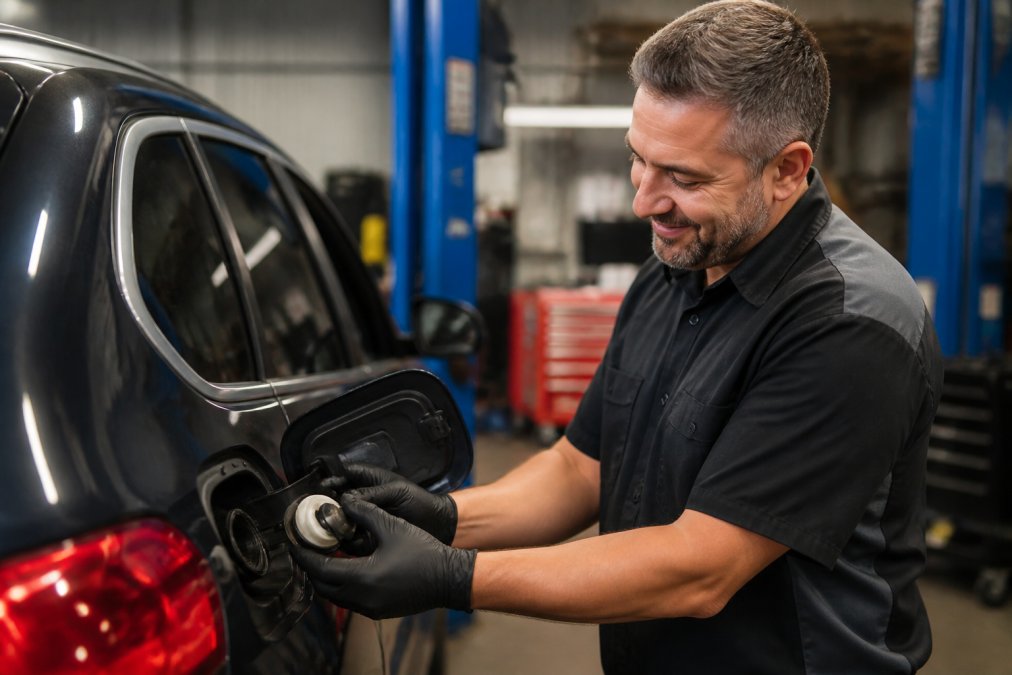
Step 1: Check Your Gas Cap
Start here. A loose or faulty gas cap is the easiest fix and the most common reason why is my check engine light on steady.
Steps:
- Open your fuel door
- Twist the cap counterclockwise to remove it
- Inspect it for cracks, damage, or debris
- Clean the cap and the opening if needed
- Screw it back on firmly until you hear a click
- Drive normally for a few days to see if the light clears
Step 2: Note Any Performance Changes
Your vehicle’s behavior gives clues about what’s wrong. Write down what you notice:
- Does the engine run rough or shake at idle?
- Is acceleration sluggish or normal?
- Does the exhaust smell unusual (rotten eggs, burning, or sweet)?
- Are you seeing reduced fuel economy?
- Any unusual sounds from the engine?
These observations help your mechanic narrow down the problem faster. They’re especially valuable when you bring your vehicle to a shop.
Step 3: Use a Code Reader
A basic OBD-II code reader plugs into your vehicle’s diagnostic port (usually under the steering wheel on the driver’s side). Most auto parts stores sell affordable readers or will read your codes for free.
The code reader pulls the fault code from your engine. Common codes include:
- P0171: System too lean
- P0300: Random cylinder misfire
- P0420: Catalyst system efficiency below threshold
- P0133: Oxygen sensor circuit slow response
Write down any codes you get. These codes guide your mechanic toward the real problem. However, a code is a symptom, not always a diagnosis. Your mechanic still needs to verify what’s actually causing the fault.
European Auto Repair in Boynton Beach
When your check engine light stays on, choosing the right shop matters. European vehicles need mechanics who understand their systems. Boynton Beach has several repair options, but not all shops have the expertise or equipment for BMW, Audi, Porsche, and Volkswagen diagnostics.
CJ Auto Services LLC specializes in European auto repair. Our family-owned shop has served Boynton Beach for years. We invest in the diagnostic equipment these vehicles require. Our ASE Certified mechanics know European systems inside and out.
We offer:
- Full computerized diagnostics for European vehicles
- Honest recommendations without pressure
- 100% parts and labor warranty on all repairs
- Free vehicle pick-up and drop-off
- Same-day appointments
When you bring your vehicle to us, we pull complete diagnostics.
Routine Car Maintenance to Prevent Check Engine Lights
Prevention beats diagnosis and repair every time. Regular maintenance catches small problems before they trigger warning lights.
Key maintenance tasks:
- Oil changes: Follow your manufacturer’s schedule. Clean oil keeps your engine running smoothly.
- Air filter replacement: A clogged air filter affects engine performance and fuel economy.
- Fuel filter service: A dirty fuel filter reduces fuel flow and can trigger lean-running conditions.
- Spark plug replacement: Worn plugs cause misfires, which damage your catalytic converter.
- Oxygen sensor inspection: Have these checked during routine service, especially on higher-mileage vehicles.
- Emissions system check: Regular inspection catches problems early.
When to Seek Professional Help
Some check engine issues you can handle yourself. Most require professional diagnostics and repair.
Seek professional help if:
- The light stays on after you tighten your gas cap
- Your vehicle runs rough or hesitates during acceleration
- You notice unusual smells from the exhaust
- Fuel economy drops noticeably
- The light flashes (stop driving immediately)
- You own a European vehicle and want accurate diagnostics
Frequently Asked Questions
Is it safe to drive with a steady check engine light?
A steady check engine light indicates a non-critical emission system issue, so it’s usually safe to drive to a repair shop. However, if the light is flashing or accompanied by rough idling, loss of power, or unusual sounds, stop driving immediately and have the vehicle towed. A steady check engine light should still be diagnosed within a few days to prevent further damage and maintain fuel efficiency.
What are the most common causes for a steady check engine light in European cars?
European vehicles like BMW, Audi, and Volkswagen often trigger steady check engine lights due to oxygen sensor failures, mass airflow sensor issues, catalytic converter problems, or loose gas caps. These vehicles have more sensitive emission systems than some domestic cars. A loose gas cap is the simplest fix; if that’s not the issue, professional BMW check engine light diagnostics can pinpoint the exact problem using specialized scan tools designed for European vehicles.
Can a loose gas cap cause a steady check engine light?
Yes, a loose or damaged gas cap is one of the most common causes of a steady check engine light. The cap seals the fuel system and triggers a warning when it’s not secure. Before visiting a repair shop, check that your gas cap is tight. If the light persists after tightening or replacing the cap, the issue is likely deeper in the emission system and requires professional European auto repair diagnostics.
Do I need a specialized mechanic for European car diagnostics in Boynton Beach?
Yes, European vehicles benefit from specialized expertise. ASE-certified mechanics familiar with BMW, Audi, Porsche, and Volkswagen systems can diagnose issues more accurately using brand-specific diagnostic tools. Local European auto repair shops in Boynton Beach understand the unique emission systems and performance standards of these vehicles, ensuring proper diagnosis and repair rather than guesswork.


