A low growl that gets louder on I-95, a vibration through the floor, or a vehicle that no longer feels settled in a turn can point to more than an annoying road noise. Wheel bearing diagnosis helps separate a worn bearing from tire noise, brake problems, suspension wear, and other issues that can feel similar from the driver’s seat. Catching the cause early protects your safety, your tires, and the parts around the wheel.
A wheel bearing is a set of precision components inside the wheel hub assembly. It allows the wheel to rotate smoothly while carrying the vehicle’s weight and handling the forces created by braking and turning. When it begins to wear out, the problem usually gets worse with mileage. Waiting can turn a manageable repair into damage to the hub, tire, brake components, or steering and suspension parts.
What a Failing Wheel Bearing Usually Sounds Like
The most common symptom is a humming, rumbling, grinding, or growling sound that rises with vehicle speed. Many drivers first notice it around 30 to 45 mph, then find it more obvious at highway speed. Unlike engine noise, bearing noise generally follows how fast the vehicle is moving, not how high the engine RPM is.
The sound may also change as the vehicle turns. During a gentle left or right curve, vehicle weight shifts toward the outside wheels. If the noise becomes louder when turning left, the worn bearing may be on the right side, and vice versa. That pattern is helpful, but it is not a final diagnosis. Tire tread patterns, road surfaces, and multiple worn components can make the noise seem as if it is coming from a different corner of the vehicle.
Tire noise can be especially confusing. Cupped, unevenly worn, or aggressive-tread tires can create a hum that closely resembles a bad wheel bearing. The difference is often revealed during a road test and tire inspection. Rotating tires may change tire-related noise, while bearing noise usually stays connected to the same wheel area.
Signs Beyond the Noise
A noisy bearing deserves attention, but not every failing bearing starts with a clear growl. You may notice a vibration in the steering wheel, floor, or seat. The vehicle may feel less stable during turns, or the steering may feel slightly loose. In more advanced cases, there can be a clicking, clunking, or grinding sound near one wheel.
A damaged bearing can also create excessive wheel play. This means the wheel and hub move more than they should when lifted and checked by a technician. Excess play can affect brake feel, wheel alignment angles, and tire wear. On vehicles with wheel-speed sensors built into the hub assembly, a failing bearing may even trigger an ABS, traction control, or stability control warning light.
Do not rely on a warning light alone. Many wheel bearings can be significantly worn without setting a dashboard warning. The best time to schedule an inspection is when you notice a new sound, vibration, or handling change that does not go away.
How Professional Wheel Bearing Diagnosis Works
A proper diagnosis starts with listening to the customer. Details matter: when the noise occurs, whether it changes in turns, if it started after a pothole impact, and whether recent tire or brake work was performed. A technician then road-tests the vehicle when appropriate, listening for speed-related noise and checking how it changes under light cornering.
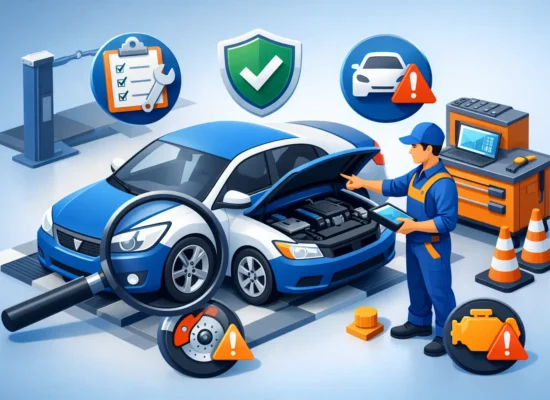
Back at the shop, the vehicle is raised safely for a hands-on inspection. The technician checks each wheel for looseness, roughness, and abnormal movement. Spinning the wheel may reveal a gritty feel or audible roughness, although some bearings only make noise when they are loaded on the road.
The inspection should also include the tire condition, brakes, CV axles, steering linkage, ball joints, and suspension components. A loose ball joint, worn tire, damaged CV joint, or brake issue can create symptoms that overlap with a bearing problem. Looking at the complete wheel area is how a shop avoids replacing parts based on a guess.
For vehicles with electronic wheel-speed sensors, diagnostic equipment can help identify inconsistent sensor signals. This is useful when an ABS or traction control light is involved, but it is only one part of the process. The physical condition of the hub, wiring, and related components still needs to be checked.
Why Wheel Bearings Fail
Wheel bearings are built to last, but their lifespan depends on driving conditions, vehicle weight, and the quality of previous repairs. South Florida roads may not deal with winter salt, but potholes, curb strikes, standing water, and hard impacts can still shorten bearing life. Water intrusion can damage the grease and internal surfaces, while a strong impact can put stress on the hub assembly.
Improper installation is another cause. On many modern vehicles, the bearing is part of a sealed hub assembly. Correct torque on the axle nut and wheel fasteners matters. Over-tightening, under-tightening, or using improper installation methods can damage a new bearing before it has a fair chance to perform.
There is also a connection between worn suspension parts and bearing stress. A vehicle with poor alignment, weak shocks, or damaged components may place uneven loads on the wheel area. Not every worn bearing means another part caused it, but checking the full system helps prevent a repeat issue.
Can You Keep Driving With a Noisy Bearing?
It depends on the severity, but a suspected wheel bearing should not be ignored or treated as a normal vehicle noise. Early wear may allow limited driving to a repair appointment, but the bearing can deteriorate faster than expected. Once there is noticeable looseness, grinding, severe vibration, or a change in braking and steering feel, the risk becomes more serious.
A badly damaged bearing can overheat, damage the hub, interfere with wheel-speed sensor operation, or allow excessive wheel movement. In extreme cases, it can contribute to wheel separation. If the noise suddenly becomes loud, the vehicle pulls unexpectedly, the wheel feels loose, or you smell overheating near a wheel, stop driving and arrange for professional help.
Avoid trying to confirm the problem by swerving aggressively or driving at high speed. That puts you and nearby drivers at risk and does not provide a reliable answer. A controlled inspection is safer and more accurate.
Repair Choices and What Affects Cost
The repair may involve replacing a sealed hub assembly or pressing a separate bearing into the steering knuckle, depending on the vehicle. Some jobs are straightforward; others require more labor because of rust, axle removal, sensor connections, or the design of the suspension. This is why an accurate inspection should come before a price estimate.
Quality parts matter with wheel bearings. The cheapest option is not always the best value when the component supports the wheel and affects safety systems. A trustworthy repair shop should explain what failed, what the recommended repair includes, and whether any related parts need attention now or should simply be monitored.
At CJ Auto Services, ASE-certified technicians can inspect the source of wheel noise and explain the findings in clear terms, without dealership-style pressure. Same-day appointments and available vehicle pick-up and drop-off help make an unexpected repair easier to manage, and repairs are backed by a 100% parts and labor warranty.
Do Not Let a Small Noise Become a Bigger Repair
A wheel bearing rarely gets quieter on its own. If your vehicle has developed a hum, growl, vibration, or handling change, make time for an inspection before it affects your next commute, family trip, or workday. A clear diagnosis gives you the information to make a practical repair decision with confidence.