Table of Contents
- How to Choose a Car Mechanic: The Core Criteria
- ASE Certified Mechanic Benefits: Why Certification Matters
- Questions to Ask a Mechanic Before Repair
- Signs of a Dishonest Auto Repair Shop
- Reading Reviews, Ratings, and Referrals
- Mobile Mechanics and Digital Diagnostics: Modern Options to Vet
- How to Choose a Car Mechanic for Specialized Vehicles
- How to Handle a Dispute With Your Repair Shop
Last Updated: August 10, 2026
Finding a trustworthy mechanic is harder than it should be. Too many drivers have handed over their keys and gotten back a bill full of surprises, or worse, a car that still isn’t fixed. At CJ Auto Services LLC, we’ve seen firsthand what separates a shop you can rely on from one you’ll regret. This guide walks you through exactly how to choose a car mechanic who will treat your vehicle, and your wallet, with respect.
How to Choose a Car Mechanic: The Core Criteria
Choosing a car mechanic comes down to three non-negotiable factors: verified credentials, transparent communication, and a clean, organized workspace.
| Evaluation Factor | What to Look For | Red Flag |
|---|---|---|
| Certifications | ASE certification displayed prominently | No credentials visible |
| Written estimate | Itemized parts and labor before work starts | Verbal-only quotes |
| Shop cleanliness | Organized bays, clean floors, labeled parts | Chaotic, dirty workspace |
| Customer reviews | Consistent praise for honesty and communication | Patterns of billing complaints |
| Warranty coverage | Parts and labor warranty in writing | No warranty offered |
| Specialization | Experience with your vehicle make and model | Vague claims of "all vehicles" |
Check Certifications and Professional Affiliations
The most reliable signal of technical competence is ASE certification. ASE stands for Automotive Service Excellence, and it’s the industry’s primary credentialing body. An ASE-certified technician has passed rigorous exams covering engine repair, brakes, electrical systems, and more. According to ASE’s official certification overview, technicians must pass hands-on and written assessments and recertify every five years to maintain their credentials, ensuring knowledge stays current with evolving vehicle technology.
Professional affiliations like the Automotive Service Association (ASA) or AAA-approved repair facilities create accountability through codes of ethics and give you recourse if something goes wrong.
Evaluate Shop Cleanliness, Organization, and Tools
Walk into the service bay before you hand over your keys. A well-run shop has clean floors, organized tool storage, labeled parts bins, and uncluttered service bays. Cleanliness signals whether the team takes preventative maintenance seriously and respects the work they do. Specialized tools and modern diagnostic equipment indicate investment in staying current with vehicle technology.
ASE Certified Mechanic Benefits: Why Certification Matters
ASE certified mechanic benefits go beyond a patch on a uniform. Certification is third-party verification that the technician can diagnose and repair the systems they claim to handle.
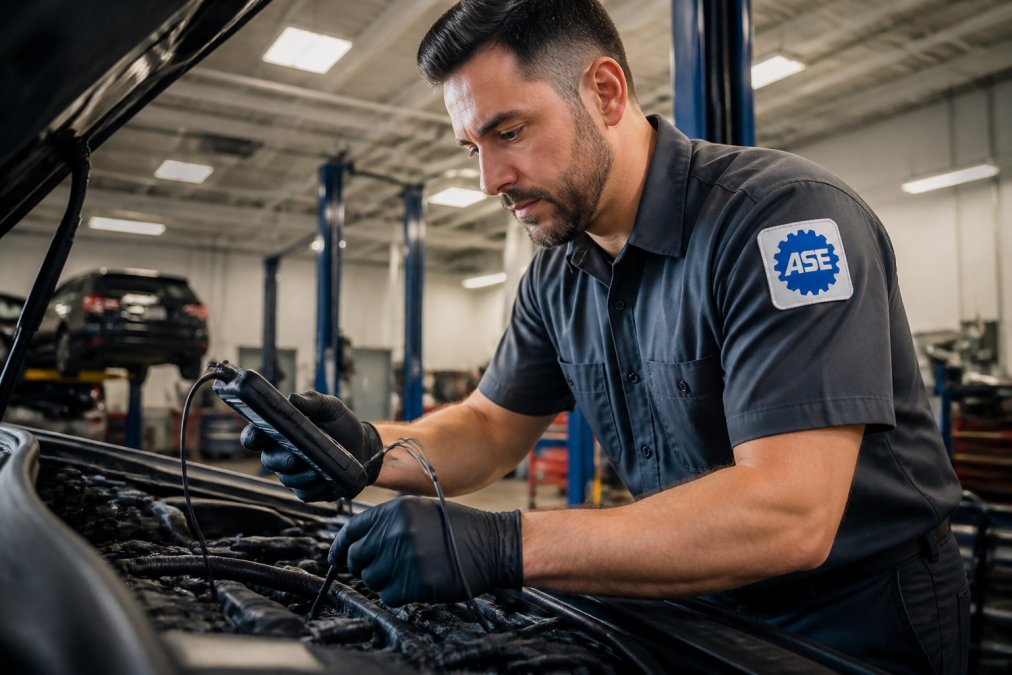
A certified technician brings documented technical training to every repair. They understand original equipment manufacturer specifications, know when aftermarket parts are appropriate versus OEM parts, and can interpret engine diagnostics accurately. Not every mechanic in a shop is certified, ask specifically which technician will work on your vehicle and whether they hold the relevant ASE certification for your repair type.
According to the National Institute for Automotive Service Excellence, there are over 50 different ASE certification categories. That specificity means you can match the technician’s credentials to your actual repair need.
Ask the shop to show you the technician’s current ASE certificate, not just a general shop certification. Certificates include the technician’s name and expiration date, so you can verify they’re active and relevant to your repair.
Questions to Ask a Mechanic Before Repair
Most drivers ask the wrong questions. They ask "how much?" before they ask "what exactly did you find?" Understanding the diagnosis first is what separates informed customers from ones who get taken advantage of.
The right questions to ask a mechanic before repair are:
- What did your diagnostic process find, specifically? A good technician describes the fault in plain language.
- Are you using OEM or aftermarket parts? You deserve to know which and why.
- What does the warranty cover on this repair? A shop confident in its work backs it with a parts and labor warranty.
- Will you contact me before doing any additional work beyond the estimate? Any shop that starts extra work without approval is a problem.
- How long have your technicians worked on this vehicle make? Experience with specific makes matters, especially for diesel engines or European vehicles.
- What diagnostic tools did you use? Modern vehicle systems require modern diagnostic equipment.
Getting a Written Estimate and Understanding Labor Rates
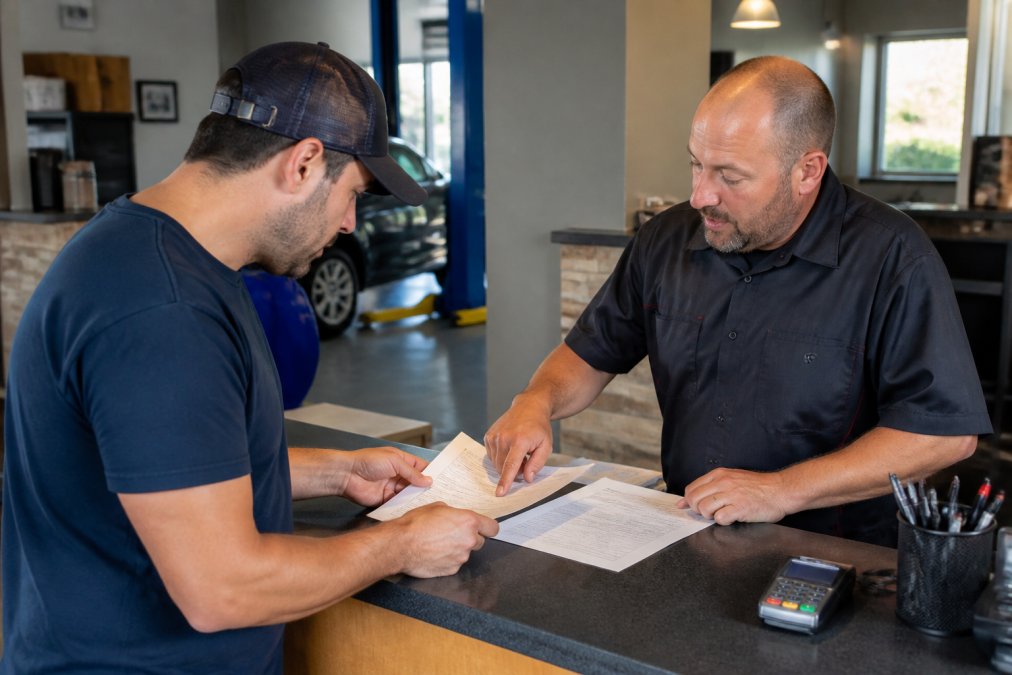
A written estimate is non-negotiable. Before any work begins, you should have a document itemizing parts costs, labor rates, and the diagnostic fee separately. Labor rates vary by region, shop type, and technician certification level. The key is that the rate should be disclosed upfront.
As documented in FTC guidance on auto repair and consumer rights, consumers have the right to a written estimate, the right to get their old parts back after a repair, and the right to authorize work before it begins.
Never authorize “open-ended” repairs where the shop can proceed without checking back with you. Always set a cap on the estimate and require a call before any additional work exceeds that amount.
Signs of a Dishonest Auto Repair Shop
Common red flags include vague or verbal-only quotes, pressure to approve work immediately, unnecessary repairs without evidence, no warranty offered, unclear labor rates, dirty service bays, and refusal to return old parts. The pattern to watch for isn’t a single red flag, it’s clusters of them.
Reading Reviews, Ratings, and Referrals
Online reputation is one of the most reliable pre-screening tools. Look for patterns rather than individual data points. A shop with consistent praise for honesty, speed, and communication is demonstrating something real. How the shop responds to negative reviews matters more than the reviews themselves, a professional, solution-oriented reply shows accountability.
Referrals from people you trust remain the gold standard. Ask specifically about transparency, whether the shop communicated clearly during repairs, and whether the vehicle came back fixed the first time.
The most predictive review signals are consistency over time and the shop’s response to negative feedback.
Mobile Mechanics and Digital Diagnostics: Modern Options to Vet
Mobile mechanics have become a legitimate option for routine repairs and diagnostics. Apply the same credential checks you’d use for a brick-and-mortar shop: ASE certification, verifiable customer feedback, and a written estimate before work begins.
Digital diagnostic tools have changed what’s possible in auto repair. Modern vehicles communicate fault codes through onboard systems, and a technician with the right equipment can pull detailed engine diagnostics and identify electrical faults without guessing. Ask: "What diagnostic tools do you use, and can you show me the scan results?" A shop that can hand you a printed or digital diagnostic report is demonstrating both transparency and technical competence.
How to Choose a Car Mechanic for Specialized Vehicles
Specialized vehicles, diesel trucks, European imports, high-performance cars, and fleet vehicles, require technicians with specific experience, not just general automotive training. For diesel engines, ask directly: "How many diesel vehicles do you service per month, and what diagnostic equipment do you use for diesel systems?"
Fleet maintenance requires a shop that can handle volume and maintain consistent service records. For high-performance vehicles, the concern is parts sourcing and calibration. Before committing any specialized vehicle to a shop, ask for specific examples of similar vehicles they’ve serviced.
How to Handle a Dispute With Your Repair Shop
Most disputes start with a gap between what was promised and what was delivered. If you believe a repair was done incorrectly or you were charged for work that wasn’t performed:
- Request the repair order. This document should itemize every service performed and associated costs.
- Ask to see the replaced parts. If the shop claims they replaced a component, they should show you the old one.
- Get a second opinion. Take the vehicle to another ASE-certified technician and document their findings.
- Contact your state’s consumer protection office. The FTC’s consumer protection resources for auto repair outlines your federal rights.
- File with the Better Business Bureau or your state’s motor vehicle repair board. Many states have formal complaint processes with real consequences.
- Consider small claims court for unresolved billing disputes. This is often faster and more effective than pursuing a lawsuit.
Keep every written estimate, invoice, text message, and email. A shop that won’t provide documentation is a shop that knows it has something to hide.
Finding a repair facility you can trust requires checking credentials, asking direct questions, reading patterns in customer feedback, and knowing your rights before you hand over your keys. CJ Auto Services LLC brings ASE-certified technicians, a 100% parts and labor warranty, same-day appointments, and free vehicle pick-up and drop-off to every service. Schedule service with CJ Auto Services LLC and experience what transparent, accountable auto repair actually looks like.
Frequently Asked Questions
Should I go to a dealership or an independent mechanic?
Dealerships employ factory-trained technicians for your specific make and have direct access to original equipment manufacturer parts, but their labor rates are typically higher. Independent repair facilities with ASE certified mechanics often provide the same quality of work at more transparent pricing, and many specialize in multiple makes and models. For routine preventative maintenance and common repairs, a reputable independent shop is a solid choice. For warranty-covered work or highly specialized recalls, a dealership may be required.
What are the red flags of a bad mechanic?
The clearest signs of a dishonest auto repair shop include refusing to provide a written estimate before starting work, quoting a low diagnostic fee then inflating the final repair order, pressuring you to approve additional repairs on the spot, and being vague about parts used (whether aftermarket or OEM). A disorganized service bay, no verifiable ASE certification, and zero online reputation or customer feedback are also warning signs worth taking seriously before you hand over your keys.
How do I know if a mechanic is overcharging me?
Get written estimates from two or three repair facilities before approving any significant work. Compare the labor rate per hour and the cost of parts separately. Ask whether the shop uses aftermarket parts or original equipment manufacturer parts, since pricing differs. If a shop charges a diagnostic fee but refuses to apply it toward the repair, that is worth questioning. Transparent pricing means you receive a detailed repair order listing parts, labor, and any warranty coverage before work begins.
What questions should I ask a mechanic before repair?
Ask whether the shop employs ASE certified mechanics, specifically for your vehicle type. Request a written estimate itemizing parts and labor before any work starts. Ask whether parts carry a warranty and how long it lasts. Confirm the labor rate and whether a diagnostic fee applies. If your vehicle has a service history on file, ask whether the technician will review it. For specialized vehicles like diesel trucks or high-performance cars, ask directly whether the shop has hands-on experience with that make and engine type.
What is the 30 60 90 rule for car maintenance?
The 30-60-90 rule is a general preventative maintenance guideline tied to mileage intervals: at 30,000 miles, services like air filter replacement and fluid checks are typical; at 60,000 miles, spark plugs, belts, and brake inspections often come due; at 90,000 miles, timing belts, coolant flushes, and transmission service are commonly recommended. Always cross-reference these intervals with your vehicle's owner manual, since manufacturer schedules vary by make and model.
How do I handle a dispute with an auto repair shop?
Start by reviewing your original written estimate against the final repair order and noting any unauthorized charges. Raise the issue directly with the service advisor or shop owner first. If that fails, file a complaint with your state's consumer protection office or the Better Business Bureau. Many states have specific automotive repair laws that require shops to obtain written authorization before exceeding an estimate. Keeping copies of all paperwork, including the repair order and any parts and labor warranty documentation, strengthens your position significantly.
This article was written using GrandRanker


