Table of Contents
- How Diesel Engines Differ From Gasoline Engines
- Diesel Truck Repair Maintenance Tips You Can’t Ignore
- Signs of Diesel Fuel Injector Failure and What to Do
- Common Diesel Engine Maintenance Schedule Explained
- Why Specialized Mechanics Matter for Diesel Engines
- The Cost of Neglecting Diesel Engine Care
- Getting Your Diesel Engine the Care It Deserves
Last Updated: August 30, 2026
Diesel engines demand specialized maintenance that differs fundamentally from gasoline vehicles. At CJ Auto Services LLC, we’ve seen a clear pattern: owners who skip specialized care face expensive repairs. Understanding why diesel engines need different care protects your investment and keeps your vehicle reliable.
How Diesel Engines Differ From Gasoline Engines
Diesel and gasoline engines operate on fundamentally different principles. A diesel engine ignites fuel through compression heat alone, while gasoline engines rely on spark plugs. This single difference cascades into every maintenance decision you’ll make.
Diesel engines run compression ratios of 16:1 to 24:1, compared to 8:1 to 12:1 in gasoline engines. This higher compression generates extreme heat for ignition but creates tremendous internal stress. Diesel engines are built heavier with thicker materials and tighter tolerances, which means they last longer under normal conditions but break harder when something fails.
Diesel fuel is thicker and heavier than gasoline, containing more energy per gallon but attracting water more readily and gelling in cold temperatures. Diesel fuel injectors operate at pressures exceeding 20,000 PSI, roughly 10 times higher than gasoline injectors. Even tiny contamination particles can destroy a diesel fuel injector in minutes.
Modern diesel engines also feature emissions control systems that don’t exist on gasoline engines: diesel particulate filters (DPF) trap soot from exhaust, and selective catalytic reduction (SCR) systems use diesel exhaust fluid (DEF) to reduce nitrogen oxides. These systems require their own maintenance routines and can fail expensively if neglected.
Diesel Truck Repair Maintenance Tips You Can’t Ignore
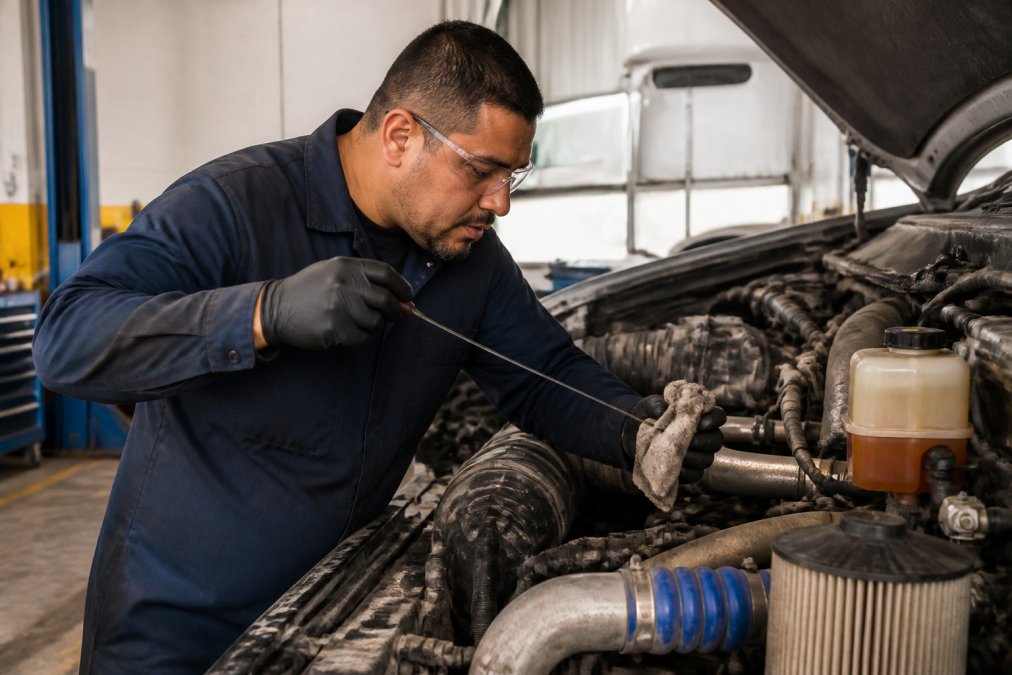
Specialized diesel truck repair maintenance starts with understanding that your maintenance schedule isn’t optional, it’s a requirement. A missed oil change on a gasoline engine might cost a couple hundred dollars. A missed oil change on a diesel can mean engine failure costing thousands.
Fuel system maintenance is non-negotiable. Diesel fuel degrades over time, and water accumulates in the fuel tank through condensation. Change your fuel filters on the schedule specified in your owner’s manual, typically every 10,000 to 15,000 miles for the primary filter and every 20,000 to 30,000 miles for the secondary filter.
Oil selection matters more than you think. Diesel engines produce more soot than gasoline engines, requiring oil with higher detergent content and more frequent changes. Always use oil that meets the American Petroleum Institute (API) CJ-4 specification or higher for modern diesel engines. Synthetic oils hold up better to the extreme temperatures and pressures diesel engines create.
DEF system maintenance prevents expensive failures. If your truck has an SCR system, it requires diesel exhaust fluid. DEF freezes at 12°F, so winter storage requires attention. Modern trucks will derate power or refuse to start if DEF levels are low.
Intercooler cleaning extends engine life. Turbocharged diesel engines push air through an intercooler that removes heat before it enters the engine. Over time, soot and road debris clog the intercooler fins. Cleaning the intercooler every 50,000 miles prevents gradual degradation.
Treat your diesel engine differently than a gasoline vehicle when it comes to service intervals. CJ Auto Services LLC specializes in diesel maintenance precisely because the work demands expertise most general repair shops don’t have.
Signs of Diesel Fuel Injector Failure and What to Do
Diesel fuel injector failure announces itself through specific symptoms that shouldn’t be ignored. Recognizing these signs and acting quickly can mean the difference between a simple repair and catastrophic engine damage.
Hard starting or no-start conditions often indicate injector problems. A diesel engine needs precise fuel delivery at the exact right moment. If one injector is failing, that cylinder won’t fire properly.
Black smoke from the exhaust signals incomplete fuel combustion. When an injector delivers fuel in the wrong pattern or at the wrong pressure, raw diesel exits the exhaust as black smoke.
Rough idle or missing at low RPM happens when one or more injectors aren’t firing consistently. The engine shakes noticeably at idle, and the vibration usually improves as RPM increases.
Loss of power or reduced fuel economy can indicate injector wear. As injectors wear, they deliver less fuel or deliver it inefficiently. The engine compensates by working harder, consuming more fuel while producing less power.
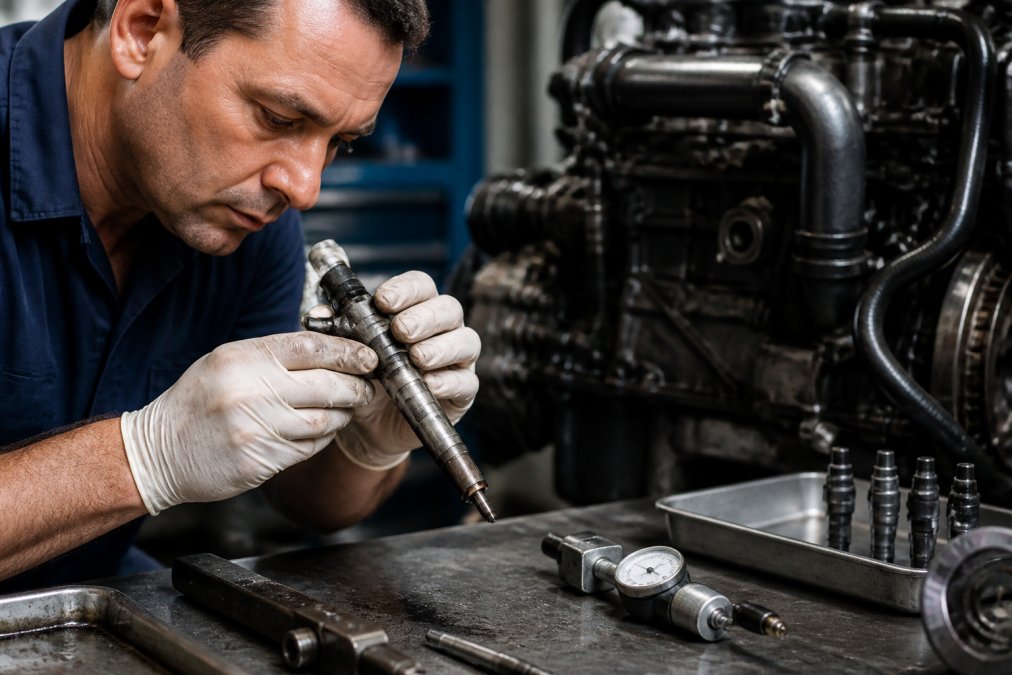
What to do if you suspect injector failure: Don’t ignore these symptoms. Continuing to drive with failing injectors causes collateral damage. Unburned fuel washes down cylinder walls, thinning the oil and accelerating wear. Get a professional diagnosis immediately. Modern diesel engines have onboard diagnostics that can pinpoint injector problems with electronic fuel pressure testing. benefits of OEM parts.
Injector replacement isn’t a DIY job. The fuel system operates at extreme pressures, and improper handling can cause serious injury. Professional shops have the specialized equipment needed to remove injectors without damaging the engine and to bench-test injectors to confirm they’re actually the problem.
Common Diesel Engine Maintenance Schedule Explained
Your diesel engine maintenance schedule is engineered into the design. Manufacturers spend years testing to determine the intervals that keep engines reliable. Ignoring these intervals voids warranties and invites failure.
Oil and filter changes represent the foundation of diesel maintenance. Most diesel engines require oil changes every 7,500 to 10,000 miles, though some modern engines can go 15,000 miles. Severe driving, towing, dusty conditions, and frequent idling shorten intervals.
Fuel filter changes typically occur every 10,000 to 15,000 miles for primary filters and every 20,000 to 30,000 miles for secondary filters.
Air filter replacement usually happens every 15,000 to 30,000 miles, depending on driving conditions. Dusty environments require more frequent changes.
Coolant system maintenance matters more in diesel engines because they run hotter. Coolant should be flushed and replaced every 30,000 to 50,000 miles using extended-life diesel engine coolant.
Transmission fluid changes follow the manufacturer’s schedule, typically every 30,000 to 60,000 miles. Diesel engines produce more torque, which stresses transmission fluid more than gasoline engines do.
DPF regeneration and maintenance requires attention if your truck has a diesel particulate filter. Modern trucks trigger active regeneration automatically when soot levels reach a threshold. Ignoring DPF maintenance leads to filter clogging, reduced power, and eventually a no-start condition.
| Maintenance Item | Typical Interval | Why It Matters for Diesel |
|---|---|---|
| Oil and filter change | 7,500-10,000 miles | Diesel produces more soot; requires more frequent changes |
| Fuel filter change | 10,000-15,000 miles | Fuel contamination destroys injectors and fuel pumps |
| Air filter replacement | 15,000-30,000 miles | Clogged filters reduce efficiency and increase fuel consumption |
| Coolant flush | 30,000-50,000 miles | Diesel engines run hotter; coolant degrades faster |
| Transmission fluid change | 30,000-60,000 miles | Diesel torque stresses fluid more than gasoline engines |
| DEF top-up | As needed (every 3,000-5,000 miles) | SCR systems won’t function without adequate DEF |
Why Specialized Mechanics Matter for Diesel Engines
Not all mechanics understand diesel engines. Diesel repair requires different training, different tools, and a different mental model of how engines work. Taking your diesel truck to a shop that primarily services gasoline vehicles puts you at risk.
Diesel fuel system diagnosis requires specialized equipment. Fuel pressure testing on a diesel engine demands gauges rated for 20,000+ PSI. Injector testing requires a specialized injector test stand. A shop that doesn’t specialize in diesel might misdiagnose problems or perform repairs incorrectly.
The stakes are higher with diesel engines. Incorrect oil viscosity, wrong fuel filter installation, or improper injector removal can cost thousands to fix. ASE-certified diesel specialists have proven their knowledge through rigorous testing and understand the unique demands of diesel fuel systems.
When you work with CJ Auto Services LLC, you’re working with mechanics who specialize in diesel engines and understand the nuances that general shops miss. That expertise protects your truck and your wallet.
The Cost of Neglecting Diesel Engine Care
Neglecting diesel engine maintenance follows a predictable trajectory: small problems become big problems, which become catastrophic failures.
Early neglect costs: Skipped oil changes and fuel filter changes cost nothing initially. Then fuel injectors start to fail, costing several hundred dollars to replace. Meanwhile, unburned fuel contaminates your oil and wears cylinder walls.
Mid-stage neglect costs: More injectors fail. The fuel pump struggles. The DPF clogs. A single repair might cost a thousand dollars or more. You’re facing multiple repairs that could have been prevented.
Catastrophic failure costs: Complete engine failure means a rebuild costing five to ten thousand dollars, or a complete engine replacement exceeding fifteen thousand dollars.
Proper maintenance costs a few hundred dollars per year. Neglected maintenance costs thousands to tens of thousands when it fails. Prevention always costs less than repair.
Getting Your Diesel Engine the Care It Deserves
Your diesel engine is an investment worth protecting. Proper diesel engine care starts with finding a shop that understands diesel engines. CJ Auto Services LLC has spent years building expertise in diesel maintenance and repair. Our ASE-certified mechanics understand the unique demands of diesel fuel systems, emissions controls, and specialized maintenance schedules.
We offer comprehensive diesel maintenance services, from routine oil and filter changes to complex fuel system diagnostics and repairs. We use the right equipment, the right fluids, and the right procedures. We’re transparent about what your truck needs and why, and we never recommend work you don’t need. Our 100% parts and labor warranty backs every repair we perform.
Diesel engines reward proper care with reliability and longevity. Schedule service with CJ Auto Services LLC and keep your diesel engine running strong. We offer same-day appointments, free vehicle pick-up and drop-off, and the expertise your diesel truck deserves. Learn more about diesel engine maintenance best practices from the American Trucking Associations to understand industry standards for fleet maintenance. EPA regulations on diesel emissions control systems outline the requirements that modern diesel engines must meet. SAE International diesel engine specifications provide the technical standards that govern diesel engine design and maintenance.
Frequently Asked Questions
Q: Why is diesel engine maintenance more expensive than gasoline?
A: Diesel engines operate at higher compression ratios and fuel pressures, requiring heavier-duty components and more frequent fluid changes. Specialized parts like fuel injectors, glow plugs, and diesel particulate filters cost more to replace. Additionally, diesel engine care demands ASE-certified technicians with specific training. The investment in proper diesel engine maintenance prevents catastrophic failures that would be far more expensive to repair.
Q: What happens if you don't service a diesel engine regularly?
A: Skipping regular service on a diesel engine leads to rapid wear of internal components, fuel system degradation, and potential engine failure. Diesel fuel can accumulate water and contaminants without proper filtration, damaging fuel injectors and the fuel pump. Neglected oil changes cause sludge buildup, reducing engine efficiency and lifespan. Over time, you risk catastrophic engine damage requiring complete replacement, costing thousands more than preventive maintenance would have cost.
Q: How often should a diesel engine be serviced?
A: Most diesel engines require oil changes every 7,500 to 10,000 miles, though some modern diesels can go up to 15,000 miles depending on manufacturer specifications. Fuel filters should be changed every 15,000 to 30,000 miles. Air filters typically need replacement every 12,000 to 15,000 miles. A full computerized diagnosis and tune-up should be performed annually or as recommended by your vehicle's manual. Always follow your specific diesel truck repair maintenance tips and schedule provided by the manufacturer.
Q: What are common signs of diesel fuel injector failure?
A: Signs of diesel fuel injector failure include rough idling, difficulty starting the engine, reduced fuel economy, black smoke from the exhaust, and loss of power during acceleration. You may also notice white smoke on cold starts or a knocking sound from the engine. If you experience any of these symptoms, bring your vehicle in for electronic diagnosis immediately. Addressing signs of diesel fuel injector failure early prevents damage to the engine and maintains performance.
Diesel engines demand more from their owners than gasoline engines do. That’s not a flaw, it’s the price of the power and efficiency diesel delivers. The question isn’t whether specialized care is worth the investment. The question is whether you’re willing to pay for maintenance now or pay for repairs later. CJ Auto Services LLC has the expertise, equipment, and commitment to keep your diesel engine running strong. Schedule your diesel maintenance appointment today and protect your investment.
This article was written using GrandRanker